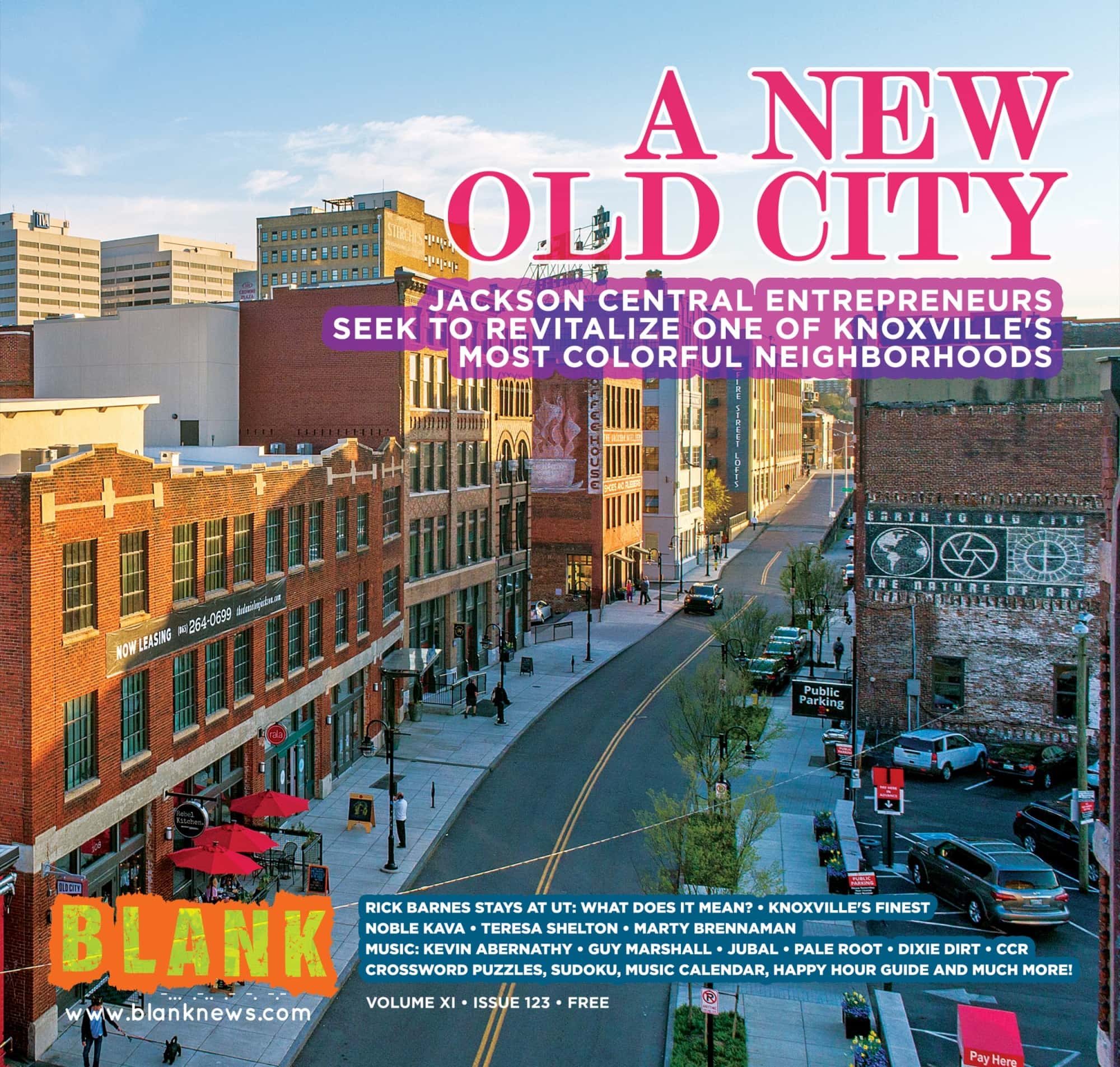
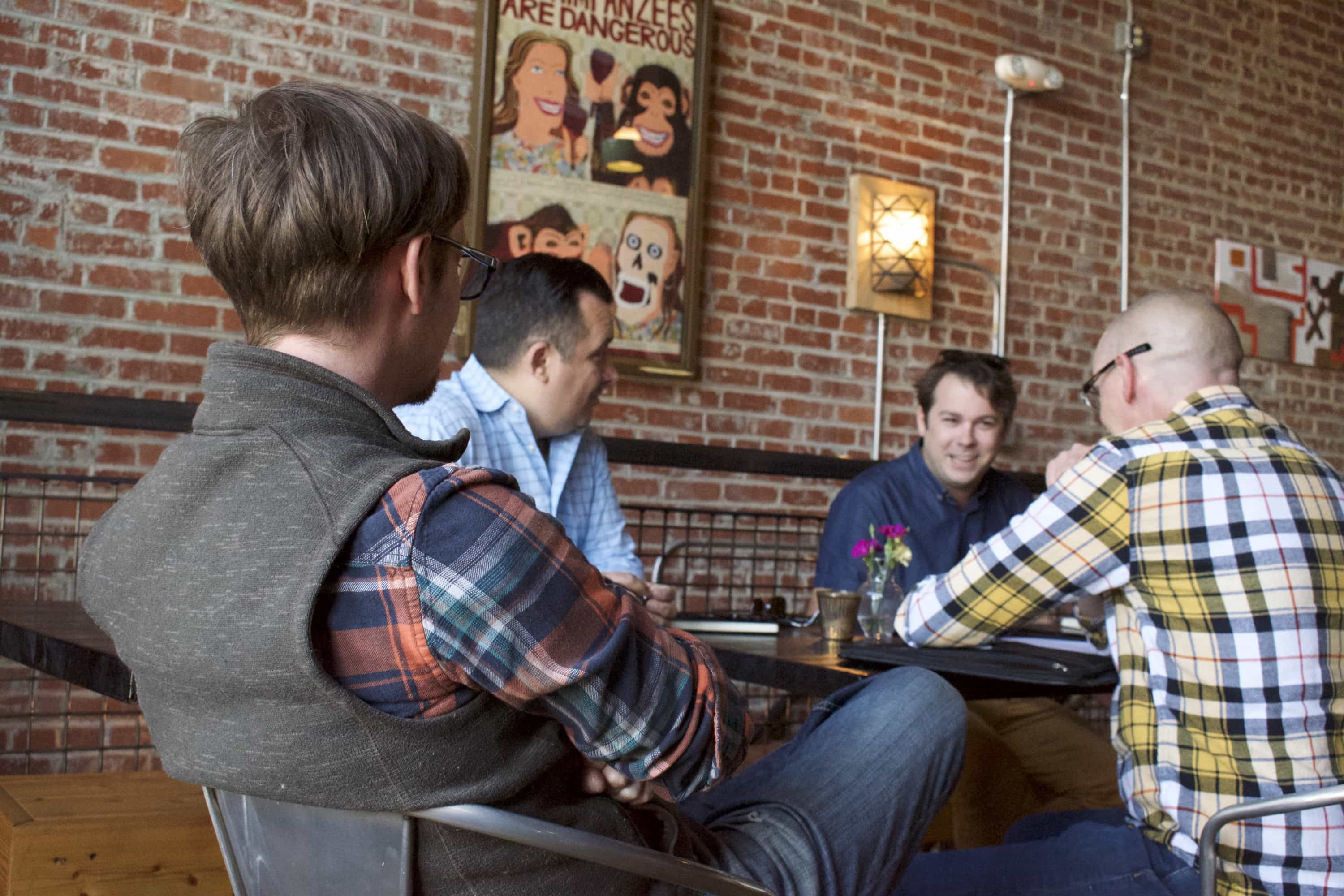
As businessmen go, Thomas Boyd, Bobby McCarter and Matt Burk look neither dandy nor intimidating in the traditional sense.
They wear no three-piece suits like the new money entrepreneurs just up Jackson Avenue and down Gay Street, where a downtown revitalization has been much heralded in recent years.
They appear, for all practical purposes, like regular guys: fairly young, not overtly hip, a little weary around the eyes from too many irons in the fire on the business front and young families at home. That they’re able to call a timeout and spend an hour chatting with BLANK is a testament to their efficiency, or at least to their willingness to get the word out:
The Old City is changing for the better, and with a little luck, some capable assistance and a whole lot of determination, they want to see it reclaim its rightful place as the heart of Knoxville.
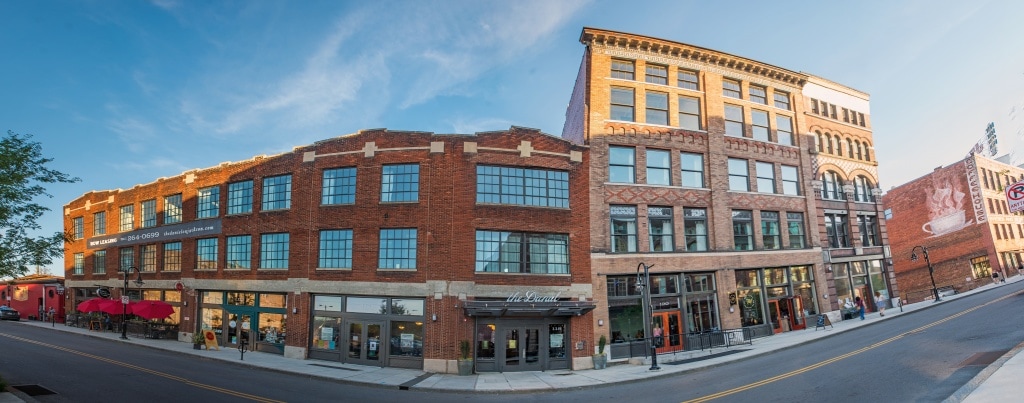
“Literally: The intersection of Central and Jackson is the geographic center of downtown,” says Boyd, sitting in the Old City Wine Bar on a Wednesday afternoon. Outside, the late March air carries a bite, sudden gusts of chilly air blasting through the canyon that is Jackson Avenue. Aside from Boyd – the proprietor of Jackson Central Group, his management company – and his two associates, the OCWB is mostly empty, save for a few employees who begin preparation for the evening rush.
Up and down Jackson, and from the railroad tracks on Central down to its intersection with Summit Hill, the rest of the Old City is low-key busy. There are signs that it’s a neighborhood in flux – here and there, orange traffic cones and sawhorses seem so omnipresent that they should be paying rent, and the rise and fall of new businesses is sometimes difficult to keep track of. But there are also signs that it’s no longer limited to activity solely after sundown, when the eateries fill up and the live music scene fires up and the party bros line up outside Southbound (or any of its nightclub predecessors that have occupied that space since for almost 20 years).
If Boyd has his way, that evolution will continue. He envisions a day, he says – sooner rather than later – when the Old City will better resemble the vibrant ethnic neighborhoods of New York City or San Francisco than the repository for eclecticism and late-night bump-and-grinds that it has been for years.
“It’s just got that neighborhood feel,” says Boyd, who moved into the apartments above the Urban Bar and Corner Café before his parents bought the old Manhattan’s building, turning it into Boyd’s Jig & Reel. “I want to wake up and spend the entire day in the Old City and not have a reason to leave.”
“We’re already the geographic epicenter of downtown; now we want to be the shopping and residential center, as well,” McCarter adds.
It’s a vision of renewal that the three men – along with a host of other business owners, proprietors and managers – have for a revitalization of one of Knoxville’s most historically rich districts. According to historian Jack Neely, writing about the area’s history on the neighborhood’s website, “it once contained the region’s highest density of saloons, and, for a while, Knoxville’s informal (and, for a while, formal) red-light district. During the same era, but for much longer, it was the city’s wholesale food district, and ensconced in it were flour and coffee factories which became famous. And it was also the meatpacking district, with a stockyard that attracted area cattlemen. At the same time, somehow, it was a residential neighborhood that included families of free slaves and their descendants as well as several waves of European immigrants.”
The nomenclature has been in use since 1980, Neely goes on to write, but over the years, the neighborhood has gone by many names: Irish Town, Cripple Creek, the Bowery, Gunter’s Flats and the Bottom, among them. As the railroads came to Knoxville in the mid-19th century, the marshlands began to fill in and entrepreneurs soon followed, hoping to capitalize on the freight and passenger trains that passed through the area. It was after the Civil War that “an Irish immigrant and former Union officer named Patrick Sullivan started a saloon in 1869 that would become one of the architectural linchpins of the community, later housing a bar that bore his name until it transitioned into Lonesome Dove a few years ago.
The mill that would become White Lily Flour soon followed, and by the end of that century, the Old City was one of the most bustling areas of Knoxville. “Large, impressive Jackson Avenue was one of Knoxville’s big economic drivers,” Neely notes, “and did almost all of its business in the daytime.” That’s a philosophy that Boyd wants to see return to the Old City, he points out.
“We need more daytime businesses,” he says. “In fact, I won’t rent to anyone not interested in opening one.”
The potential for daytime traffic is what drew the owners of Rala, a gift shop on the other side of Old City Wine Bar, to the neighborhood, and Boyd points to Blühen Botanicals, a soon-to-open CBD dispensary that will occupy a space across from The Pilot Light, as another business that will have daytime operating hours. Kneaded, a new neighborhood bakery with a focus on naturally leavened breads will join OliBea and Old City Java as one of the businesses targeting roving gourmands during the day, and while the streets are mostly empty on this particular Wednesday, the recent Big Ears Festival helped to solidify the notion that daytime growth is sustainable, according to McCarter.
“We saw a lot of foot traffic down here during the festival, and we’re always seeing new people that give us a bustling bit of activity during the day,” he says. “When we see that potential, we can’t help but think we can sustain that all the time.”
“For years, the nightclub scene has overrun any other narratives – and I say that as someone who’s involved in three bars,” Boyd adds. “But our goal is to change that paradigm.”
The proliferation of nighttime entertainment options in the area traces its roots back to the 1890s, when cheaper property along South Central opened the door for a number of houses of ill repute that earned it a nickname as Knoxville’s Bowery. Shortly after the 20th century dawned, Neely notes, “there were at least 10 competing saloons on that one block of Central,” and the avarice and violence that accompanied alcohol led Knoxville voters to ban saloons in a 1907 vote. The ban “changed the character of the neighborhood,” Neely writes, and over the next several decades, the Old City underwent periods of social and economic turmoil that culminated in shuttered storefronts and darkened historical buildings that left the area largely derelict until the 1990s.
It was never abandoned, however. Manhattan’s and Patrick Sullivan’s propped up the Jackson-Central intersection, and in the 1990s, the West family – now one of the driving forces behind the continuing revitalization of Market Square – ran three businesses in the neighborhood, mostly on the West Jackson Avenue side. On the other was the Spaghetti Warehouse, which would change hands and reopen as Barley’s. Original owner Doug Beatty sold it to Randy Burleson in 2002, who in turn sold the business to the Jackson Central Group last year.
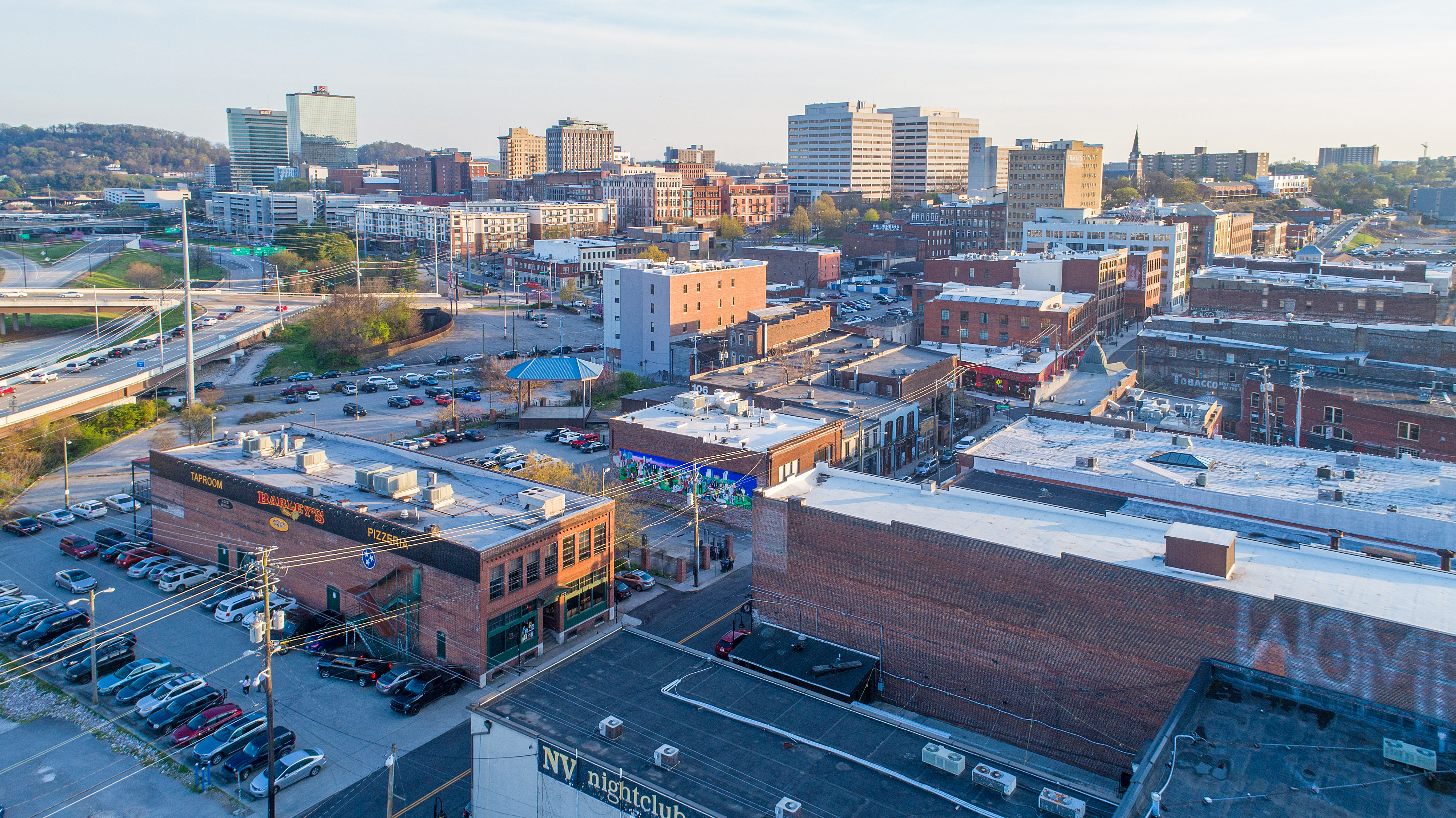
It was a business decision that caught many people by surprise, but one that Boyd saw an opportunity in.
“I’m looking to get my hands on anything I can around here to help steer the narrative of what the Old City is and can be,” he says.
Burleson had bought Crown & Goose in 2016 and had recently closed it; Boyd, after taking stock of the building’s potential under the Jackson Central umbrella, decided to pursue the space to make room for Kneaded and other properties that can further the narrative of the Old City as a daytime destination. The acquisition of it and Barley’s gives Boyd and the company a greater stake in the neighborhood, bringing its total managed properties to also include Merchants of Beer, Old City Wine Bar, Rebel Kitchen and the new Pop Up Food Truck.
“With Crown & Goose, the plan is to divide it up in order to try and drive retail,” Boyd says. “With what Pretentious [Beer Co.] and Corks [Wine and Spirits] and now Kneaded is doing, we want the whole area to have a maker’s mindset. I think wine, glass, meat, bread and beer are a really good start for a community.”
Barley’s, however, is another matter entirely, and the online consternation brought about by the acquisition is due, in large part, to the Boyd name. Former gubernatorial candidate Randy Boyd, now interim president of the University of Tennessee, opened the Jig & Reel with his wife, Jennie, in 2011. Since then, the founder and chairman of Radio Systems Corporation has taken on a bigger role in shaping the development of Knoxville – specifically in regards to a deal that would include a new stadium for a minor league baseball team “just east of the Old City, generally between Willow/First Creek, Jackson Avenue and Florida Street, according to city spokesman Eric Vreeland,” the Knoxville News Sentinel reported in February.
That story interviewed several Old City property owners who say that have been approached about selling to make room for the stadium and parking, and while it’s all speculation at this point, the Boyd name is synonymous with speculative chatter. Add in Ancient Lore Village, a South Knoxville fantasy resort that’s in the planning stages by Tom Boyd – Randy’s father and Thomas’ grandfather – and it’s not easy for the youngest Boyd to escape the perception that he’s part of the family empire.
“When people meet me, they assume I’m Republican and that I have something to do with the baseball stadium; I’m not, and I don’t.”
If anything, Thomas may have a greater investment in the Old City than his father. At Boyd’s (which is run by his mother), he was responsible for booking the music, a carryover from his time with WDVX. He was instrumental in bringing the “Tennessee Shines” shows to Boyd’s, and the recent move of the Friday edition of the WDVX “Blue Plate Special” to Barley’s plays to his strengths, as well. That decision, he adds, was made to help ensure Barley’s patrons and employees that the venue wasn’t going to be shuttered.
“When it was first announced, it was naturally assumed that we were going to turn it into apartments, or that my dad had bought it,” he says.
“The first thing we did was gather all of the employees and talked to them to reassure them that not only was Barley’s not closing, but that it’s going to see a lot of attention,” McCarter adds.
Over the past 20 years, the bar business has been hard on the building itself, Burk points out. One of the first improvements, long asked for by customers, will be improvements to the bathrooms. They’ll also be putting in a second pizza oven to keep up with demand during the busiest times of day. And with 96 taps, they’re looking to work with local brewers for special runs of beer by Hexagon or Pretentious made exclusively for the Jackson Central Group.
“My intentions are to preserve and improve,” Boyd says. “We want to raise the bar at Barley’s and bring it back to what it used to be. At the end of the day, who doesn’t like pizza, beer and good music? We want to have a better focus on doing those three things well.”
And that’s where Burk and McCarter enter the picture. With so many moving parts, impending deals and renovation decisions to be made, Boyd needs guys he can trust to help make it happen. He and McCarter were once neighbors; he and Burk met at the opening of OCWB, and they’re all “very much Old City people,” Boyd says. McCarter runs Merchants of Beer and has a large role in operations at Barley’s, Burk handles managerial duties for the wine bar and the adjacent Rebel Kitchen and they both are assisting with the development of future plans – like the Pop Up Truck, a food truck that will augment the 44 beers on tap, six wines and large cooler-temp selection of package brews at MoB. The Pop Up Truck will feature a rotation of chefs, McCarter says, and with new chef Preston Williams, all food-centric creations will come out of Rebel Kitchen.
“What we’re doing with the food truck, we’ll have food everywhere, with Rebel Kitchen as the center,” Boyd says. “We want to use that as a central hub. Food is community, and community is the goal.”
Williams, a recent addition to Rebel Kitchen, will continue to work with local growers and use locally sourced ingredients whenever possible, Burk adds. And because there are a number of food options available or in the works, it’s possible to bring in whole animals from which meat will be distributed to Barley’s, Rebel Kitchen and the Pop Up Truck.
“The whole idea is to not be able to put us into a specific box,” Burk says. “We want to pull from whatever we want to and mesh it into something new, to support local where we can and where it makes sense. The only questions at the end of the day are, ‘Is it good? Will people want to eat this?’”
If it’s available, they will. While the Jackson Central conglomerate is driving the narrative of the Old City, there’s always room for more businesses at the table. A rising tide lifts all boats, the three men point out, and there’s already a sense of community among the shopkeepers and business owners who love the Old City’s colorful past and believe fervently in its potential.
“I know that the staff that work at our businesses are frequenters of each other’s businesses,” Burk says. “I know that if I run out of lime juice here at Old City Wine Bar, I can walk down the street and get some from [several] other places, because that’s just what we do.”
“It’s a cohesive neighborhood,” McCarter adds. “We look out for each other, and until the past couple of years, we were the only people around during the day, so we all knew each other!”
Those days, hopefully, are changing. Boyd envisions a day when those who call the Old City home can grab brunch at OliBea or OCWB, get a coffee at Java, walk downtown and back again, hit Corks for a bottle of wine on the way home and go out to see live music during the late-night hours.
“We want to make sure all of these businesses are not competing, but working together to provide great services for folks,” he says. “I see a bright future for this place. Business breeds more business, which brings more people in, which builds more business for everyone. We just want to make our neighborhood, our community, a better place. And we want to be the glue that holds this area together.”