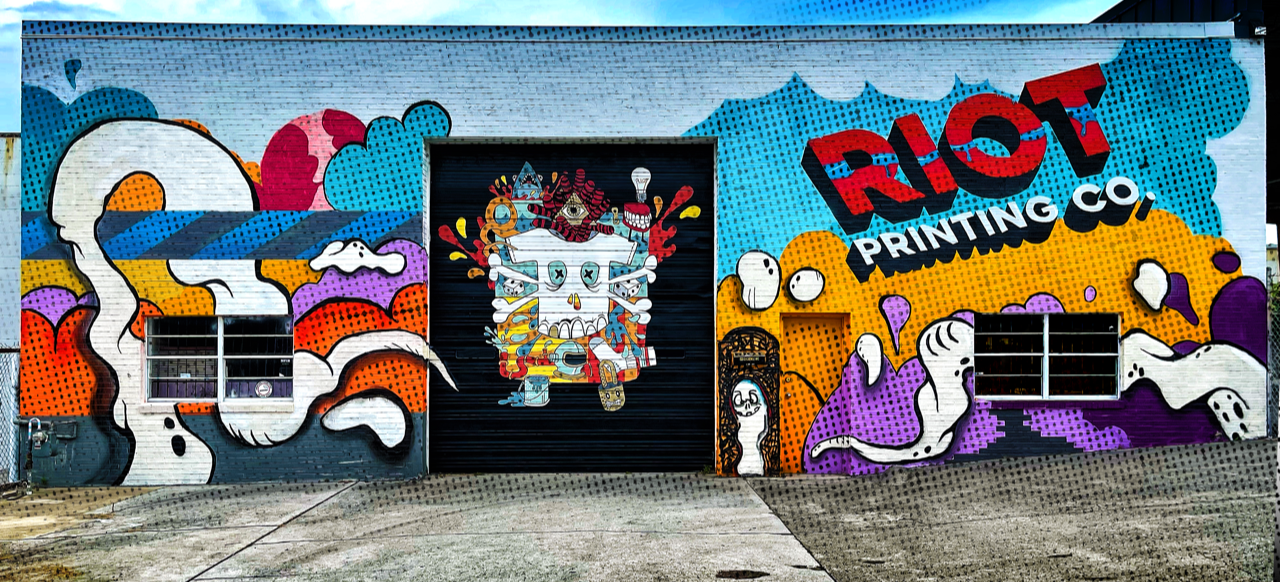
Travis Stevens and Riot Printing seek to revolutionize how Knoxvillians think of T-shirts
A killer T-shirt design is the difference between a treasured item of clothing so often worn that the neck is frayed and the graphics are barely visible, and a rag at the bottom of the closet used to wash a car.
Travis Stevens knows that well. As the owner and proprietor of Riot Printing, the East Tennessee native grew up in the East Tennessee music scene, and before he even tried his hand at graphic design, he was a T-shirt afficionado. Back then, a well-designed band shirt made the difference between passing the merchandise table by or scrambling for his wallet as soon as it caught his eye.
That, he says, is what he aims to do with every article of clothing that rolls off the printer at Riot’s Chilhowee Avenue shop, just south of Magnolia Avenue in East Knoxville.
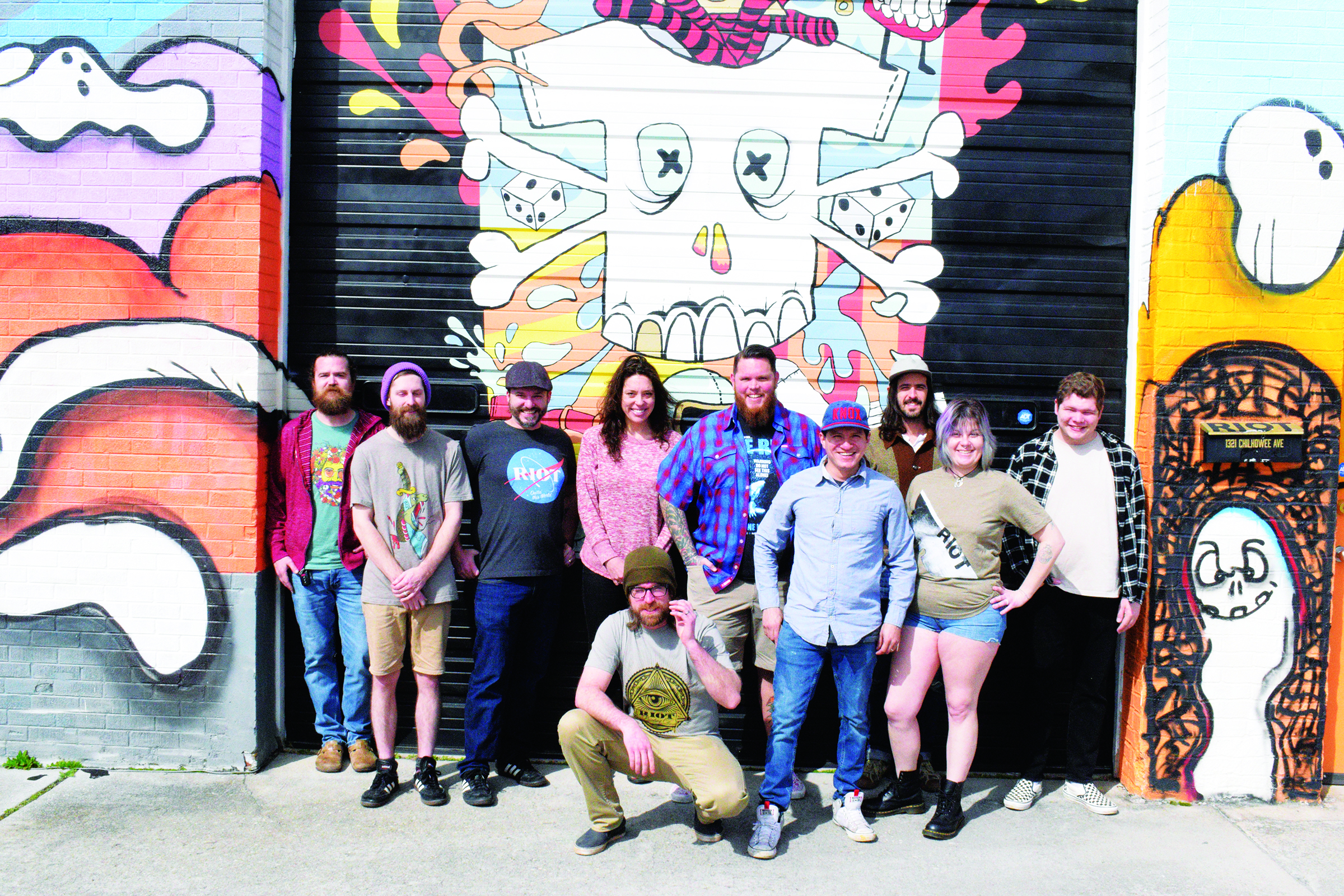
“If I had to describe the Riot brand, I would call it unapologetic,” he says. “It’s edgy. It’s fashion-forward, geared toward a newer generation. I want to be as all-inclusive as I can, and our goal is to help other people make money. I try to push merch on everybody because merch just sells, man.
“Shirts are like food. It’s not as important, obviously, but clothing is a necessity, for sure, so why not make it cool as s***?”
Stevens got his work ethic from his old man, Gary, who owned construction businesses and worked long days, occasional nights and frequent weekends to make ends meet. Small-business owners face a different level of stress than other 9-to-5 workers, and it took becoming one himself for Travis to appreciate exactly what his father endured.
“He worked a lot,” Stevens recalls. “My dad was always working, and even when he was at home, he was in the garage working and always had some things going on. I learned everything I know about construction and home repair and all that stuff from him. His dream was for me to follow in his footsteps, but I always had an artistic tendency, and that goes back to me downloading Photoshop illegally when I was 15.”
The ability to manipulate images and type and to create artwork that previously existed only within his imagination felt like wizardry, and Stevens set out after graduating from Karns in 1999 to pursue a degree in graphic design. The prestigious Savannah College of Art and Design (SCAD) was his ultimate destination, and after taking care of his core requirements at Roane State Community College, he and a friend moved to Savannah in 2001. Four years later, he returned to Knoxville with a degree in motion graphics and broadcast design, as well as a minor in photography – not exactly the graphic design path he had originally intended.
“I did more film and television work after I graduated, and when I moved back to East Tennessee, I did some freelance work for Scripps, for HGTV, for DIY,” Stevens says. “I did motion-graphics work, but I never really landed a full-time job doing it. Instead, I became a professional web designer!”
His old friend and classmate from SCAD, Philip Gray, got on board at DMGx (now BigWheel), and a short time later, Stevens joined the team. Having a steady job gave him more flexibility to explore his creative endeavors, and as an avid fan of the local music scene, he naturally became something of a designer and photographer when local bands – especially those of the heavier persuasion – needed a professional touch.
“I was a touring photographer, and I did a lot of graphic design work for 10 Years,” Stevens says. “I did all the graphic design for their [2005] album ‘The Autumn Effect,’ and I designed the band’s logo. From that, I got a lot of other work with local bands, and that ultimately led to the story of how I even got into screen printing.”
One of those bands happened to be The American Plague, that long-gone, much-missed, heavy-rock project led by James “Jaw” Alexander, formerly of The Malignmen, and bassist Dave Dammit. As with most local bands, the Plague, despite possessing enormous talent, didn’t necessarily have the cash on hand to pay for goods and services. And so, for Stevens’ photography and videography work for his group, Alexander proposed a trade.
“He told me, ‘Hey, man, I got this screen printing kit off of eBay because I was going to print shirts for my band, but I don’t know if I’ll have time to figure it out. I’ll trade you this kit for the value of the money we owe you,’” Stevens remembers. “I said, ‘Sure,’ and he gave it to me, and it sat in my garage for six months.”
Were it not for Alexander’s persistence, it might be there still, but a touring opportunity for The American Plague led him to encourage Stevens to set it up.
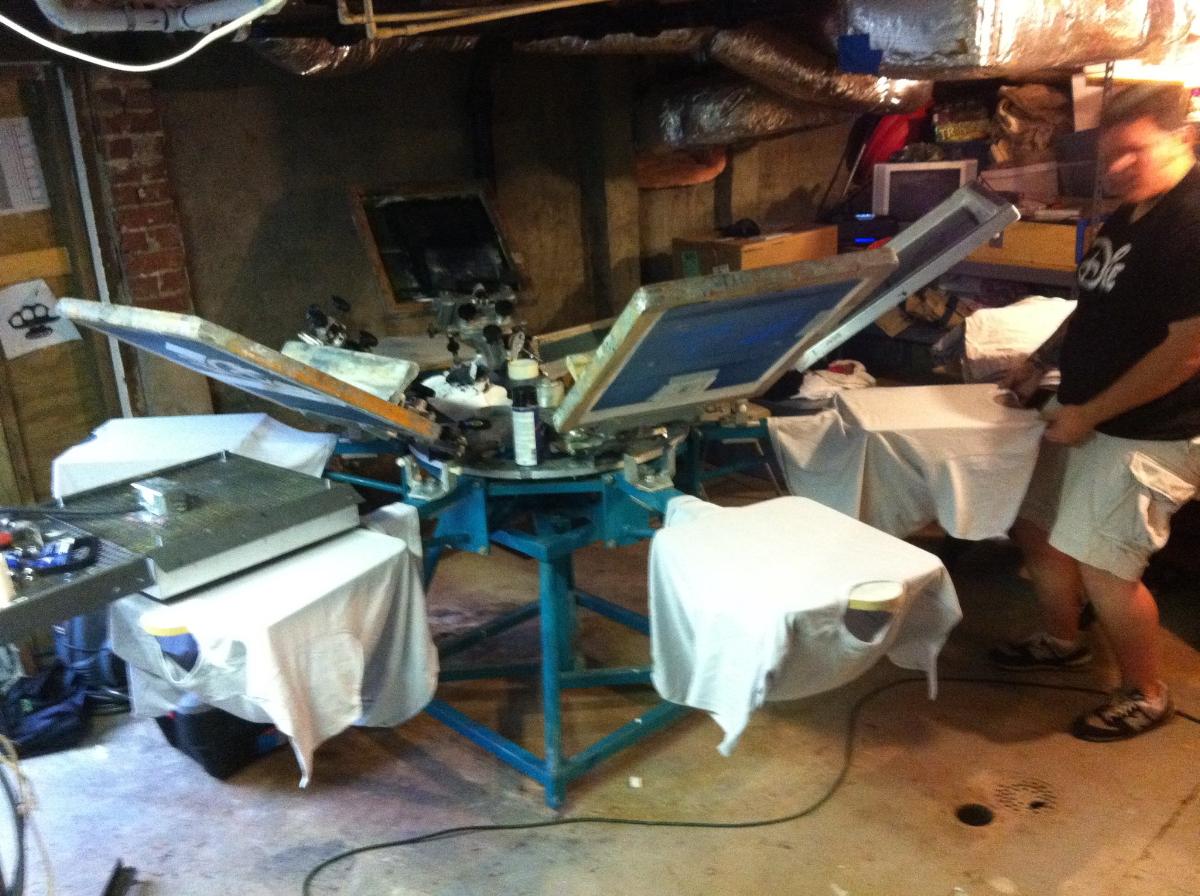
“So by trial and error, a couple of weeks later, we finally printed some shirts,” Stevens says. “All of this was happening in the basement of my house in Fountain City. It was just us, messing around with it, and we had no idea what it was going to become.”
Stevens, Gray and Alexander launched Riot Printing in 2009, and at first it was a side hustle that was insanely profitable. The profit margin, Stevens says, turned Riot into a behemoth that quickly overshadowed the hobbyist approach the three guys brought to it in the beginning.
“It wasn’t easy, but the gratification was instant: Get the screen on the press, put the ink on there, print a shirt and bam! There’s $20 right there,” he says. “In those kinds of terms, the financial aspect of it was huge, and as we were doing it for a while with no overhead in my basement, it was all profit. On top of that, we all had day jobs, and our bills were relatively paid. So we were doing this from like 5 p.m. to 2 a.m., just hanging out and listening to Pantera and printing T-shirts.”
Monstrous growth and the accumulation of capital were aided by ingenuity: The guys built their own exposure units and screen racks, and as time went on and more jobs landed in their laps, they upgraded their equipment, as well. But even a six-color press and a conveyor dryer weren’t enough to expedite 1,000-shirt jobs that needed to be printed by hand, which eventually led to the establishment of Riot Printing as a full-time operation.
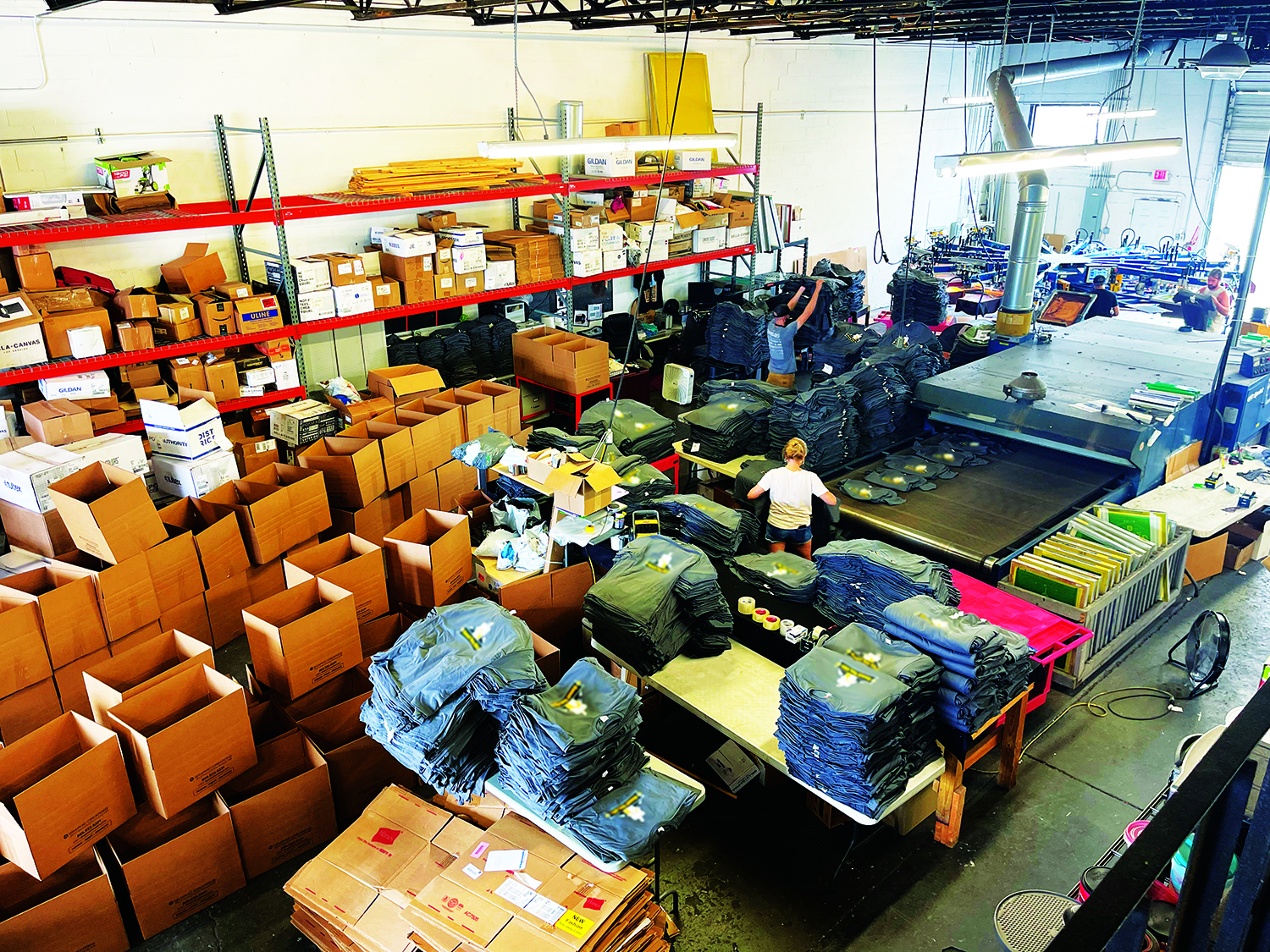
Today, Stevens is the sole owner and operator, and Riot is no longer a basement operation. In fact, when business boomed so hard that Riot needed to transition to an automatic press, the guys found space at 202 Randolph St. in an Old City-adjacent neighborhood known as The Bottom (which would, after Riot moved to its current location on Chilhowee Avenue, become home to the community space and Black-empowerment project by the same name).
And from there, Stevens says, Riot began to focus on alliance-building as much as it did on printing services.
“We knew a lot of people, so getting into the screen-printing side of things, we wanted to get into business with other people we knew that owned businesses,” he says. “Ultimately what I learned about the printing business is this: I wanted to make it about design, but the historical printing business is manufacturing, and that’s just a whole new area of business to navigate as a graphic artist.
“We tried to approach as many local Knoxville businesses as we could, like Knoxville Opera – we do all the printing for their Rossini Festival. And that kind of passion is what we knew would set us apart, because we were determined to learn the manufacturing and the technical aspect of shirt printing, but also the creative aspect of creating really cool merchandise.”
Screen printing, he points out, is a legacy business, and for years, the ability to churn out massive quantities of T-shirts was the business model for dozens of printshop owners, many of whom have been in operation for decades. And for decades, customer satisfaction with simple designs and logos made the shirts they produced treasured possessions of those who purchased them. But over the past decade, Stevens says, a younger generation of printers has managed to bring a more innovative approach to the industry.
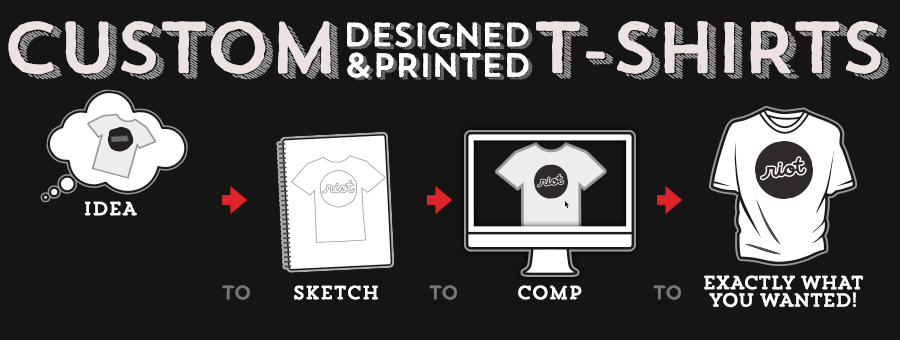
“The whole aspect of how we want to do business was completely different from how they had always done business,” he says. “We cared a lot more about how well the shirts sold. A lot of print owners will tell you, ‘Whatever you give us, we’re going to print that exactly.’ They’re not that concerned with whether it looks cool or not. At Riot, we want to have a conversation with you. We want to help you design something that realizes your vision, because the more shirts you’re selling, the more business we do.”
That approach has led to collaboration with other young printers, like Knoxville illustrator Paris Woodhull. Stevens and the Riot team recently helped her select all of her printing gear, he says, and partnerships with entities and organizations like Central Cinema, the Knoxville Film Fest and Second Bell Music Festival (affiliated with this publication) has broadened Riot’s exposure to younger audiences.
And along the way, Stevens says, hopefully earned a nostalgic place in the heart of every customer who wears a Riot T-shirt faithfully rather than chucking it into a rag bag out in the garage.
“I wanted to approach Riot as a very creative business: Yeah, we print shirts, and we produce merchandise, but I want to make really, really cool s***,” he says. “I want to make something that people aren’t going to turn into car rags after a couple of years, and I want us to be intertwined with everybody in Knoxville. I love Knoxville, and I love watching this city grow. I just want to see us become a part of the fabric of it and all of us to prosper together.”