


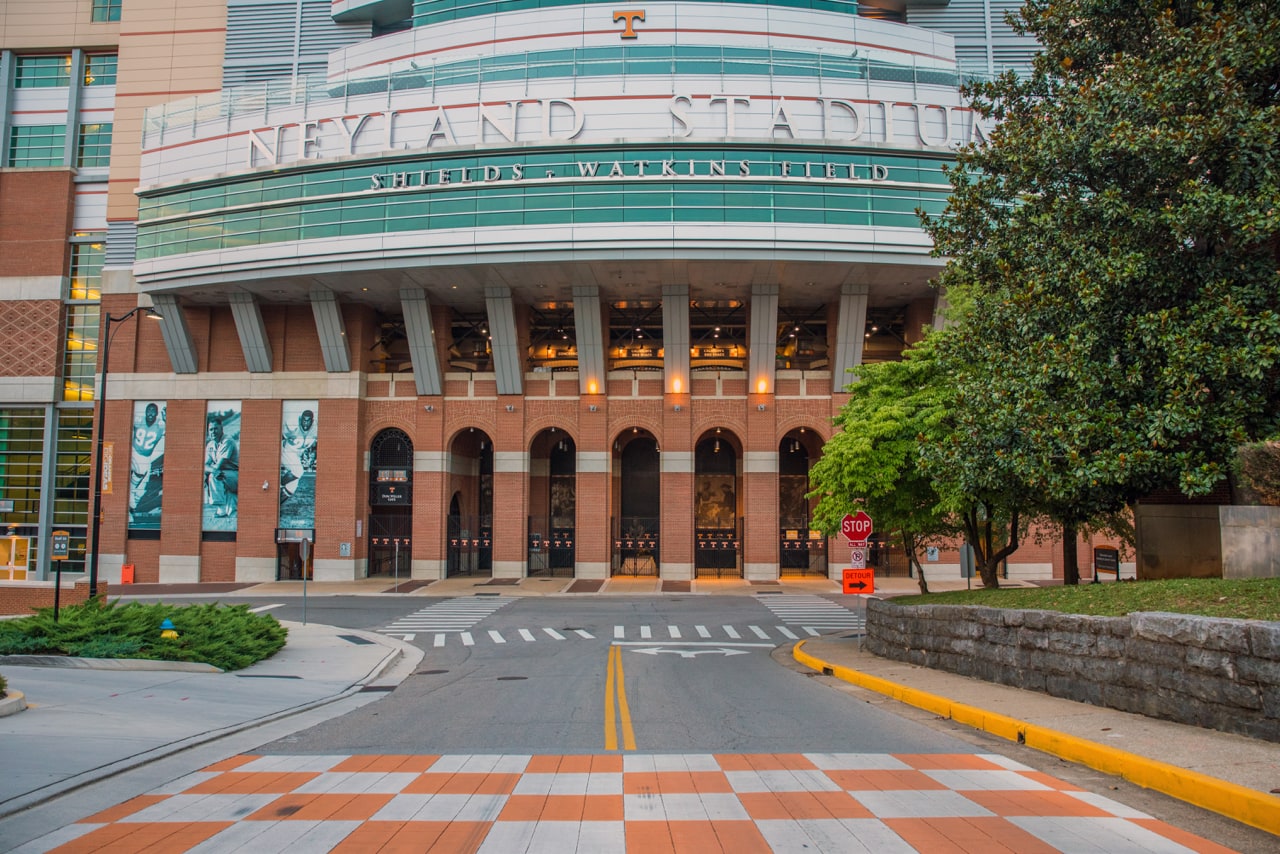
In real life, fans can’t get near most college football players. They travel with police escorts. They practice closed off from the world. Their coaches decide who speaks to reporters. Even the coaches are only available to the media in specific scenarios, but the student athletes are insulated for really good reasons. These are students, many in their teens. Bigger than their value in generating millions of dollars in local and university revenue, they are people’s children, entrusted to the coaches and athletic administration, for guidance and protection during their time at school.
Unlike the stadium, there is no concrete divider between fans and players on social media. There are no penalties for “unsportsmanlike conduct.” There are no referees. There is no police escort to maintain the healthy dynamic between audience and performer.
The same can be said of any social media front, where the public has a direct line to singers, presidents, directors, actors and any conceivable celebrity or regular people like you and me. The monetizing of social media engagement is a towering maker in the modern world, so we’re geared to drive those profits by engaging and evaluating and loving and hating, all out loud in 240 character bursts. If the internet hive mind randomly decides that you’re special, you can wake up with a new life. If you’ve got a webcam and you’re comfortable loudly eating mukbang for an hour, the ASMR internet hive might just make you a star. Just like that.
But when the hive turns, it can similarly levy any and every amount of pressure or punishment, on anyone. For anything. Sometimes, it’s justified, and the mob looks heroic. More often, the mob falls somewhere between an ambient mess of negativity and an unguided mangler. Our comment sections are a fight within a fight within a fight, regardless of topic. And when enough angry emojis point in the same direction, in this case it’s college football athletes, the powerful results can be dark. Digital stampeding isn’t a Tennessee epidemic, it’s a worldwide social epidemic. But change starts by looking at ourselves.
Yes, we know Vol Fans blockaded the hire of disgraced former OSU defensive coach Greg Schiano. It was powerful to witness. Nobody this side of twitter-ghoul Dan Wolken wanted Schiano, so congrats. But this isn’t about coaches or directors. This is about digital boundaries for students.
On Saturdays and throughout pre-Twitter history, student-athletes communicated with fans by playing well or poorly, occasionally asking for more noise and making statements after practices or games. Fans communicated their support or disappointment with attendance or absence, cheers or boos, and revenue. And then everyone went back to their private lives. But unlike those Saturdays of real life, with its police escorts, closed practices and concrete partitions to maintain the appropriate distance, the social media sphere that links us all together offers no insulation between emotional fans and student athletes.
There are superficially positive moments, with fans showing support to injured players or rallying in the mentions of potential recruits to show love with rows of orange emojis. But, objectively speaking, even that crosses the line into personal space, even when it’s personal space on a public medium. It might feel helpful, but there’s a reason coaches and recruiters bring recruits to games on strategically timed and curated official visits. That’s when fans can blow their minds with support and noise, in the appropriately controlled setting of a football game. Offering person-to-person communication of any kind to recruits often undermines the months or years of relationship building and skilled work of professional recruiters and also, more importantly, crosses into a very chaotic gray area of adults confronting teenagers on the internet. Like everything else in this piece: there’s a healthy way and an unhealthy way to approach supporting a student athlete.
Twitter, Snapchat, Instagram and other platforms, while used by older generations, are a built-in social certainty for the generations coming into universities now. It’s where many find themselves, their social structure, everything. And the cross-section where athletic notoriety mingles with the developing digital identity of adolescents is tricky, because it IS their space to explore, like all of us. But, playing football on Saturday doesn’t change that a person is a 19-year-old every second of the week. Sometimes I shudder, imagining how my college social group would’ve permanently damaged our reputations if Twitter was in our hands in 1999.
That said, it’s true that college football is a lifestyle that kids choose. You become an instant celebrity with a million eyes on your performance, personality, your health and your attitude, everywhere you go. Even online. When you come to Tennessee, you become part of a historic brand and story that feels emotionally critical to millions of fans, band members, cheerleaders and former players, every day of life. That opportunity is absolutely to be respected. When it isn’t, though, it falls on coaches and teammates to confront a rogue player, deliver correction and (when appropriate) punishment. That’s their job.
The public’s passion does not entitle any fan to directly confront a student athlete, digitally or otherwise. If you tried to angrily confront a player at the Vol Walk, you’d be cuffed. If you tried it at the mall, you’d have a furious parent in your face and a possible harassment charge.
Two weeks before leaving the program, Vols wideout Jordan Murphy retweeted a WorldStar-esque fight video, showing two women punching each other. Fans descended into his mentions about the optics (a coach’s job), how it represented the program (a coach’s job), and how it made him look as a person (a parent’s job). In a display of extreme immaturity, Murphy began directly responding to fans. Naturally, the situation became immediately toxic between an array of angry fans and a hot-headed college kid who felt encroached upon by adult strangers in his mentions. Everyone handled it wrong, and the tension between Murphy and fans hit critical mass when Murphy retweeted a post making fun of Tennessee’s shocking, historic loss to Georgia State. He shouldn’t have posted it, considering the optics, and the post was deleted. Days later, after a sprawlingly furious online response from Tennessee fans and myriad foolish responses and sparring from the wideout, Murphy left the program. Several regulars on Vol Twitter celebrated, some even taking credit for encouraging Jordan Murphy to leave the University. You know, all the typical watermarks of digital trolls.
Was Murphy right to perpetuate content that mocked his own team? No way. Does this entitle a mass of adult strangers to directly descend on him via Internet, calling for the program to revoke his scholarship and personally confronting him? Again, if it happened in the street, it’d get nasty. If you walked up to Athletic Director Fulmer calling for a kid’s scholarship over a frustrating retweet, you’d look like a sociopath. Murphy gave the program no problems, outside of these twitter transgressions, and was a key contributor to Tennessee’s 2018 upset of #11 Kentucky.
Some time ago, I saw Vols OL Marcus Tatum tweet about a sensitive social debate. He was immediately met by fans saying “stick to football.” I was so disappointed that Tatum didn’t respond with “then you stick to selling insurance, @VFLsmokey8765444778,” but alas.
Perhaps the most resonant example of this phenomenon was Cade Mays. Cade was a 5-star Tennessee commit from Knoxville Catholic and a Vols legacy. Mays had committed to Butch Jones and was the crown jewel of a flashy Vols recruiting class. Though a great recruiter, Butch’s beyond-clueless coaching caused the bottom to fall out of Tennessee football in 2017. In the wake of the losses and turmoil, Cade decommitted, opting to play for revered offensive line coach Sam Pitman and the ascendant Georgia Bulldogs instead. It was heartbreaking for fans to see such a stud legacy sidestep his father’s collapsing alma mater, but the venom on social media was legendary. Many fans verbally attacked and openly wished injuries upon the once celebrated offensive lineman. Only weeks ago, a tweet about Cade getting “pancaked” by new Vol nose tackle Elijah Simmons generated tension when Cooper Mays responded. Cooper is Cade’s younger brother and a 4-star, 2020 Tennessee commit. Though the response was small and inconsequential, it was a resonant reminder that this teenager (who, again, chose Tennessee) sees the bile that fans posted to and about his big brother, who he doubtlessly admires and loves. Imagine being in that position.
Ultimately, the trouble in all of this is that, for better or worse, almost all of us are on social media. Coaches, players, fans, young and old, all on an open, level field of communication. We celebrate and suffer there. And while it’s true that players have a responsibility to represent the name on the front of the jersey, college-age humans are still, simultaneously sorting out the name on the back of the jersey, too.
This isn’t at all meant to be a “fan blaming” column. After these punishing coach transitions and hard years, Tennessee’s fans are the portrait of passionate, die-hard believers and the Vols’ on-field and off-field struggles are through no fault of the fans. But there is a legion of coaches, advisors, teammates and parents, who’s job and responsibility it is to correct team issues and individuals’ issues. Fans have no job in this, only hobby. Football is a show you watch, like a concert. Support it with money, noise and attendance if you love it. Do something else if you hate it. But regardless of the depth of your feelings and height of your passion, that’s the end of what a fan can effectively and appropriately affect.
So yes, some players handle social media better than others, but regardless, they are 18-21-year-old students, period. There’s never an appropriate moment for an adult fan to directly, aggressively come at a student, digitally or physically.






This might be the most accurate statement of social media “trolling recruits/players” that I’ve seen. I’m a life-long VFL and while I’ve been utterly disgusted at the product put on the field, and the money it’s cost our program to put it there (and then make it go away) social media wasn’t designed to bully, harass, belittle, or abuse anyone. That’s what we, as a society, have allowed it to become. Shame on the product the myriad of coaches have put on the field. Shame on US, as fans, for allowing our opinions to be broadcast with no regard to the harm they might cause