Faith, family informs Knoxville-based musician’s latest effort
Joey English was at a bit of a crossroads.
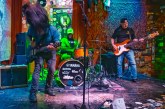
He’d taken a few stabs at going all in on music and had a few feathers in his cap: He had opened for national artists like Delta Spirit, he’d been playing guitar for popular regional indie band Blond Bones and he had released a run of EPs and albums that had been well-reviewed locally. But he also was struggling to let go of the need for a day job while he was simultaneously having difficulty equating a personal faith that he believes is at odds with the modern structure of the mainstream Christian church.
“In the past few years, I’ve spent a lot of time getting to know myself and … in the past six months, I’ve just decided I’m a creative person and nothing gives me greater joy or purpose than sharing that with others,” he says.
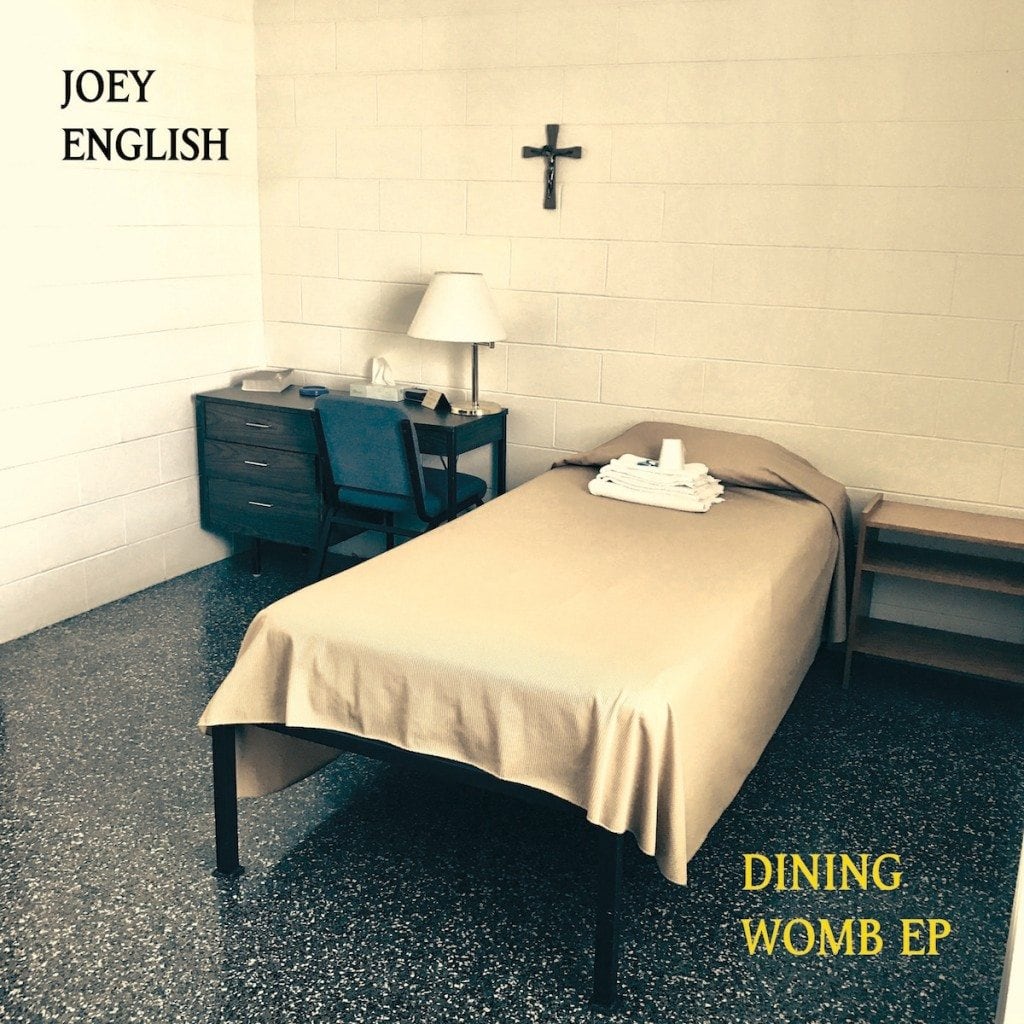
English says that the title of his soon-to-be-released EP “Dining Womb” comes from a chance encounter in a coffee shop with a priest and the ensuing conversation they had that helped him out of his funk and which helped him crystallize a new direction – one that integrates both his creative drive and reinvigorates his spirituality in the authentic manner he feels it should be nurtured.
English and the priest talked about many things, but to make a long story short, he was especially interested in a particular anecdote the priest shared about medieval sanctuaries: The archways leading in often were designed to resemble vulvas, the sanctuaries like long vaginal chambers, the altar area lit with warm, red stained-glass light, simulating … a womb. The idea was that worshippers would leave a mass through the vaginal canal of the aisles, out the vulva of the narthex and into the bright world of life, reborn by their worship experience.
English says he and his wife, Corey, already viewed their dining room as their sanctuary: a calm, peaceful room with great acoustics where they would meditate or pray, talk things out, read – and where he would do the majority of his writing and practicing. After hearing the priest’s anecdote, they jokingly had dubbed it the “dining womb,” hence the name of the EP.
“I think I’ve always identified on the edges or fringes of society, and I saw the mainline church in the center or in the bed with the party, and I am able to put language to it now as an adult, but there was always a frustration as a teen that something didn’t seem intuitively right. And if you read the words of Jesus, I think it’s interesting to note that somehow we’ve twisted it somehow [to where] Jesus is on the side of the global military superpower. I didn’t want it to be all political because the way I learn about it, the human being is very tribal, and the way we are wired needs an “us versus them,” and I think the church has picked a side rather than be a third way or a bridge, and that’s what I’d rather see.”
“Red Letter” is the EP’s first single, but don’t expect bubblegum pop here. Instead, it’s a stinging indictment of the church that contains the line, “All your Sunday words are black and white.” He describes police brutality, racism towards immigrants and other social justice issues to which he has seen the American church be slow to respond or indifferent. “We can trace it to the Moral Majority” he says. “We like walls, and we like chains and we like thrones.” He says in the chorus, “It’ll be God’s teardrops that’ll cause the oceans to overflow/In a way I think it’ll be the battles you fought that pushed Jesus Christ out of his home.”
At the end of the song, he has a stern, prophetic warning for his church: “When you look out and your church seats are all empty and you say/‘What happened to the good old days?’/Don’t think we forgot all the atrocities you indulged in Jesus’ name.”
On the other hand, in the interview English acknowledges there are positive movements in the Christian community and plenty of other folks like himself who are reacting to the existing culture and are trying to change it, seek a more authentic spiritual life for themselves and to rebuild their church communities around it.
“Let me go on record saying I am so energized and excited about those changes that are happening. Conversation is totally happening. There is a community of all ages that recognizes this God that we have somehow rolled up in culture, this deconstruction and reconstruction. My ultimate hope is the church can be a gift and hope to the world and light rather than reinforce the problem.”
English says he feels like Jesus would say things like, “‘Don’t draw those lines in the sand … there is no more us versus them’ … he always points that finger back and points it at the person who is calling out the sinner.”
English recorded the songs on “Dining Womb” straight to cassette tape, dictating that he had to capture perfect takes on each track or at least to accept the best last take he could live with – something he says he considered an important exercise in self-trust and love in an era when editing software for sound and even for videos and pictures allows us to show others only polished, filtered highlight reels of modified, distorted versions of ourselves. English says he wanted his best, most authentic raw self to be captured, whatever that was. That sound does come across, and it is disarming. You can tell from the lack of flubs and errors that he must have played his ass off to record a great take each time, but little moments of dynamics – choices he makes in the moment to crack his voice extra hard on a phrase going into a chorus or strum down to almost nothing at the end of a part – make it easy to feel his heart beating right there in the room.
“The beauty of recording on cassette was I didn’t really know what I was doing, so whatever mistakes I made, they become part of the song,” English says.
“That was important for me because I am usually a perfectionist … copying and pasting and making it sound flawless, and that’s not usually where people get their joy from a song at all. People get their joy from something that I don’t have language for at all. Music is what language wishes it could be.”
The songs are filled with plaintive finger-picking, with some sparse harmonica peppered throughout. His voice gently crackles. Lyrics are thoughtful, and songs take their time to unfold.
“Freddy Mac” is a song that “just kind of spilled out of me” English says, talking about how he used to have a simpler relationship to homes when running in and out of them while playing with friends when he was younger. Later, when he was a part-time real estate agent, he had to get extremely technical, dry and businesslike about houses, something that was so personal to some of his clients. A part of the job that he found particularly disturbing was picking through foreclosed homes.
“You’d step into these foreclosures and walk into a little kid’s room and see butterfly stickers on the wall or an Iron Maiden poster,” he says,” [and] realize these were people in this home and they were pushed out due to some unfortunate circumstance.”
“My Old Friend” is a song English has been playing around town for quite a while but just now has committed to recording. It’s a touching, emotive confessional letter to a childhood friend for whom something obviously went dark or has gone wrong. In it, he keeps singing, “I’m not who I was then,” and alludes to choking or otherwise becoming aggressive with the friend in an argument. He also talks about “rules I had to bend” and about battling demons. Ah, regret. That old chestnut.
Evie Andrus plays fiddle on “Rapture.” The song is a cover, originally performed by Antony and the Johnsons. English does the original track justice with a passionate vocal performance, and he and Andrus complement each other well instrumentally.
“Miles From Home” is all about that sense of displacement many young folks on the road seem to feel. He talks about growing up while also moving around a lot. “I left town in my cap and gown … and I’m a few thousand miles from home/And where that is I still don’t know.” He describes being uncomfortable in some early adult dating scenarios: “I told her I was gay/Just so I wouldn’t have to stay for dessert.” At the end of the song, he still feels out of place yet seemingly content in his wanderings, enjoying his confusion, saying, “I’m still a man on the lam/I’m just a little more sure of the riddle written on the palm of my hand.”
“It’s all part of that journey of understanding myself,” English says. “And I guess I’m a late bloomer, but I think it helps in understanding others and ultimately creating a more compassionate, useful person and helping others.”
English’s earlier works were somewhat more polished, layered and smooth, but this new approach lays his soul bare. His vocals are raw, his performances arresting. The lyrical imagery is vivid and confessional as a result. In a way, he’s felt protective of these songs, these babies gestating in the “dining womb.” But it’s time to for them to find their place out in the world in the Tower of Song.
English will release the “Dining Womb” EP on CD at the Birdhouse on Nov. 17, with Eric Griffin of Guy Marshall opening. It also will be available on iTunes, Spotify and his website and Bandcamp pages.