By Wayne Bledsoe
Two of Knoxville’s best acts have just released new albums. Both Trisha Gene Brady and Mic Harrison and the High Score performed a joint album-release show last October at Yee-Haw Brewing Co. and continue to play regularly around town. Here’s a little bit about both the artists and their new albums:
Trisha Gene Brady’s lovable new album, “First Second Chance,” was a long time coming.
Brady has been part of the fabric of the Knoxville music scene for more than 20 years. After years of being part of the local folk band The Naughty Knots, Brady joined The Black Lillies in 2009 and quickly became a fan favorite in the group for her vocal and instrumental work. The group earned an international following and appeared at the Grand Ole Opry more than 30 times.
In 2016, After a seven-year stint with the Lillies, Brady embarked on a solo career and released the EP “I Have You” in 2018. A full-length album always seemed imminent but didn’t materialize for another seven years.
“I got married, bought a house …” says Brady in a telephone interview, explaining the long time between recordings.
And then there was the COVID pandemic in 2020 that forced musicians off the road and scrambling to find new sources of income. When the quarantine was lifted and audiences slowly began going to concerts again, Brady played occasional gigs but nothing like the sort of touring she did with the Lillies. She says her departure was as much a surprise to her as it was for fans. When Lillies leader Cruz Contreras reorganized the band’s lineup, Brady was not part of it. And, she says, it made her hesitant to throw in her lot with another group of musicians.
“I think I had a lot of PTSD,” says Brady. “I was not willing to work in a bad situation. In The Black Lillies, we were a family – or I thought we were.”
Still, there was no lack of artists who wanted to work with the talented performer.
“Really, what I needed was to say yes to people who wanted to work with me,” says Brady.
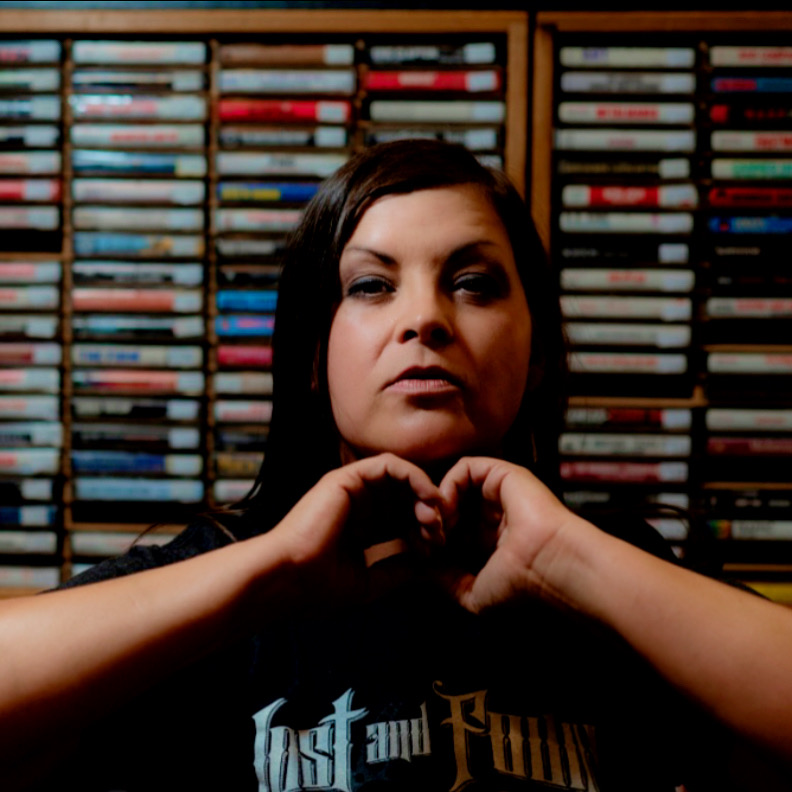
One of those people was Mike Armstrong, musician/producer and co-owner of Lost and Found Records.
“When I was a kid, Lost and Found Records is where I hung out,” says Brady. “I found a new family with Mike and reconnected with people I knew as a kid.”
The next member of the new family was drummer Andrew Bryant, of the bands Beare, Evil Twin and several others. Both he and Armstrong were enthusiastic about Brady’s songs and about getting a new album out. When they began recording at Armstrong’s Vibe City studio, there was no rush. Brady wanted to get it right.
Brady didn’t want to make an album that was designed to fit into any certain category. Fans might have expected her to stick within the increasingly confining boundaries of Americana, but she was determined to just go in and give the songs what they demanded. She listened to suggestions from her bandmates and trusted her gut.
While the album sounds cohesive, there is an array of styles and influences to be heard on “First Second Chance.”
Brady says it was Armstrong who suggested putting a 12-string electric guitar on the song “Thankful,” which recalls the sound of The Byrds – with Brady even paying overt homage with the “dee-dee-dee” refrain borrowed from the group’s version of Bob Dylan’s “Chimes of Freedom.”
“Blueberry” adds a little funk to the mix. The homey melody of “My Favorite Dream” has an almost Stephen Foster parlor song feel to it, complete with strings. And then there are the rockers, including “I Break Things” and the opener “Best of a Bad Situation,” a style for which Brady’s sturdy voice seems particularly well-suited.
“I was able to just go in and make art,” she says. “This is more indie rock. We need a fresh sound. We need something new. Even if this doesn’t hit, I made something new.”
Brady made something new, but she also made something that’s built to last.
“Peach Blossom Youth,” the title of Mic Harrison and the High Score’s new album, sounds like it would be a happy number. However, the title, which references the disc’s final track “Picnic at Shiloh,” actually refers to something very, very dark.
On April 7, 1862, during the early morning after the first day of the Civil War battle of Shiloh in West Tennessee, there was a frost that made the blossoms on the peach trees fall. When the sun rose, the dead and dying young men on the battlefield were covered with fallen peach blossoms.
Harrison says this was the same place where he spent many happy times as a child with his family picnicking and having family reunions. Back then, he had no knowledge of the dark history of the place where he was having fun. As an adult history buff, Harrison recognizes the strange dichotomy and finds it a little eerie.
Harrison has been writing songs since he was a high school student in Bradford, Tennessee. “Even early on, I hardly ever wrote songs about girls and all that,” he says. “I wrote about life, history … that stuff.”
I first met Harrison when he moved to Knoxville in the 1990s to join proto-Americana act The V-Roys, which featured Scott Miller, Jeff Bills and Paxton Sellers. When The V-Roys disbanded, Harrison co-founded The Faults and later joined Knoxville-based power-pop favorites Superdrag before recording his solo album “Pallbearer’s Shoes.” In the early 2000s, Harrison joined forces with the already-established High Score (featuring Faults member Robbie Trosper). The band now consists of guitarists Trosper and Kevin Abernathy, bassist Vance Hillard and drummer Mark Dunn. The group, which experienced a couple of member changes over the years, has performed high-profile gigs at Bonnaroo, Rhythm N’ Blooms, and The Easyrider Rodeo, along with some national tours everywhere from large concert halls to little honky-tonks. And through that 20-year collaboration, the band has released a stack of excellent albums.
Harrison considers this new one his best-sounding, and it’s hard not to agree. Producer Eric Ambel (a veteran of the bands The Del-Lords, The Yayhoos and Joan Jett and the Blackhearts) was enlisted at producer and adds the same smarts and polish as he did on albums for The Backsliders and Nils Lofgrin.
Harrison’s best songs tend to be ones that draw from real-life experiences, and “Peach Blossom Youth” features plenty. “A lot of these songs are very personal,” he says. “It could be a book.”
That it could. Nearly all of the songs are about real people – from a West Tennessee character named Bobby Jack, who inspired “Scrap Iron Man,” to a Mexican-American War soldier in the song “Dallas Sutton.”
“Lose You Over This” was written after a family member’s suicide attempt. “Keep Drivin’” was inspired by a beloved niece being kicked out of church because she is gay. “Old Man” is about Harrison’s late father, who died of Alzheimer’s disease.
Yet all of these songs are catchy enough to have you humming or singing along. You usually only catch their darkness and depth the second or third time through.
And then there’s that final track that sounds so upbeat and nostalgic … and then you dig a little deeper. That’s the kind of thing that sticks with you, teaches you something and keeps you coming back.
Wayne Bledsoe is a longtime Knoxville music writer and is the co-host of the podcast “How We Heard It,” available on all major podcast outlets.