An interview with Craig Smith, playwright of ‘Reunion Under the Moon,’ ‘The Good Son,’ ‘Birds on the Bat,’ ”Til Death Do Us Part’ and ‘Theatre of Operations’
By Harrison Young
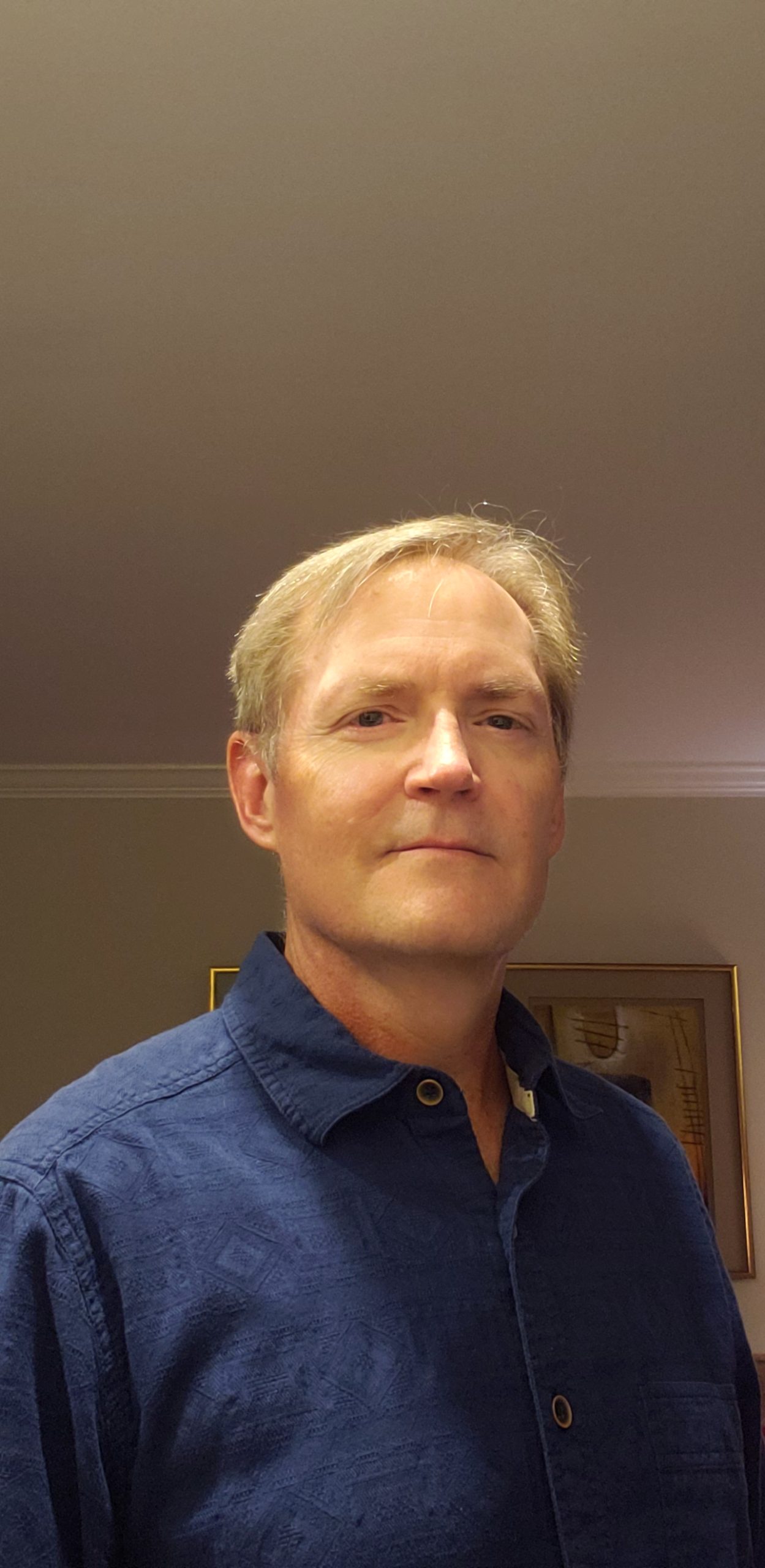
Craig Smith is a playwright, actor and panel judge who has quietly been one of the most influential people in Knoxville’s play scene. I first trained with Smith in 2008 when we took a 10-minute playwriting class by Kali Meister. Soon afterward, we both had the scenes we created there turn into full-length premieres with the Tennessee Stage Company’s New Play Festival. His play that premiered from that workshop was “The Good Son” in 2012, and he’s returning to the festival again in January 2026 with a table reading of his new play “Theatre of Operations.”
BLANK Newspaper: What was the earliest thing that you remember writing?
Craig Smith: Probably an essay I wrote for an English class in high school. I don’t remember what it was about, but I remember really pouring my heart into it and feeling good about it.
BN: When did you first decide you wanted to be a writer?
CS: I’m not sure I’ve ever decided I want to be a writer. In truth, I write when the spirit moves me. When actively working on a project, I write regularly, but not necessarily every day. I also go long periods of time when I don’t write at all. My current play is the first full-length I’ve written since 2021. I struggle with calling myself a writer.
BN: Who’s a playwright that inspired the way you write?
CS: I’ve always been drawn to the great post-World War II playwrights such as Arthur Miller, Tennessee Williams and William Inge.
BN: What was your first victory when you began as a playwright?
CS: I got some nice, thoughtful rejection letters when I first started submitting my plays that encouraged me to continue.
BN: How do you overcome the times you have writer’s block?
CS: The short answer is I wait for it to go away! Honestly, I don’t think I’ve ever experienced writer’s block when actively engaged in work on a specific play. My problem comes between plays coming up with new ideas, but I don’t really consider that writer’s block.
BN: What advice would you give first-time playwrights?
CS: Just write – advice I need to take myself. The first draft is not the final draft. Rewriting is extremely important, and the part I most enjoy.
BN: A lot of people think of the imaginative side of writing more than the analytical side of rewriting. What is it about rewriting that you enjoy so much?
CS: I guess I don’t think of it in those terms. To me, the rewriting is just as imaginative as the first draft, which I think of as the foundation of the play. I not only polish the dialogue and take out what isn’t necessary or doesn’t work – I also flesh out ideas, add nuance, look for ways to add depth to the characters and make them more interesting, etc. I often feel just as – if not more – creative in the rewriting as I do in the initial writing.
BN: What’s the hardest thing you’ve ever written?
CS: My play “Til Death Do Us Part,” which explored the death of my wife and its aftermath.
BN: “‘Til Death Do Us Part” received a stage reading by the Wordplayers. For something so sensitive and personal, what made you decide theater was the way for you to share this story?
CS: It’s the only way I have of sharing the story. I always knew I would write about it, but it took several years before I was able to fully address it – that is, get beyond the personal and treat it like any other play as much as possible.
BN: “Theatre of Operations” is your latest play. What’s it about?
CS: It’s about a family of three generations of military combat veterans: World War II, Vietnam and Iraq and Afghanistan. They gather on the 75th anniversary of D-Day, along with two other family members: a Vietnam War protester and one who didn’t serve in the military. Sparks fly, and lively conversation ensues.
BN: We shared many panels and table readings together with the Tennessee Stage Company’s New Play Festival. What’s a common mistake you see in plays when they are being submitted to festivals like this?
CS: Too many feel like they’re written for TV or movies: lots of short scenes, too many different settings, technical requirements too difficult for all but the most highly resourced theaters.
BN: You act as well as write. What things are important for you when writing for actors?
CS: I just try to write interesting characters. I don’t ever want to include characters in my plays that good actors wouldn’t want to play. Contrary to the popular saying, there are small parts, and I try to avoid writing them.
BN: What are you writing nowadays?
CS: Not sure. I’m considering going back to the first play I ever wrote – so long ago that I wrote it by hand, and then on an electric typewriter. I don’t even have a digital copy of it! I’m curious to see what my much older self thinks of it and if it’s worth trying to do something with.
Smith’s table reading of his play “Theatre of Operations” can be seen with the Tennessee Stage Company’s New Play Festival at the Clarence Brown Lab Theatre on Tuesday, Jan. 6.
harrison@blanknews.com