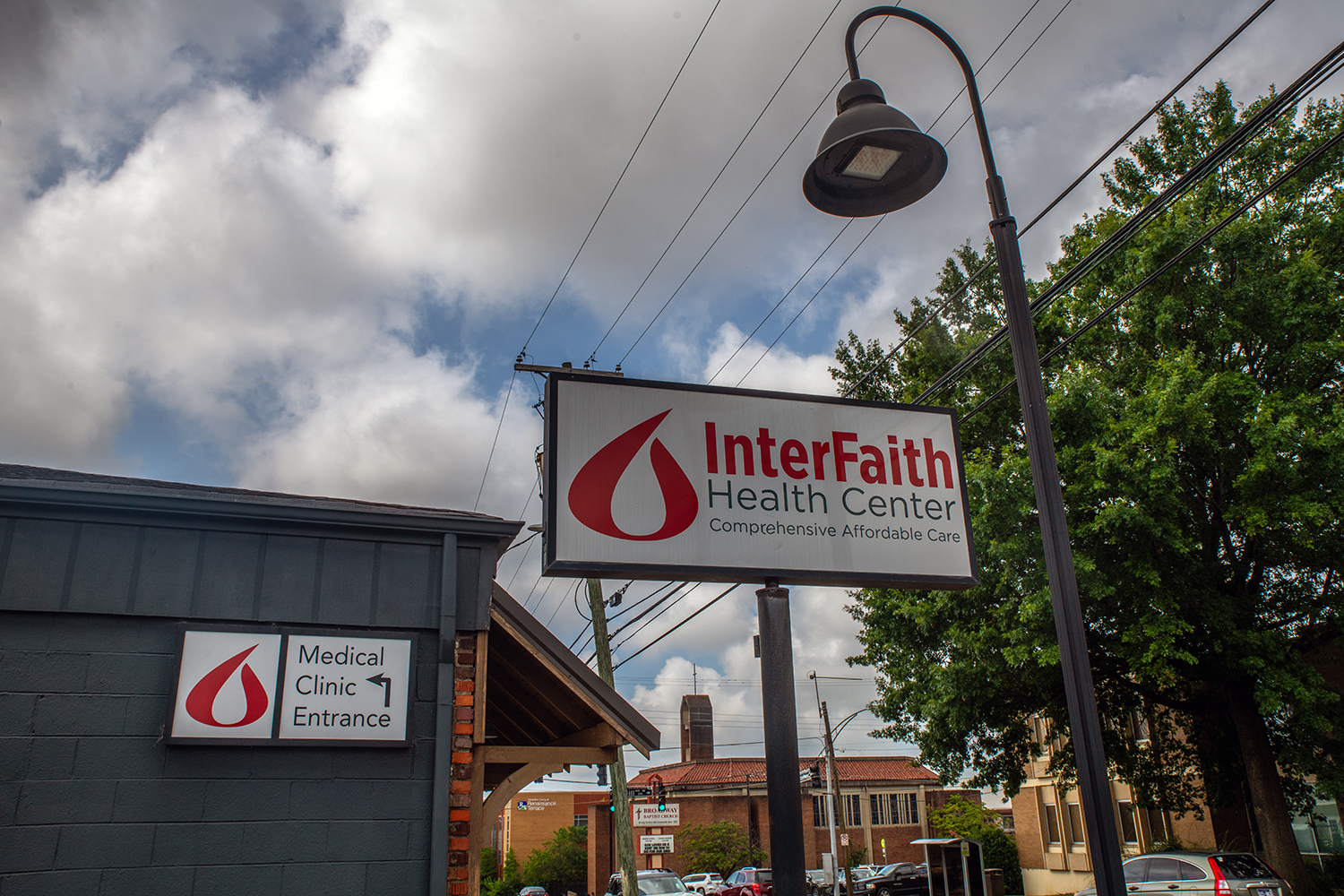
InterFaith Health Center continues its mission of caring for a community
By Steve Wildsmith
An independent politician from Vermont and a nondescript clinic tucked off of Broadway in Knoxville’s historic Fourth and Gill neighborhood may not seem, on the surface at least, to have a lot in common.
Bernie Sanders, after all, hasn’t been to Knoxville since 2015 – and even then, he visited the other Knoxville, the city of roughly 7,500 people in Iowa. No one can quite remember whether he’s ever been through East Tennessee during one of his several campaigns for president, but as an advocate for equality in all walks of life, he once made a statement about health care that seems foundational to the work of Knoxville’s InterFaith Health Center.
“Healthcare must be recognized as a right, not a privilege,” Sanders wrote in an opinion piece for the British newspaper The Guardian back in 2013. “Every man, woman and child in our country should be able to access the health care they need regardless of their income.”
For the providers, administrators and support personnel at InterFaith, such a philosophy informs everything they do. At its heart, InterFaith is designed to provide “accessible, affordable and quality health care to the working uninsured or underserved, primarily through the support of individuals, the religious, health care and business communities,” according to the center’s website. “These services are provided within the capacity of the Center regardless of race, sex, creed, age, religion, national origin or ability to pay.”
And they’re provided, says director of development and public relations Beth Roskelly, by a determined group of individuals who show up every day and work to make Knoxvillians who come through the door, many of them with heads hanging low in embarrassment, feel validated and valued and to ensure they leave feeling better about the illnesses that plague them.
“I think it’s the job of people in our community to help others, and I think the only way it can be solved is by working to keep people healthy,” Roskelly says. “I think that’s more important than ever because people have to work in order to survive, and if they have to work, they have to be healthy. Helping them be healthy and stay healthy means they’ll be good parents, good employees, good members of the community. So if you look at it that way, InterFaith is needed now more than ever.”
Changing lives, saving lives
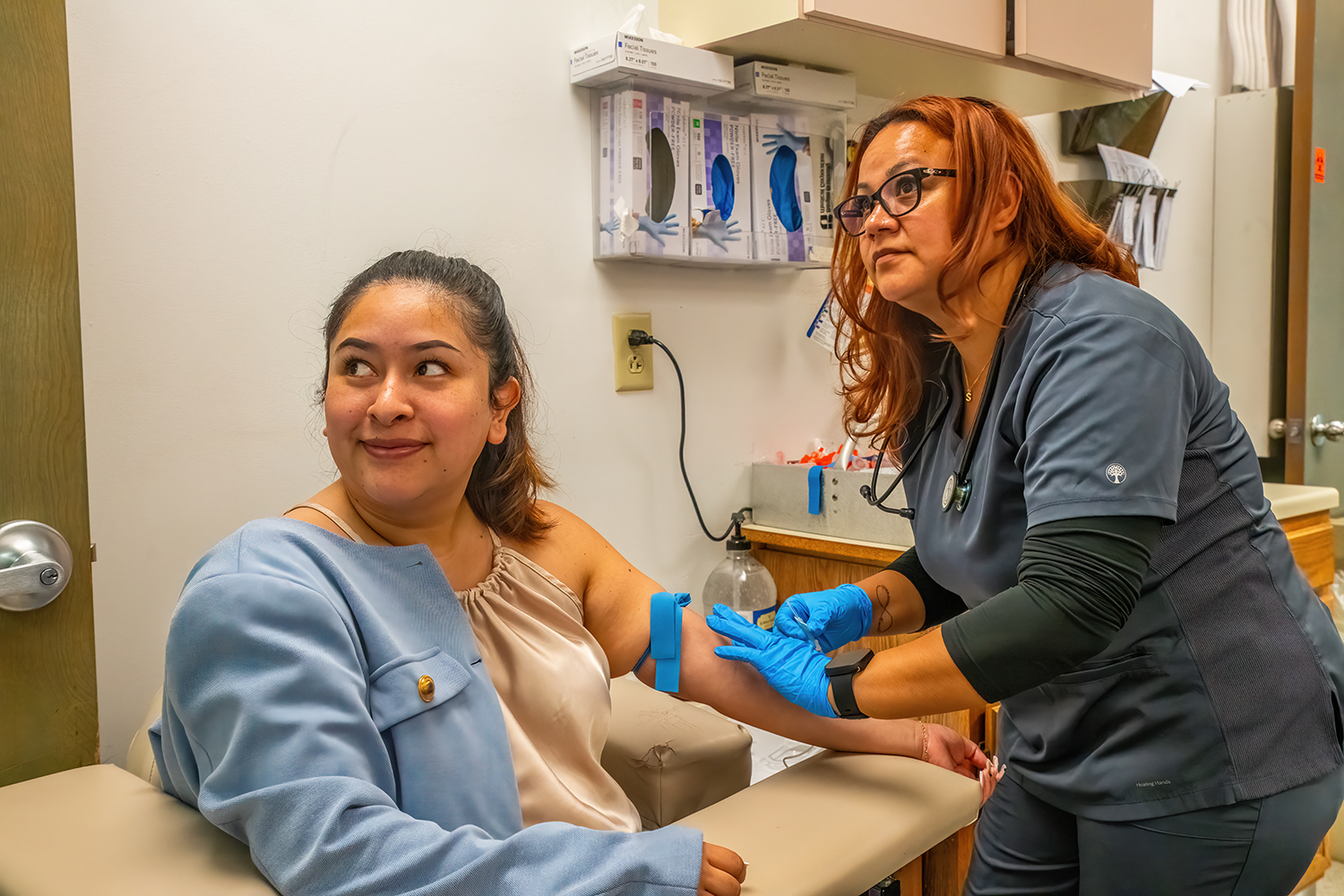
To be fair, it’s hard to think of a time when there wasn’t a need for the clinic, which provides everything from regular health screenings, dental exams and other preventative care to highly specialized treatment through on-site physical therapy or referrals to oncologists and other providers that maintain an agreement to charge InterFaith patients via InterFaith rates.
“Our patients have access to any kind of health care they need,” Roskelly says. “They have access to surgeons to operating rooms, to so many things. We have specialists who come on site a couple of times a month – endocrinologists, dermatologists, gynecologists, dieticians – and it’s just incredible health care. We can help folks get an MRI, for example, for $100.”
Even then, she adds, that’s sometimes too much. The majority of the clinic’s patients, she says, are uninsured, but that doesn’t necessarily mean they’re homeless. Unfortunately, the clinic is often stereotyped as a facility that caters specifically to the indigent, but that’s wildly inaccurate, Roskelly points out. Yes, some of the patients who use InterFaith for healthcare are unhoused, but that doesn’t mean they’re sleeping in neighborhood alleys or trying to scam narcotics from the on-site pharmaceutical dispensary. (InterFaith doesn’t dispense opioids, anyway.)
“It’s a misconception that has a lot to do with our location, I think,” Roskelly says. “Yes, there are a lot of unhoused individuals who walk up and down the streets in this neighborhood, but the majority of our patients are working individuals who are anywhere from 18 to 65. Sometimes, they’re families with only one person in the home who can work. Some of them are working in the restaurant industry, in food services, in retail, even in health care, and even for nonprofits.
“Any small business you can think of that may not be able to afford insurance for their employees fits our patient demographic. The average household income of our patients is about $31,000 a year, and the average family size is 2.3 individuals per household. We serve a lot of people who own their own businesses, like construction or lawn care, and just can’t afford to provide their employees with healthcare.”
And given the health care indexes for Knox County, that’s not something many families can afford to do without. More than 10% of the county population is uninsured, according to annual data compiled by U.S. News & World Report, and while the percentage of Knox County residents in “poor or fair general health” is lower than the national average (16.6% vs. 17.7%), the life expectancy in Knox County is also lower (74.9 vs. 75.8).
Another alarming statistic via U.S. News & World Report: The number of “deaths of despair” – those attributed to suicide, drug overdose or alcohol-related liver disease – is almost twice the national average, with 109.2 deaths per 100,000 in Knox County versus 63.5 deaths per 100,000 in the United States. In 2017, PhysiciansWeekly.com ranked Knoxville at No. 10 on its list of “Fattest Cities in America,” and a WalletHub survey released earlier this year ranked Knoxville way down at No. 114 on its list of “Healthiest Places to Live in the U.S.”
Despite the ever-present need for health care given those risk factors and complications, coverage for those who need it the most is hard to come by. In recent years, the plight of Knoxville residents in that government “gray area” – making just enough income to disqualify them for Medicare, but not enough to purchase health insurance – has been a familiar worry for legislators and providers alike, which makes InterFaith more indispensable than ever.
“When you talk to the patients who come here about the difference we’ve made for them, you begin to see that it’s life-altering,” Roskelly says. “That’s what makes the difference to us. That’s what pushes all of the noise into the background, and that’s what makes it worth it. That’s how it works around here.
“We try to have compassion for our patients and for each other. We’re trying to be somebody’s relief, and we try to work as a team to make it happen, so that when they leave here, they feel valued and like somebody cared about what they have to say. We never, ever want them to feel like they got charity care.”
Meaning, she adds, short visits, quick diagnoses and little to no interaction with providers who apply an assembly-line, shotgun-style approach to the care of those without the money to normally afford their time. At InterFaith, Roskelly says, the reward for those employed there is so much more than a simple paycheck.
“People working here care more than at a doctor’s office,” she says. “A couple of our nurse practitioners have been here so long that they know everything about our regular patients and their lives. They see the positive, which is the fact that this is changing people’s lives and saving people’s lives.”
Ease of access is paramount
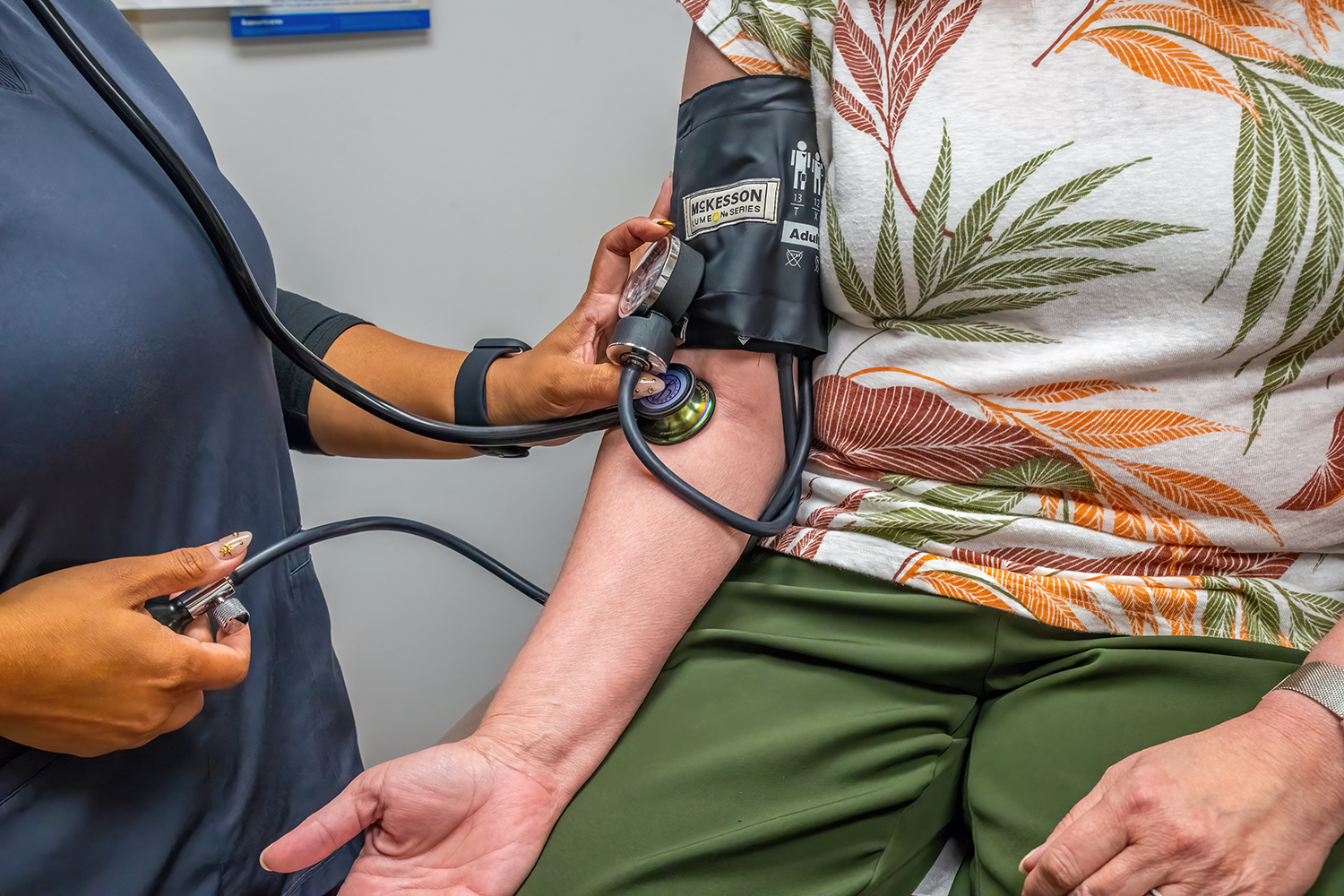
To be clear: It’s better to change than it is to save, Roskelly points out. Yes, every cured illness, treated disease and bandaged injury is a win, but helping patients cultivate a lifestyle that prevents those things before they occur is the ultimate goal of getting regular patients into the system.
“Preventative is where we want to be,” she says. “Nobody wants to come in here and find out they have cancer because they’ve never had a colonoscopy or a mammogram. I mean, I’m a [breast] cancer survivor, and even though it was scary, I knew I wasn’t going to lose my house. I knew my kids were going to be OK because I had insurance.
“But the fact is, most people are one medical emergency away from being homeless. I mean, can you imagine having cancer and not being able to get treated for it? Not knowing where to turn?”
It’s the helplessness and hopelessness that gets to Roskelly and her InterFaith colleagues. It feels monumentally unfair, which gets back to that Bernie Sanders quote. Health care, Roskelly believes, is a human right. Yes, doctor-patient interactions are transactional by nature, but the costs stopped being fair years ago. And while InterFaith isn’t exactly set up to barter for care, they do have relatively easy and painless pathways to get into the system. First up: Simply call the InterFaith office.
“We have certain criteria you must meet to become a patient: You have to be working, or someone in your family has to be; you can’t have any insurance at all, not even TennCare; and you have to provide documentation with your identification, like your Social Security number, your driver’s license, things like that,” Roskelly says. “It’s an application process, but if you fit into the income parameters, then you’re in.”
To determine whether they qualify, individuals can multiply the federal poverty line by 2.5. That’s the threshold for InterFaith assistance, Roskelly says: an annual income of 250% of the federal poverty line. For example, the 2025 Federal Poverty Level (FPL) in the United States is $15,650 per person, increased by $5,500 for each additional person in the household. Therefore, the threshold for InterFaith assistance is $39,125 for an individual or $80,375 for a family of four.
“If you make $300,000 per year and just don’t want to pay for health insurance, this isn’t the place for you,” she adds.
After patients are accepted into the system through the clinic’s support staff conducting pre-visit screenings, the first appointment is scheduled within two weeks. Upon the first visit, patients receive a full physical examination, laboratory work and an EKG “to get the full picture of what’s going on so we can figure out what direction they need to go in,” Roskelly says.
Because the system does take time to navigate, it’s important for those who wish to access it to do so before they get sick, she adds. That, she points out, is preventative care – and it gives the InterFaith team the time they need to be thorough. From that initial visit, patients may receive referrals to the dental clinic (the only component of InterFaith care not located in the Gill Street clinic), to mental health therapy, to drug and alcohol treatment, to any number of specialists in the area who charge those referrals with honored InterFaith prices … or even for free.
Wraparound care is included: While there’s not a pharmacy on site, the clinic does maintain a large supply of maintenance medication for conditions like high blood pressure, diabetes and other cardio-pulmonary ailments that often require routine daily pharmaceuticals. (Again, the clinic has no narcotics on site.) In addition, clients can obtain basic toiletries, health care and baby care products, which the clinic keeps stocked in a part of the building that resembles a corporate mailroom.
“We try to break down the barriers they might normally encounter in receiving health care,” Roskelly says. “Do they need transportation here? We can help with that. Do they need a translator? We can provide that, too. Any barriers that might exist, we try to overcome them to make that access easier for our patients.
“We like to call it compassionate health care because it’s compassionate in every way to meet patients where they are. You never know what’s going on in a patient’s life, but if you can meet them with compassion, it’s the greatest feeling in the world.”
A bigger building on the horizon
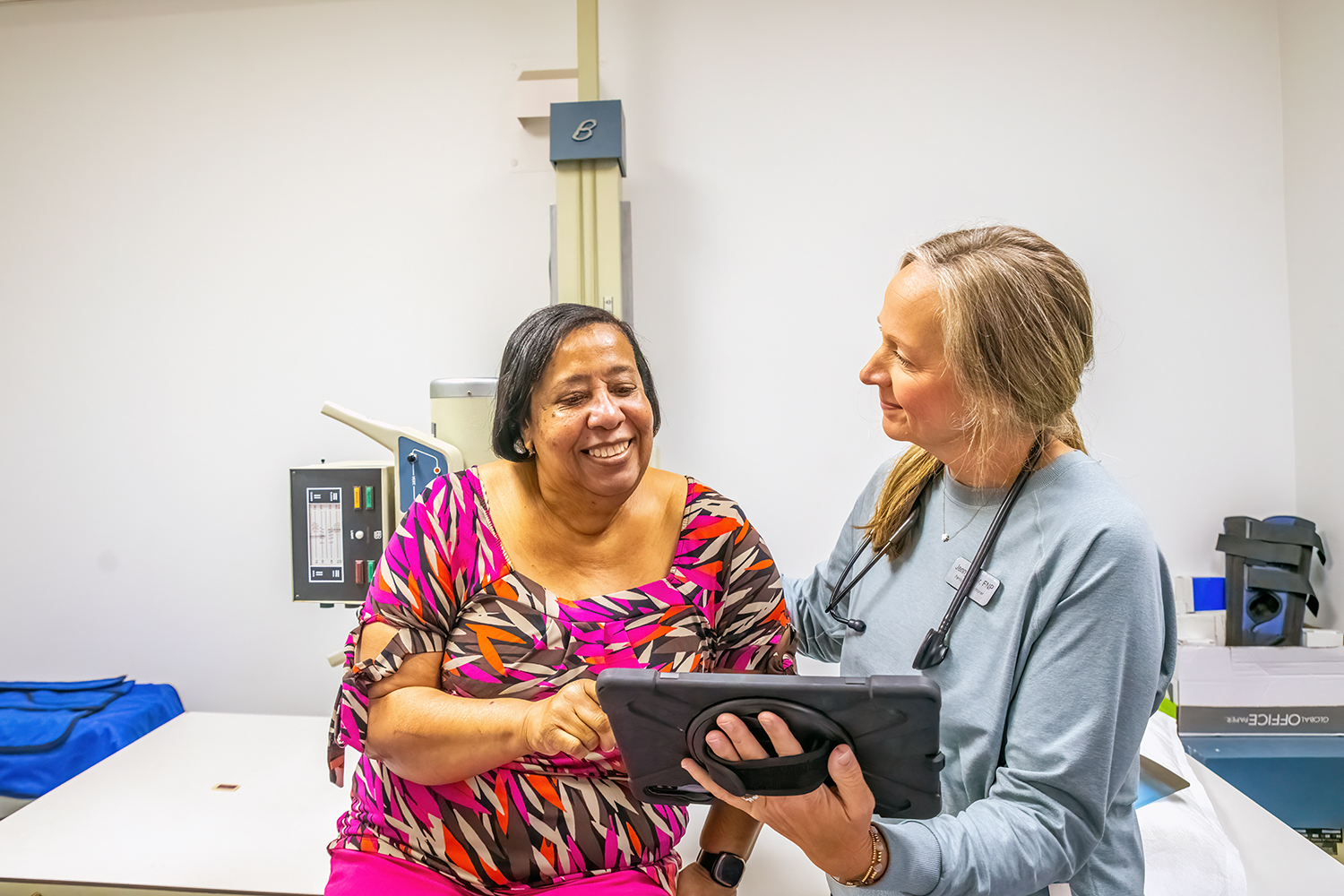
Providing that compassionate care stands to get even better this fall, when InterFaith is slated to move to Middlebrook Pike into a building formerly owned by the debt collection agency Wakefield and Associates. While the move is away from the inner-city neighborhoods where it’s operated since doors opened in 1991, growth indicators point to a population increase that’s moving westward, Roskelly says.
The clinic’s origins date farther back than that, when Mary Leslie Simpson Dotson saw a need to provide care to individuals who fall through the cracks between low- to zero-income households that qualify for Medicaid and upper-income households that benefit from employer-provided health plans. In 1989, Dotson organized a meeting of community leaders from a variety of disciplines, from religious to civic to business to social service organizations that formed a 12-member steering committee, the goal of which was to guide the development of a primary health care clinic.
Because of the overwhelming support from various congregations and denominations, the name was chosen to represent the collaborative spirit of a cross-religious desire to provide such care, but despite that, the clinic is not faith-based, Roskelly adds. (For example, the clinic does write prescriptions for birth control, but more often than not refers patients to the Knox County Health Department, which provides contraceptives for free.)
The new facility, Roskelly says, was funded with a $10 million capital campaign that succeeded in just 13 months. When the new location was announced last September, InterFaith had already raised $8 million, most of it from private donors. That’s a far cry from the $250,000 one-year startup grant the coalition that founded InterFaith in 1990 to purchase the original clinic, renovations for which were paid for by a loan assumed by Baptist Hospital. Since then, InterFaith has provided “more than 400,000 patient encounters to over 24,000 hardworking East Tennesseans,” according to the clinic’s website.
“The new space will allow us to double our patient served in the next two years, and triple the number served in the next five years,” Roskelly says. “We’re moving from 14,000 cumulative square feet of space to all of our services in one location that’s 23,000 square feet, so we have room there for future programs, as well. There are some things we’re always trying to do, because when we see where the cracks are, our mission is to fill those cracks.
“On top of that, one reason that we wanted to move is that we wanted a space to reflect the quality of health care we provide, and to provide it to our patients with dignity. We think they’re going to love it, because it’s a clean, nice, bright space.”
Community support for community care
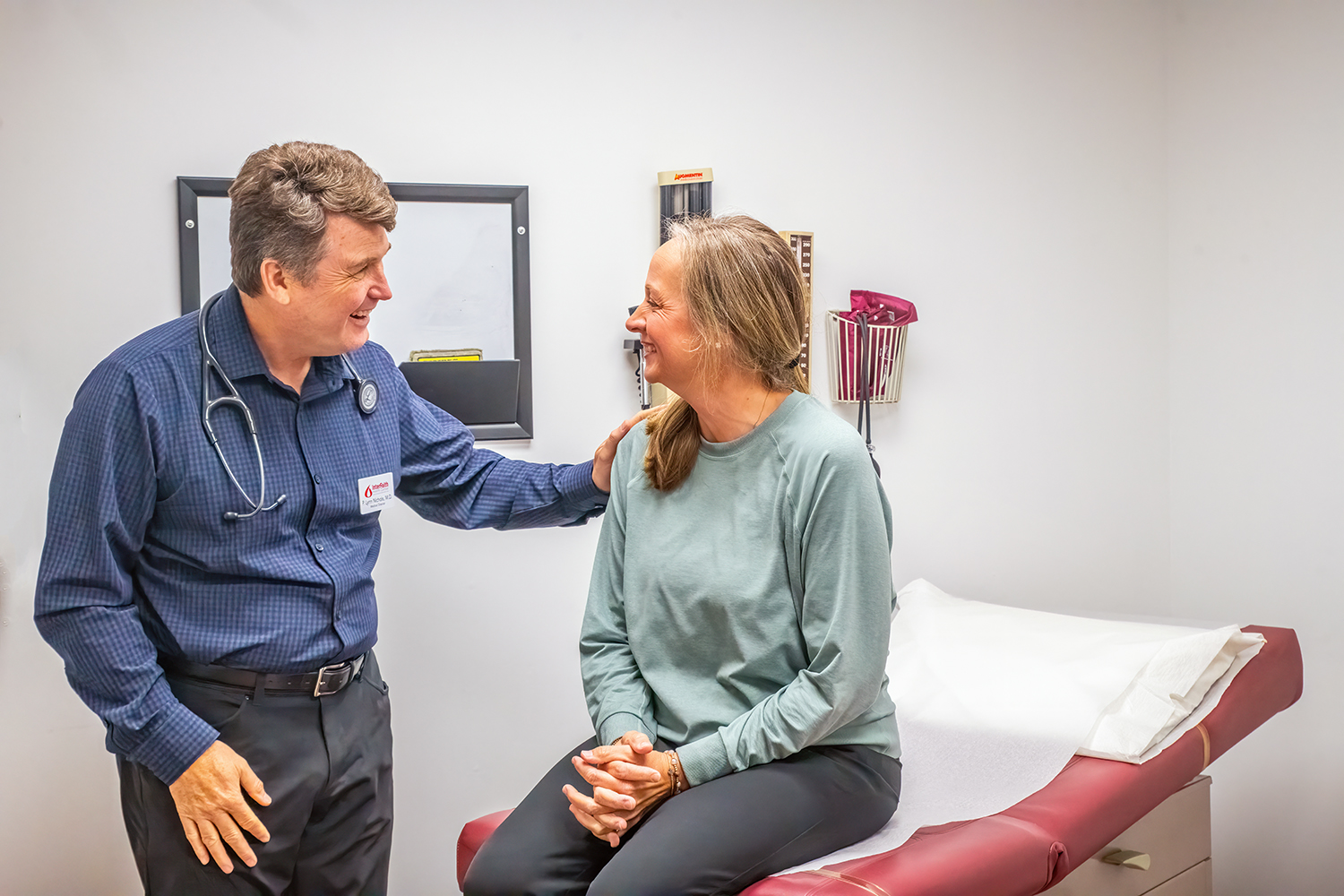
InterFaith has long counted among its allies politicians who recognize the good it does and advocate on its behalf – like Dr. Richard Briggs, a state senator who frequently asks InterFaith administrators what’s missing in the health care landscape and how he can help. Most of the funding, however, comes through corporate and private donations, fundraisers and social grants.
While InterFaith is among the partners that make up the Tennessee Department of Health’s Safety Net Program, administrators prefer to rely more on donors and fundraising efforts than grant money, which comes and goes depending on political circumstances. Case in point: Federal DOGE cuts to the Centers for Disease Control took a bite out of some of InterFaith’s funding, but the organization was able to find replacement money, Roskelly says.
Just as word of mouth helps potential patients discover InterFaith, the clinic’s success has also spread among philanthropic groups that seek to reward organizations making a difference in their communities – like the nationally based Hearst Foundations, which work “in the fields of culture, education, health and social services,” according to the Hearst website. Earlier this year, the foundations awarded InterFaith a $125,000 grant that funded two dental rooms in the new space, Roskelly says.
“We have a strong base of monthly donors that make up the Ogden Society – named for our first medical director – and we put together fundraisers like Sweets to the Sweet,” which allow donors, for $50, to select a recipient to receive a card and a bundlet from Nothing Bundt Cakes as a Valentine’s Day gift, Roskelly adds. One recent donor ordered 30 for 30 residents of a Knoxville area nursing home and declared it “the best money I’ve ever spent,” Roskelly recalls.
“He then told us that if we ever needed anything, that we should call him … and that we’d be damn fools if we didn’t!” she adds with a laugh.
That, she points out, gets to the very heart of what the InterFaith Health Center is all about: service work, one patient at a time. Yes, health care workers provide the care, and support staff handles paperwork, but it’s the entire InterFaith community – from the elderly widow who drops $20 in a donation bucket to the successful CEO who writes a check with a lot of zeros on it – that keeps the doors open and InterFaith as an East Tennessee godsend.
“It’s why InterFaith was founded: It was a community of churches of different denominations who came together and said, ‘This needs to happen,’” Roskelly says. “It was founded in the concept of community and taking care of each other. We work really hard to provide an excellent level of care and to make a difference in somebody’s life that makes their quality of life better, and we rely on friends and neighbors to help with that level of care.
“After all, caring for other people is what we’re put on this earth to do.”