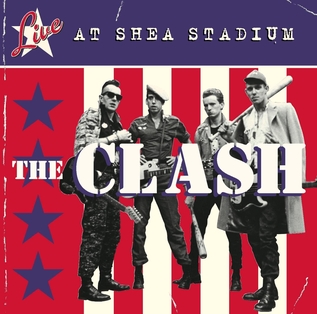
Shea Stadium concert captures punk legends at their best
By Ken Lay
When U2’s The Edge inducted The Clash into the Rock & Roll Hall of Fame, he said that the band made the only music that mattered during its heyday in the late 1970s and early ‘80s.
The English group definitely was an innovator in punk music, and many of its songs remain relevant today. It also was magnificent onstage. And in 1982, the band embarked on a tour with The Who that could have represented a changing of the guard in rock.
The Clash performed as the opening act for several shows on the farewell tour of Pete Townshend, Roger Daltrey and the gang. Conversely, The Clash was enjoying the height of its commercial success and was on the road in support of “Combat Rock,” a seminal work that included “Rock the Casbah” and “Should I Stay or Should I Go.”
On Oct. 13, 1982, the two groups played a concert at New York’s Shea Stadium, and the opening act was at its best as it performed renditions of classic songs including those two big hits from “Combat Rock,” the last that would feature frontman Joe Strummer and lead guitarist Mick Jones. Exuding undeniable onstage chemistry and the innovation that made the group one of the most relevant musical forces of its day, its set included “I Fought the Law,” “Train in Vain,” “London Calling” and “Guns of Brixton” among others.
Released in 2008, six years after Strummer’s death, “Live at Shea Stadium” stands as a valuable piece of rock history. Although original reviews from Who fans were tepid at best, revisionism has meant the show and its documentation are now seen in a proper light. While the set captured The Clash at its best, however, things were starting to crumble behind the scenes.
Drummer Topper Headon had been sacked earlier in the year due to heroin use, and he was replaced by the group’s original drummer, Terry Chimes. And Strummer would later fire Jones in a move that spelled doom for the band. Strummer would reincarnate The Clash in 1985 for one more album, “Cut the Crap,” but it was a colossal disappointment that would leave a scar on the band’s legacy. Strummer was the only founding member to actually appear on the effort; bassist Paul Simonon was credited but didn’t contribute.
The Shea Stadium show could’ve propelled The Clash to even greater heights, but that was not to be. “Live at Shea Stadium” documents one of rock’s most commanding live performances; however, it also serves as a sad reminder of what might have been.