From power chords to community connection, Knoxville’s DIY spirit lives on at The Birdhouse
By Steve Wildsmith
If the age of a tree lies in its rings, The Birdhouse’s story lives in its reverberations – in every feedback squeal, blast beat and half-screamed lyric that once shook its old bones. Long before it became a gathering place for neighbors and nonprofits, the house was a sanctuary for noise, for art and for the messy beauty of creation.
Back then, the floors trembled with the energy of Knoxville’s DIY punk scene. Bands practiced on the first floor, their sound bleeding through open windows into the surrounding historic Fourth and Gill neighborhood. Back then, Birdhouse was never just a house – it was a proving ground, a clubhouse, a space where anyone with a guitar, a notebook or a cause could find a stage. Its heartbeat was irregular but strong, pulsing with every new voice that dared to make itself heard.
These days, the amplifiers have quieted some, but The Birdhouse is no less alive. Now a nonprofit community center, it hums with a different kind of rhythm: the cadence of conversation, the rustle of shared meals and the buzz of volunteers and visitors who treat it like a second home. Art workshops, neighborhood meetings, mutual aid events, poetry nights – each adds a new layer to the home’s evolving harmony.
For those who remember its louder years, the transformation feels less like a reinvention and more like a natural progression. The Birdhouse has always been about connection – first through music, now through community. The instruments may have changed, but the melody remains the same. It’s a space where people come together to build something meaningful – one note, one neighbor, one story at a time.
Historic beginnings
These days, Birdhouse Neighborhood Center is a community hotspot owned by the residents who live around it. Catherine Abbott, the center’s coordinator, had recently relocated back to Knoxville when she heard about the job opening through a neighborhood email list in the summer of 2022. In 2019, she had moved back to East Tennessee from the D.C. area, where she had worked for a large nonprofit, and plugging into The Birdhouse was one of the first things she did after finding a home in Fourth and Gill.
“I remembered The Birdhouse as a community center and a place for a lot of like-minded individuals to come together in this fun neighborhood that just had a lot of potential,” Abbott says. “I remember a lot of music events, bicycle meetups and all different kinds of social, crafty events at The Birdhouse 15 years ago.
“When I moved back to this neighborhood, I think my first involvement was a workday that volunteers had set up as a way to help out with the building and grounds. I went down and helped with planting plants, and that just reengaged me.”
Fresh off the imposed isolation of the pandemic, the opportunity to get out of the house and engage with people again – as well as bring her nonprofit background to work for The Birdhouse – seemed ideal. She applied, got the job and stepped right into the center of controversy among members of the Fourth and Gill neighborhood organization over whether to keep the building or sell it.
The house was initially constructed for “Colonel” Silas T. Powers, a prominent Knoxville resident who served as president of the East Tennessee Insurance Company and the head of a clothing store, who never stepped foot inside. On Aug. 22, 1889, the inaugural excursion of the Knoxville, Cumberland Gap and Louisville Railroad left East Tennessee for Middlesboro, Kentucky, with Powers on board and derailed over Flat Creek in Grainger County; he was among several Knoxville dignitaries who perished in the crash. In 1891, his widow Margaret moved into the house, and her son and daughter-in-law would later live in the home, but by 1960, it had ceased to be a private residence and instead, according to a 2022 article by “Inside of Knoxville” blogger Alan Sims, was owned by Gene Monday, a member of St. James Episcopal Church who allowed four area houses of worship to run youth programs out of the building as the North Knoxville Fellowship for Community Service.
The construction of I-40, the gas crisis of the 1970s and the general urban decay that blighted many old neighborhoods that lost their grandeur of a century earlier led to something of an existential crisis for Fourth and Gill. An early community organization by neighborhood mothers to better the lives of their families led to the establishment of the Fourth and Gill Neighborhood Organization, and in 1973 Monday donated the building to it.
In the years to come, organizers would organize youth programs, hold community meetings and even publish a neighborhood newspaper, The Gazette. The focus on quality of housing and tenant-rights issues led to the creation of the Inner City Neighborhood Coalition, and thanks to community development grants in the late 1970s, sidewalks, streetlights and more helped improve the area around the Birdhouse.
From a house to The Birdhouse
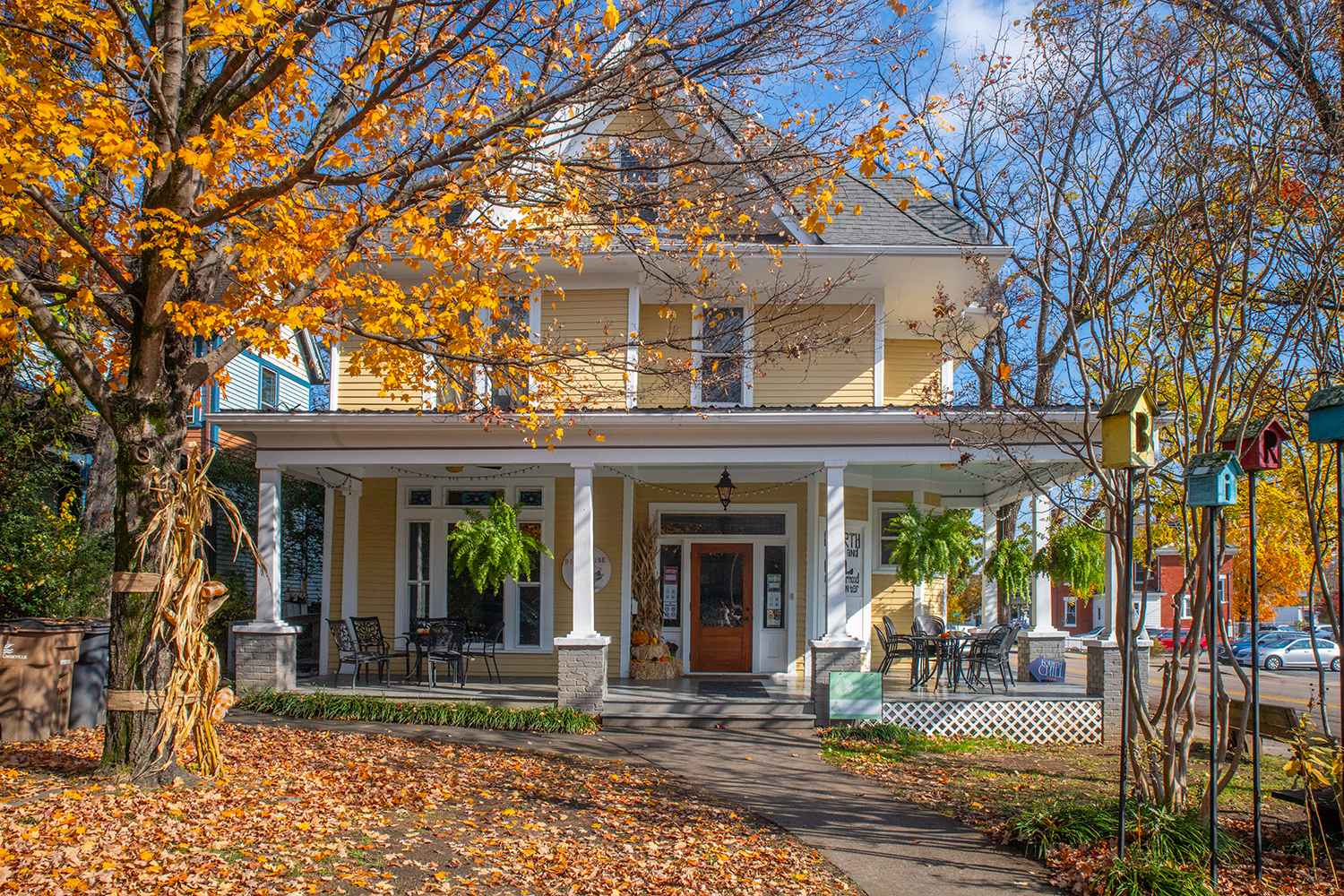
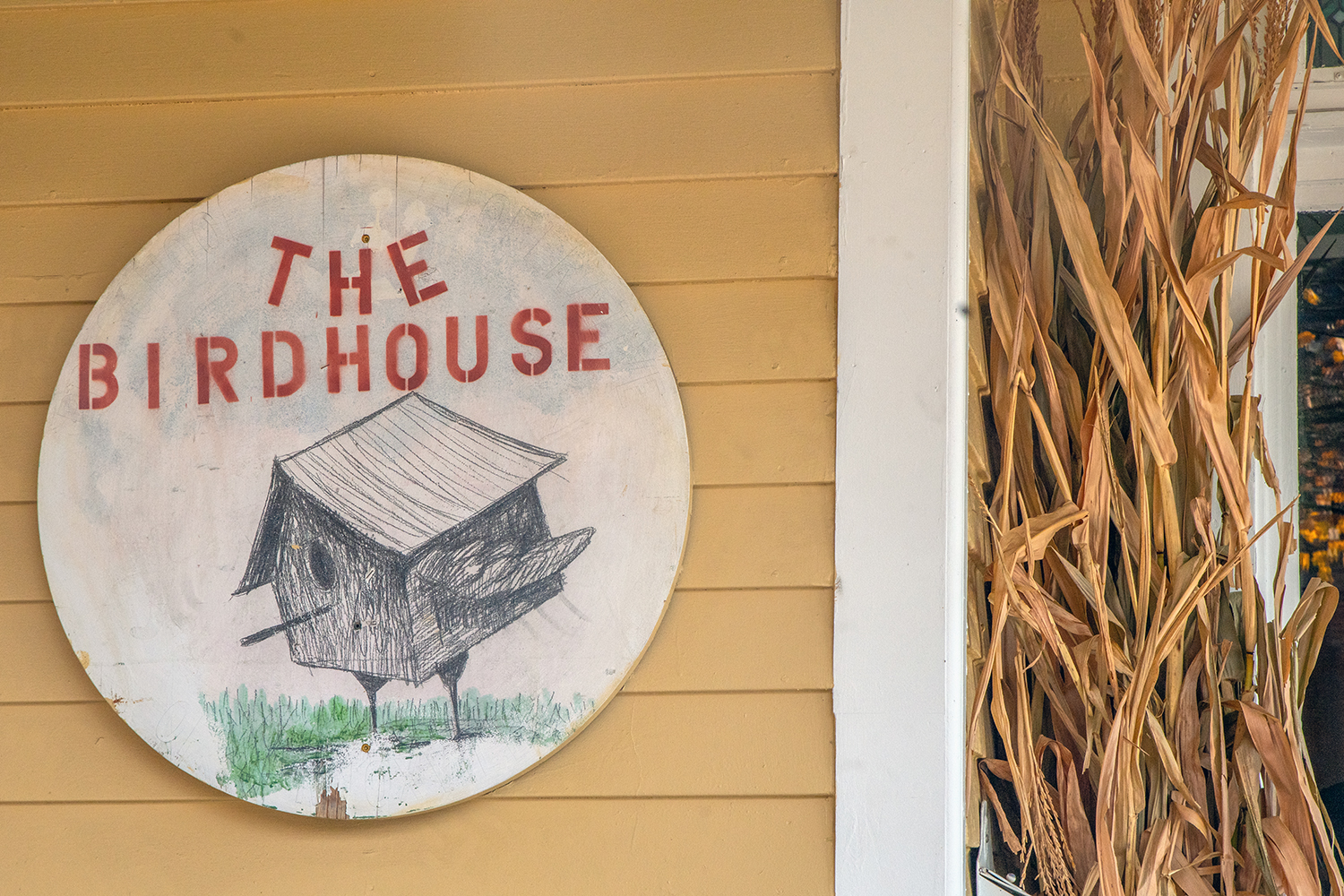
No one’s quite sure when it became a gathering spot for local bands. However, by the 1990s, the now-defunct independent weekly Metro Pulse would refer to Fourth and Gill as a haven for both young couples looking to rehabilitate dilapidated old homes and itinerant musicians who embraced the dilapidation because it meant cheap rent. As for The Birdhouse, the name itself can be traced directly to a band established by Knoxville hardcore icon Carl Snow.
“Birdhouse was Carl, Rich McCoig and myself,” says Michael Goldman, now a resident of Atlanta, where he holds a respectable career in industrial hygiene and environmental safety. In those days, though, he was part of a growing scene of rockers who took their cues from East Coast punk, West Coast hardcore and New York noise. Goldman spent time in the Estradas with Bob McCluskey and surf-rock outfit the Ray-o-Vacs, and Snow was already considered a scene vet, having founded Koro with David Teague in 1982.
“Bob Jones found the place but bailed on the band early on because we were drinking way too much,” Goldman says. “It was two doors down from a bar, which was trouble. I remember great posters on the walls. I think I was in three different bands that played in there, and I don’t think I ever saw anyone else in the building.
“Birdhouse was loud as hell, but there were no complaints from neighbors that I remember.”
(Birdhouse would go on to release one cassette in 1995; “I’m Your Huckleberry” can be streamed online at soundcloud.com.)
By the time Mic Harrison moved to Knoxville in 1995, The Birdhouse was the commonly accepted nomenclature.
“Carl and Mike were the first ones to call it that, and it just stuck,” he says. “Kind of like ‘the Superdrag house,’ or ‘the V-Roys house,’ and the rest of us always just called it that because of the band. The V-Roys started practicing there in 1997. For me, I played there with the V-Roys, The Faults and then years and years with me and the High Score.
“There was a daycare center there during the day, with all of the children downstairs, and we’d go up and rock out at night. It was like, ‘This is our place!’ Before it was a community center, there were people sleeping in the foyer, or we’d have to run people off the porch. Now, it’s very gentrified, but for a while, it was very funky and very home. We’d get done with practice and go to Sassy Ann’s and have a big time.”
The same year the V-Roys played their final show (except for a 2011 one-off reunion), another titular figure in the Knoxville scene was turned on to The Birdhouse by Scott Carpenter, a member of the Taoist Cowboys: Todd Steed, who established it as a practice space for the band Apelife, a three-piece that included Ed and Matt Richardson.
“In all my illustrious, money-soaked career, it’s the only time we’d had a separate practice space where you could go and pay to rent, and it was great!” Steed recalls. “I like rehearsing in my home, because there’s a refrigerator, but there it was like, ‘There’s no refrigerator – you must create!’ It lets you kind of let loose, because there’s no one in the bedroom trying to sleep.
“It just had a great vibe to it. I remember there was an Iggy Pop poster in there, and just the way he looked at me, it was like he was saying, ‘Don’t give 80%, you wimp!’ Apelife wrote a lot of songs in there. We would go in there and get lost for hours, and we would meet cool people. I love being in Fourth and Gill. I’ve had so many epic, mystical moments in Fourth and Gill.”
It’s little wonder, then, that The Birdhouse was the place where Steed wrote “North Knoxville,” which is as close to an unofficial Fourth and Gill anthem as there ever was: “Thank God for North Knoxville, where this town still looks like itself. / It’s the last place in America ain’t trying to be somewhere’s else …” “North Knoxville” would wind up on the 2002 “Knoxville Tells” record recorded under Todd Steed and the Suns of Phere, and, before that, all of the songs on the Apelife album “Natural Selections” were conceived in The Birdhouse.
A broader purpose
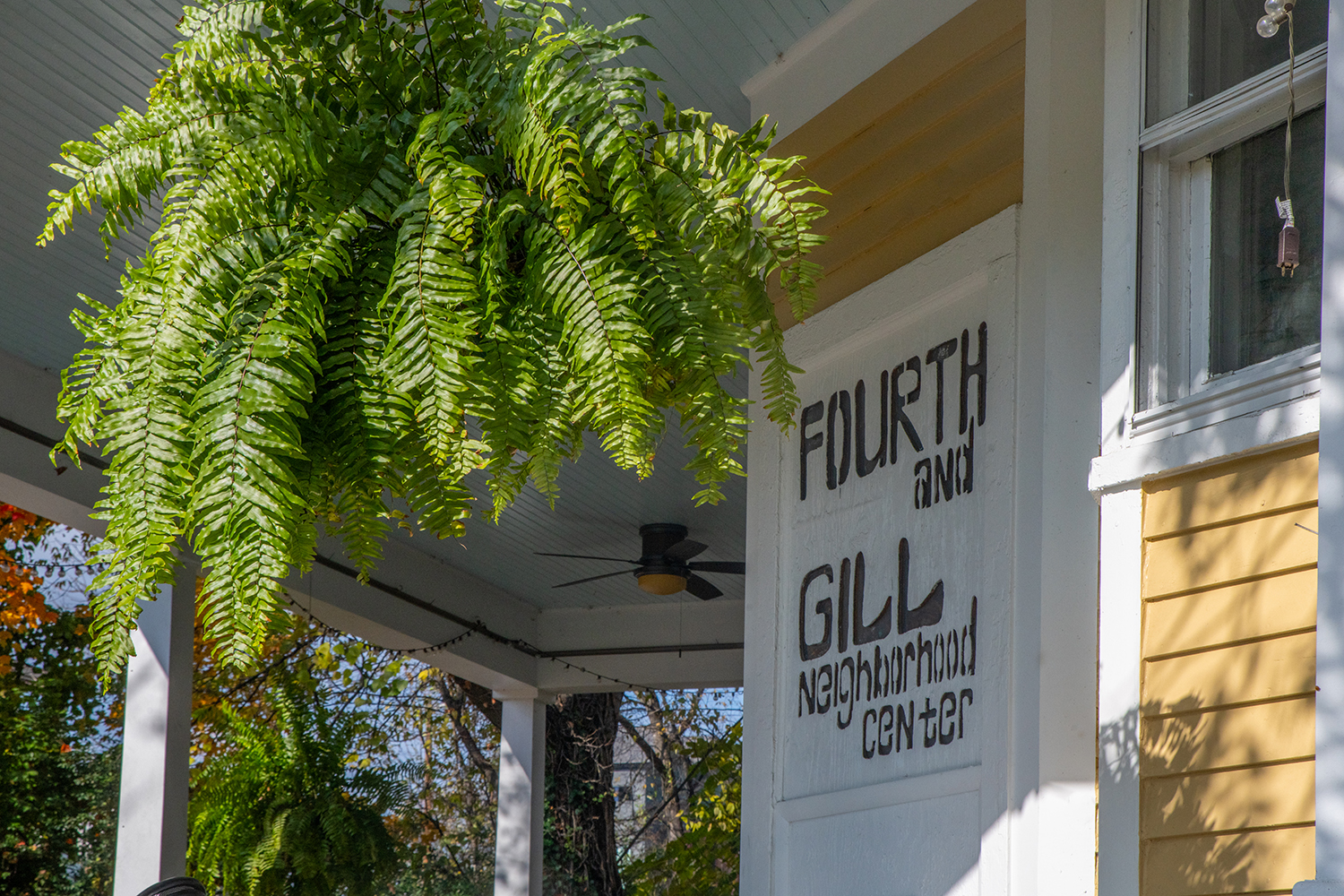
Around the same time that Apelife was using The Birdhouse as a practice space, a group of local activists decided to establish a separate nonprofit under the Birdhouse name, Abbott says.
“They rented the space and used it for more of what you see now – a community building space where they held their own events to bring people together.”
For the next 20 years, The Birdhouse served as one of several Knoxville hubs for social justice, community empowerment and the arts. The Birdhouse organization put together its own events and rented out space to other groups and volunteer organizations, but when the COVID pandemic struck, the group went defunct. The Fourth and Gill Neighborhood Organization had a decision to make, Abbott says: keep, or sell?
“It was an interesting situation, and we obviously voted to keep it and run it as a community center under the Fourth and Gill Neighborhood Organization,” Abbott says. “Myself and the leadership group that started in 2022 decided to keep Birdhouse in the name because of its familiarity, and because we wanted to work toward a similar mission as the previous group, and we wanted to capitalize on that and the following it had, as well.
“Even though it was a big controversy, 65% voted in favor of keeping The Birdhouse, so it’s pretty clear the members wanted to keep the space. And really, everyone has been so supportive, even the people who thought it would be a good financial decision to sell. Now that we’re succeeding and doing well, they seem to feel good about what we’re doing.”
Harrison and the High Score, who recently released “Peach Blossom Youth,” have the distinction of being one of the longest-running occupants of The Birdhouse, until the return on what was paid for practice space rental became unsustainable. It was mainly a rehearsal space, Harrison says, although they did cut rhythm tracks for the 2020 record “Bright Spot” in the building.
Close behind them, however, is the Good Guy Collective, one of four upstairs tenants who rent a room to serve as an office. Formed in 2013, the collective is a group of artists who work to create a positive and sustainable hip-hop community through shared resources, workshops and performances. Joseph “Black Atticus” Woods, whose roots in Knoxville hip-hop date back to the Fluid Engineerz of the early aughts, first met the Birdhouse council in 2020, and then when leadership changed and the neighborhood association took it over again, leaders sought input from Good Guy.
“Good Guy was one of the rest organizations they reached out to in asking what the house needs,” Woods says. “I’ve seen a lot of great human beings come through there. I feel like the house is something sacred. And listening to people who have actually been working in that space, you start to see that there are some really dynamic people in that building.
“I’ve seen it go from a very heavy activist community to a more polished and established space with lots of community organizing. Now, it’s everything from an art gallery to a wedding venue to a meeting space for all kinds of different groups. What I love about it is that it’s kind of like The Pilot Light [the indie-rock club in the Old City]: You never know what you’re going to get. It could be art, it could be activism, it could be a dance class, it could be painting.
“For us as tenants, it’s done nothing but stimulate our creativity,” Woods adds. “I expect to see something different every time I walk in there.”
Such diversity is a point of pride for Abbott and others in the neighborhood who hold fast to the community ethos that’s been the Birdhouse brand for more than a quarter-century now. Back in June, the house played host to Big Asses Fest, a music festival that originally coincided with Knoxville’s Big Ears Festival and took place at The Pilot Light; this year, it took place June 21, started at noon and went for nearly 12 hours, all of them free. Then, in September, a Social Justice Meetup took place on a Thursday evening, and the house was at capacity.
“We had about 60 attendees, and the indoor capacity is 49,” Abbott says. “People were spilling out onto the porch. The purpose was networking and to showcase different social justice groups to bring like-minded people together in a safe space in the community.
“With Big Asses Fest, it was a day full of music, comedians and other acts that was really fun and community-building. We just love that The Birdhouse has a long legacy of music and shows.”
On Oct. 4, the inaugural Fourth and Chill Festival took place in the neighborhood, with The Birdhouse at ground zero. It was only the second event in the City of Knoxville organized to take advantage of a recent ordinance that allows for alcohol in the street; a stage was placed in front of The Birdhouse on North Fourth Avenue and featured dozens of artists throughout the day. Knoxville hip-hop group The Theorizt, playing its first show in years, was the headliner. (Those who missed out can buy merch at fourthandchill.com.)
A community hotspot thrives
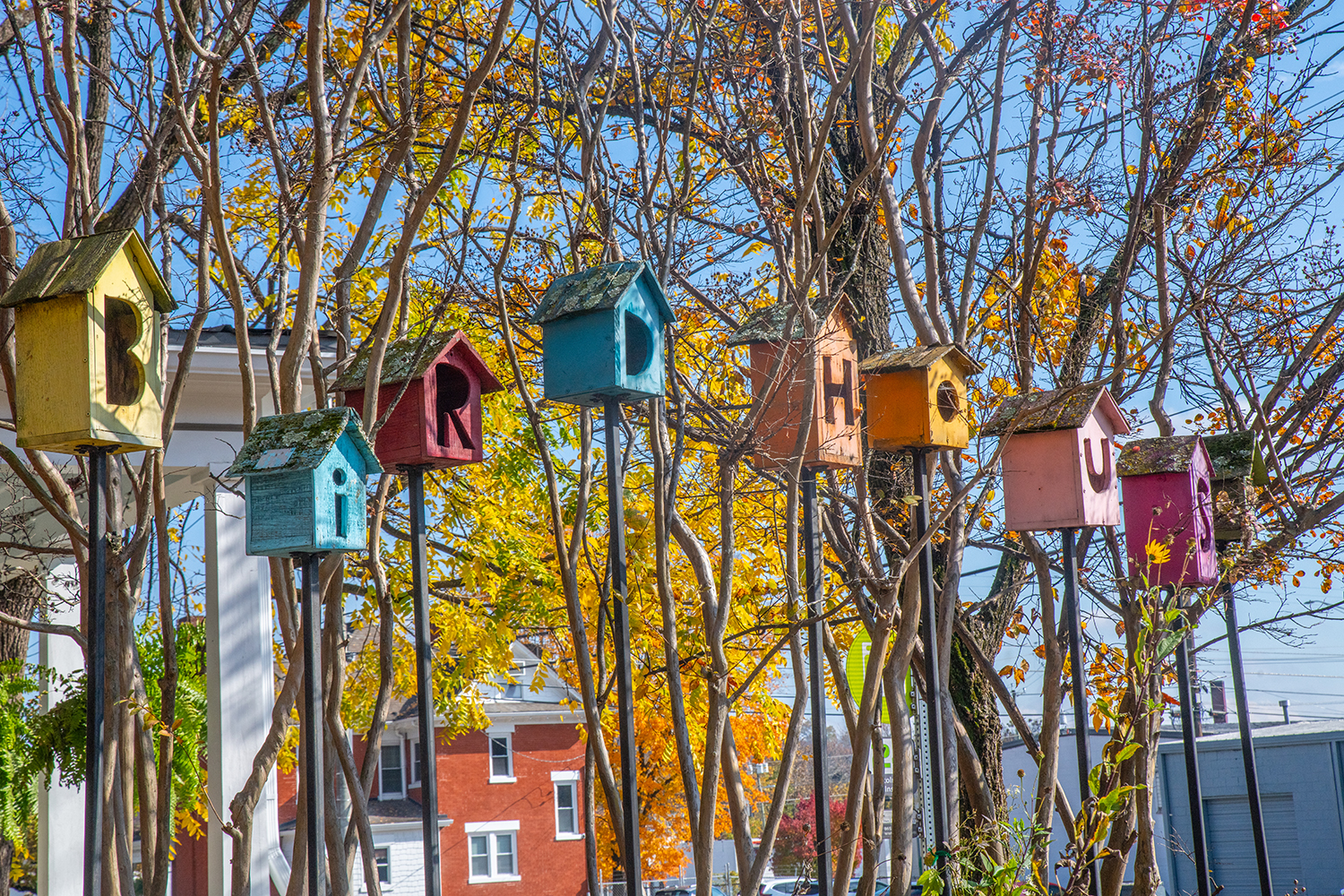
Last fiscal year – July 1 to June 30 – there were 438 events that took place at the Birdhouse, Abbott says. Many of them are rentals, as different groups can rent the downstairs area for anything from an intimate singer-songwriter evening to a punk-band house party. Prices are intentionally kept affordable, and word has gotten out: The Birdhouse is a safe space, and it’s a vibrant place.
And then there are events organized by the building’s leadership, mostly through grant funding from the City of Knoxville, the Knoxville Arts and Culture Alliance, the Tennessee Arts Commission and more. Many of them are workdays; as a 135-year-old structure, there’s a large need for ongoing maintenance and improvements, which are important in order to keep it appealing as a rental space.
“We have volunteers who help us save money by implementing those improvements to the building,” Abbott says. “We’ve had volunteers tear up the entire floor of the kitchen, down to the crawlspace, and put down a new floor and new tiles.”
A few times a year, volunteers are needed to touch up the walls and paint over the wear and tear of regular use. There’s always a project that needs completing and a price associated with it that needs to be paid. Fortunately, grants aren’t the only source of income that keeps The Birdhouse going.
The four upstairs bedrooms have been converted into offices, and each is rented to outside organizations. In addition to Good Guy Collective, today’s tenants include Devan “That Dude” Smith, a music producer; Knoxville Environmental Law Partners, billed as “treehugger lawyers whose practice includes helping anyone fight strip mines, polluters and incinerators;” and a new counseling service.
“We have a waitlist, and we try to keep those prices as low as we can,” Abbott says. “In 2024, we did a cost analysis compared to other similar spaces, and what we’re charging is 50 to 100% less than other spaces our same size. And that’s because we really want to be a resource for new businesses and entrepreneurs.”
Each of those offices, Abbott adds, was updated with new carpet and revisions to doors and windows, and a new HVAC unit was installed several years ago. Six or seven years ago, a new deck was built onto the front of the house that was constructed to look like the original deck that could be seen in old photos; now, with a grant from DOW Chemical, a backyard stage is being built, as well.
“We rent the upstairs offices, the main floor, the backyard and the front yard, and we work to keep rent affordable and on a sliding scale,” Abbott says. “For a group meeting, it’s $10; for a wedding, it’s maybe $100. It just depends on what you’ve got going on. We’re happy to work with anyone.”
On Nov. 1, The Birdhouse launched a fundraising campaign that will take place through the end of 2025. Donations are critical because the grants, while supportive of events, don’t fund the entire operation. Public financial assistance is needed to help with upkeep, staff pay and more, Abbott says.
“Individual or business contributions and donations are essential to our budget to be able to offer discounted and low-cost affordable rental space,” she explains. “We have to have donations. We’re actually doing decently as far as our budgeting goes; we’ve broken even the past year or two, and we actually received a really generous donation that turned into an endowment early on from Thomas and Lindsey Boyd, and we used that money to buy that new HVAC unit and redo so many things inside.
“The good thing is that we can draw down on that endowment each year, so we have a cushion. But we need donations to break even or have a net profit, which is going to help pay for more hours for myself [and] a part-time coordinator, and to establish a safety net.”
(The Boyds, incidentally, have their own ties to the local music scene: They’re veterans of the rock band Oh No Fiasco, which was active from 2011 to 2014. These days, Thomas is a restaurateur/property developer.)
Already, there’s a safety net that isn’t financial: a hub of roughly 25 volunteers that help run the facility alongside Abbott and a couple of cleaning contractors. There’s always room for more, however.
“The hope is that a new wave of people will come in,” Abbott acknowledges. “And the volunteers there now might be able to step back a little. Because right now, it all just comes down to the super dedicated group of 25-ish volunteers. But if the Knoxville community is looking for a gathering space – a space to come together with like-minded individuals and groups and feel safe and at home – The Birdhouse is it.
“It’s a lively, warm environment, and the history really plays into that. We really want it to be a beacon of art, music, social justice and community gathering, and we’re excited for it to become that. A lot of people know about The Birdhouse, and a lot of people are learning. And the good news is that we only have room to go. It’s not part of our vision to be some big, fancy rental space or venue where we book big bands; what we’re doing on the grassroots level is our vision.
“It’s not about money, and it’s not about trying to make it,” Abbott concludes. “It’s about trying to be a resource for the community, and we think people can support that.”
wildsmith@blanknews.com