Legendary baseball player, basketball coach and owner of multiple franchises die in October
By Ken Lay
Last month, the sports world lost three outstanding icons in Willie McCovey, a West Coast baseball legend and Hall of Famer for three decades; Tex Winter, a brilliant basketball coach and architect of the triple-post offense; and Paul Allen, an eccentric billionaire businessman and fan-friendly owner of the Seattle Seahawks and Portland Trail Blazers, as well as minority shareholder of the Seattle Sounders. Their collective impact on athletics will long be felt and may never be forgotten – nor should it.
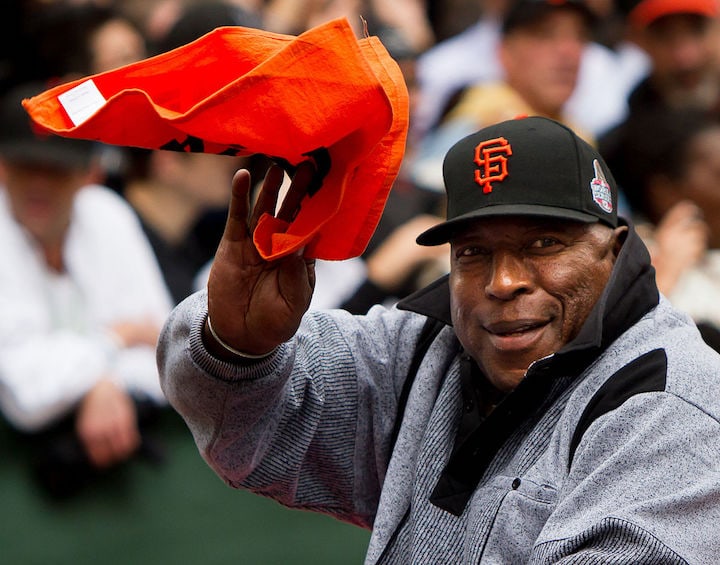
Baseball lost a true legend on Halloween when longtime first baseman and first-ballot Hall of Famer Willie McCovey died at the age of 80. Although Willie Mays began his career when the Giants were still based in New York, McCovey became the face of the franchise once it moved to San Francisco in the late ‘50s.
Spending his entire career on the West Coast, McCovey had two stints in San Francisco, breaking into the big leagues with the Giants in 1959 and remaining with the team until 1973. He then went south to San Diego, where he played from 1974-76. He then went back to the Bay Area, spending a year in Oakland before returning to San Francisco for the 1977 season and finally retiring as a Giant the following year.
A first-ballot selection to Cooperstown in 1986, the dead-pull, left-handed hitter clubbed 521 career home runs, many of which that flew over the right-field fence at Candlestick Park, where McCovey played the majority of his games. AT&T Park, the current home of the Giants, is built adjacent to the Pacific Ocean. The China Basin waterway just over the right-field grandstand was lovingly re-christened McCovey Cove in honor of the slugger.
A true fan favorite, McCovey garnered respect from opposing pitchers and coaches, as well. His unique batting style prompted opposing managers to regularly initiate a defensive shift. Some, such as Sparky Anderson, even feared him. The skipper once said that he walked McCovey so many times that the player logged enough miles to make it to the moon and back.
Tex Winter, who was touted as an offensive genius on the hardwood, died on Oct. 10 at the age of 96. Creator of the triple-post offense (later known as the triangle) the guru can be at least partially credited for Michael Jordan, Scottie Pippen, Kobe Bryant and Shaquille O’Neal winning multiple championship rings. The dynamic system he invented was implemented by Phil Jackson during the coach’s dynastic runs with the Chicago Bulls and Los Angeles Lakers.
Jackson won six titles in nine years in the Windy City, and he won five more in Tinseltown. Winter was an assistant coach for nine of those championship-winning teams, and he served as a senior consultant for another one of them. Jackson won just one title after Winter retired from coaching.
An excellent basketball player at both Oregon State and USC, Winter also was a standout collegiate pole vaulter. He first made his mark as a coach at Kansas State, starting out as an assistant in Manhattan in 1947. He served as head coach of the Wildcats from 1954-58, guiding the team to eight conference titles and two NCAA Final Four appearances. He also coached at Marquette, Washington, Northwestern and Long Beach State, winning 451 total games as a college coach.
Winter wrote a book, “The Triple Post Offense,” in 1962. Although he experienced little success as a professional head coach of the Houston Rockets, he would go on to be one of the NBA’s biggest innovators. Including his time as a player, Winter’s illustrious career in basketball lasted for six full decades.
Paul Allen, who made billions of dollars as a co-founder of Microsoft, died from complications of lymphoma on Oct. 15. First diagnosed with the disease in the late ‘80s, the lymphoma had returned recently after being in remission for years. Over the course of his eventful life, though, Allen earned a reputation as being a shrewd businessman, a generous philanthropist and a passionate sports fan.
Allen bought the NBA’s Portland Trail Blazers in 1988 when he was just 35 years old. Already a fan of the squad, he and his mother often flew from his hometown of Seattle to attend games in the City of Roses prior to purchasing the team. Upon doing so, he promised to make the franchise a winner. Shortly after his purchase, the Rick Adelman-led Blazers made two NBA Finals appearances in three years during the early ‘90s. They lost both, however, falling first to the powerhouse Detroit Pistons in 1990 and then to the Chicago Bulls (led by Jackson and Winter) in ‘92.
Allen bought the Seattle Seahawks in 1997 from Ken Behring, who had threatened to move the franchise to Los Angeles when taxpayers refused to foot the bill for a new stadium. With Allen at the helm and promising to cover any additional expenditures beyond the estimated costs for a new home for the team, a referendum granted the project’s completion. Now dubbed CenturyLink Field, the multi-use building ranks among the loudest in the NFL and is home to Seattle Sounders FC, the MLS franchise in which Allen also owned a stake.
Although his beloved Blazers never won an NBA under Allen’s stewardship, the Seahawks made it to three Super Bowls, winning it all in 2014. Having paid $194 million for the latter franchise, Allen also increased the team’s worth to more than $2.5 billion. In addition, the Sounders won the MLS Cup in 2014.
Allen accrued most of his money in the computer and software business, which put him in a unique position as a sports owner. In an age when owners like Jerry Jones and Jim Irsay crave the limelight, Allen largely avoided media attention. He was a fan primarily and thus a fan’s owner. A true renaissance man, he helped to make Seattle a major West Coast cultural center, as well.