by Brittany Norvell Priest
A peculiar hush settles over Gay Street as dusk gives way to night, a humid lull that whispers of magnolia blossoms and the ghosts of cotton fields, secrets seeping from wrought-iron balconies. On a night like this, the Tennessee Theatre’s neon marquee, scarlet letters glowing like an arresting brand, beckons the curious and the restless alike into its embrace. Here, under the vaulted arches and star-speckled ceiling, Moulin Rouge! The Musical took flight, carrying the Knoxville audience on a fever-dream odyssey of truth, beauty, freedom, and love.
A Prologue in Light and Shadow
The lobby’s terrazzo floor reflects fractured shards of light from crystal chandeliers, as though the ceiling itself were weeping stardust. Velvet ropes part like red bayou waters, and in the narrow confines of the grand foyer, patrons murmur into the humid air, an expectant congregation awaiting ritual. Outside, the city hums with late-night diners and street musicians. Inside, every footstep echoes like a distant drumbeat. In that pregnant pause before curtain, one can almost taste the sugar-wine tang of France in 1900, grafted improbably onto this Tennessee hill town.
When the house lights dim, the proscenium, framed in gold leaf arabesques, becomes a portal. A single spotlight spirals downward and ignites the red-velvet curtain in a blaze. From that moment, for the next two hours and change, the Tennessee Theatre transforms itself into the fabled cabaret of Montmartre.
Architecture in Dialogue with Drama
Built in 1928 and lovingly restored to its original Spanish-Moorish grandeur, the Tennessee Theatre feels less like a building and more like a living being, its organ pipes still whispering in the walls and its balconies cradling generations of dreamers. Against this tapestry, director Alex Timbers’s staging feels seamless. The gilded arches echo the gilt-rimmed posters of Toulouse-Lautrec and the baroque proscenium mirrors the Belle Époque silk and lace that drapes the stage. When the lights cut to black at intermission, the audience is left not merely in darkness but in a memory chamber where architecture and art commune.
Christian and Satine: A Love That Burns
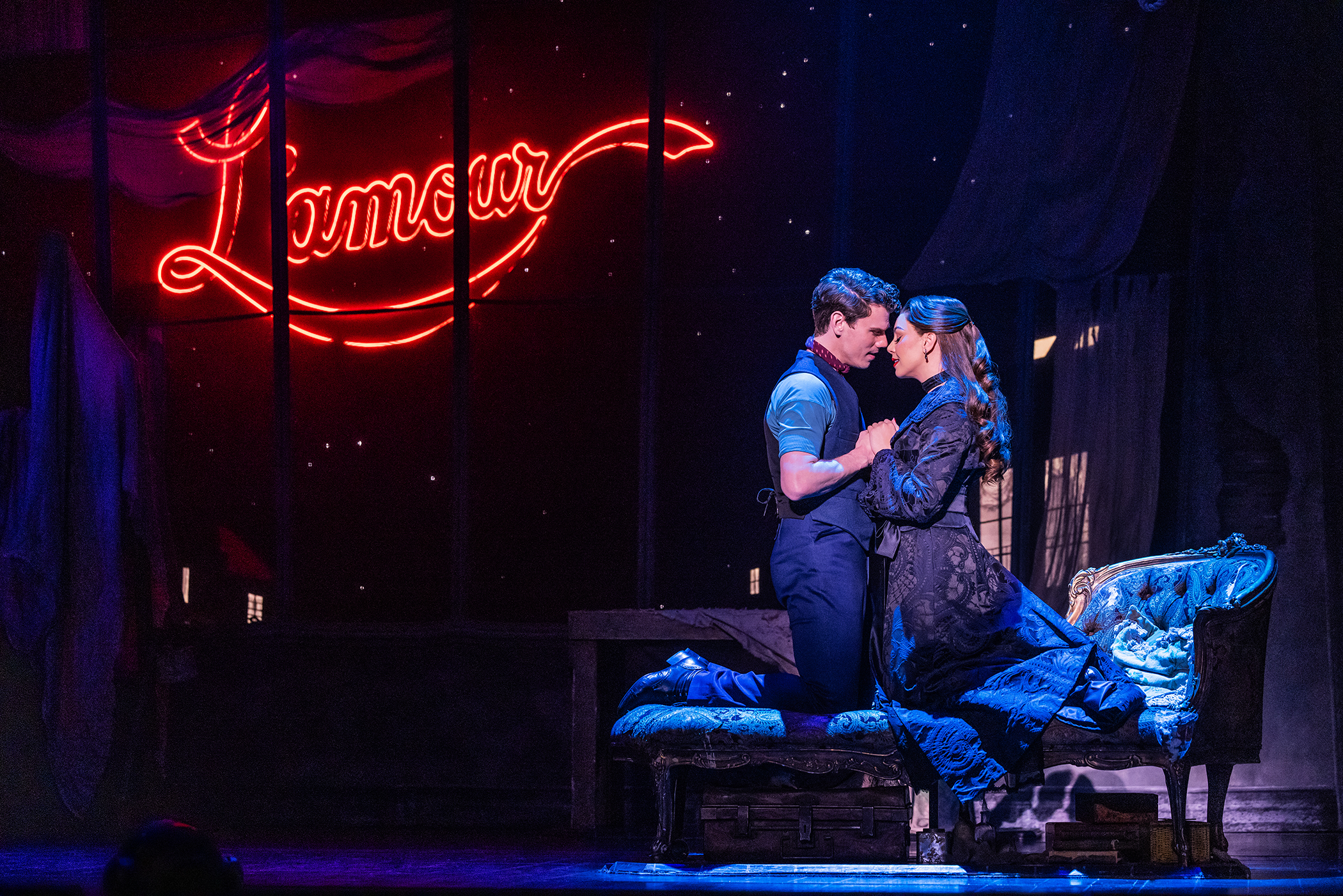
At the heart of the musical lies Christian Douglas’s impassioned portrayal of Christian, the penniless writer smitten by the illustrious Satine. Douglas’s voice possesses both clarity and grit, each high note trembling on a wire of desperation. In “Your Song,” his tender falsetto unfolds like a prayer beneath the Tennessee Theatre’s celestial ceiling. When he crescendos into “Come What May,” you can feel the trembling seams of every heart in the house.
Opposite him, Gabrielle McClinton’s Satine is incandescent. She flits across the stage in sequinned gowns that catch every stray beam, each movement measured yet electric. McClinton’s vulnerability surfaces in stolen moments: her pause at the final chorus of “Diamonds Are a Girl’s Best Friend,” the soft quiver when she confides, “I’m dying.” Together, Douglas and McClinton create an alchemy that is both heartrending and transcendent.
Zidler, Lautrec and the Ensemble
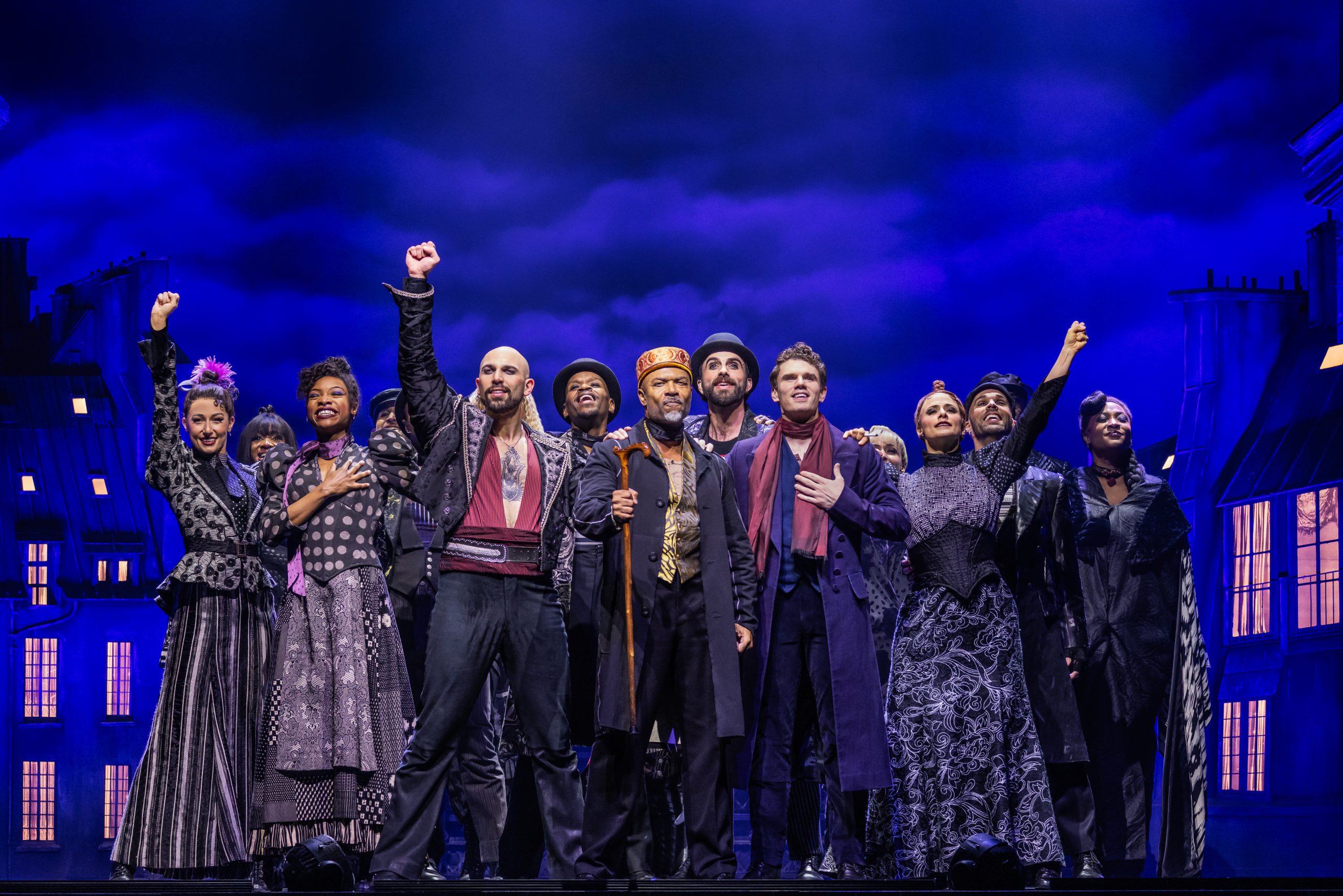
No Moulin Rouge! is complete without its eclectic cast. Robert Petkoff’s Harold Zidler commands the stage as the exuberant ringmaster, his booming voice rolling over the orchestra pit like thunder, each flourish a carnival of charisma. Nick Rashad Burroughs embodies Toulouse-Lautrec’s bohemian spirit, moving with a graceful ease and tapping his cane out a percussive counterpoint to choreographer Sonya Tayeh’s movement.
Tayeh’s choreography is itself a character, with sharp angles, sudden lifts and cascades of red-scarlet skirts that swirl like blood in water. The chorus line of can-can dancers, their legs slicing the air in perfect unison, feels almost sacramental, a communal exorcism of restraint through rhythm and abandon.
A Jukebox of Memory and Emotion
Over seventy songs wind through this production, but they never feel like a mere mixtape. Each pop anthem, from Lady Gaga’s “Bad Romance” to Adele’s “Rolling in the Deep,” is reengineered to serve the narrative. When “Material Girl” erupts mid-party scene, the irony lands hard, and you laugh even as you wince at its truth.
Beneath the music, Justin Levine’s orchestrations are lush and muscular. String swells punctuate moments of yearning, and brass blasts propel the cabaret into riotous frenzy. The music does more than accompany; it comments, underscores, and interrupts, mimicking the restless spirit of bohemian Paris.
Costumes as Characters
John Macfarlane’s costume designs transcend mere dress. Each sequined sheath, feathered headdress and satin frock is a portal into identity. Satine’s wardrobe arc, from pristine white satin to ragged corsetry, mirrors her descent from glitter-goddess to fragile mortal. The dancers’ attire erupts in primary colors and metallics, each outfit tailored to accentuate the movement’s poetry. In one of the evening’s most striking visuals, Zidler’s tailcoat, stitched in gold brocade, almost seems to breathe under the footlights.
Collective Catharsis
Moulin Rouge! The Musical arrives at a moment when spectacle feels both necessary and precarious. In an era of screens and social media, the live human communion of theater is nothing short of radical. Under the multiplex shadow of streaming giants, the Tennessee Theatre stands as a bulwark for community and connection. To witness this production is to feel the electric spark of collective catharsis, to cheer, to weep and to gasp together.
As the final chords reverberated and the lights surged back on, the audience remained suspended in that afterglow, caught between reverence and revelry. A young couple in the front row embraced so fiercely you could almost hear their hearts pounding. An octogenarian near the balcony dabbed at tears with a vintage handkerchief. Outside, the marquee glowed on, indifferent to the mortal struggles enacted within. But for those who ventured inside, Moulin Rouge! was more than a musical; it was a reckoning and a release.
Moulin Rouge! The Musical runs at the Tennessee Theatre through May 11. Tickets and information are available at tennesseetheatre.com. Don’t let this evening of abandon and beauty slip through your fingers; step into the jewel box and let your heart catch fire.