Lonnie Holley Walking Tour of Knoxville
As we mentioned in our review of his earlier set with The Messthetics, celebrated visual artist-turned-improvisational keyboardist and singer Lonnie Holley had quite the effect on the Mill & Mine audience Friday with his sincere, open references to mysticism and spirituality and his warm, direct addresses to the crowd in between transcendent, soaring songs.
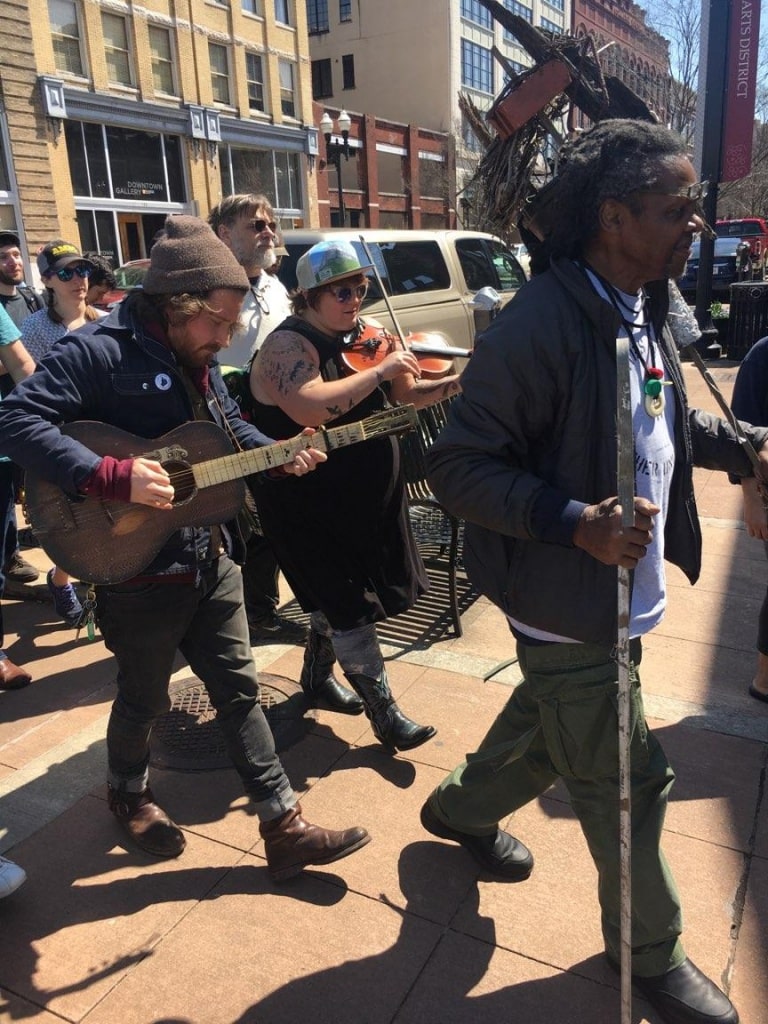
Early Sunday morning, Holley was spotted enjoying breakfast at Old City Java’s Ampient brunch, and early that afternoon, intrepid Big Ears attendees who made the choice to journey further down the rabbit hole with Holley experienced a special walking tour like no other. Past festivals have had similar events where local historians like Jack Neely have shown attendees the musical history behind the buildings or neighborhoods they’re passing.
But Holley’s tour was more of a spiritual trip focused on how to see the world through his eyes: as one big improvisational canvas. He carried a whimsical homemade walking stick and on his shoulder one of his found-object sculptures made of various sticks, bricks and other items. As he walked, he sang deeply, richly and happily about ordinary objects he saw. As the group approached the train yard below Jackson Avenue, Holley sang about trains as they related to working people or travel. As he sang, musicians walked along accompanying him on fiddle and acoustic guitar. As the group approached the tracks, Holley directed them to find cast-off objects they’d usually think of as trash and gather them together in a milk crate he’d had one crowd member retrieve.
The crowd then gathered around Holley under the viaduct, and he put on a clinic on how to look at the objects in a different light, repeating homespun mantras from his youth about making something from nothing and how to “waste not … want not.” He led chants to that effect that rippled throughout the crowd as he distributed pieces of the items and either put people to work making music with the musicians or building their own found-object sculptures. – Luke Brogden
East Tennessee Bluegrass Association Open Community Jam
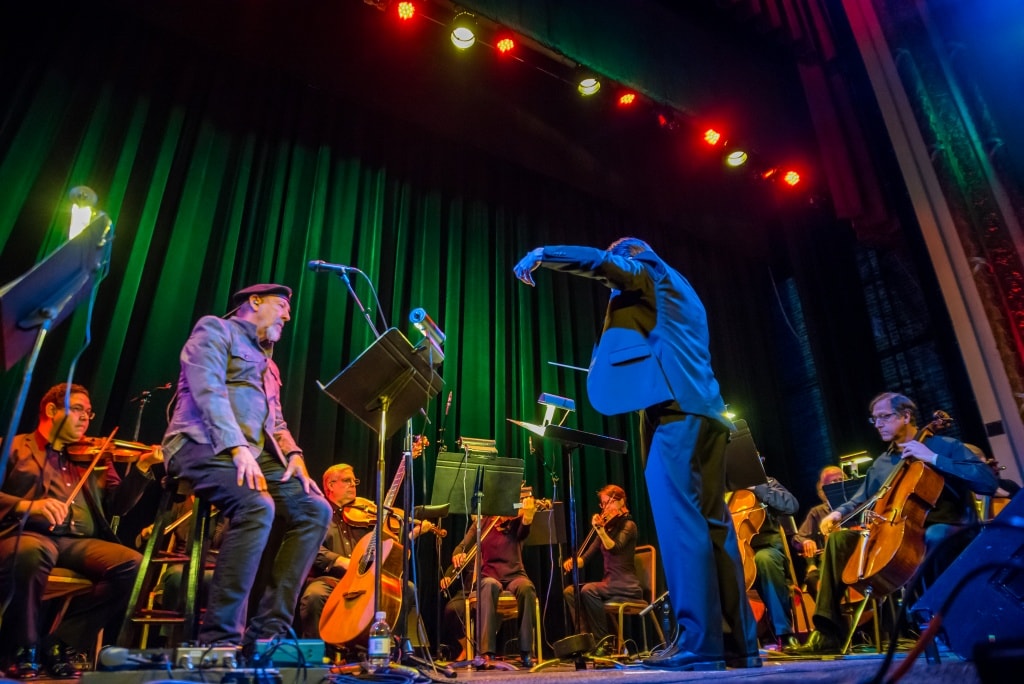
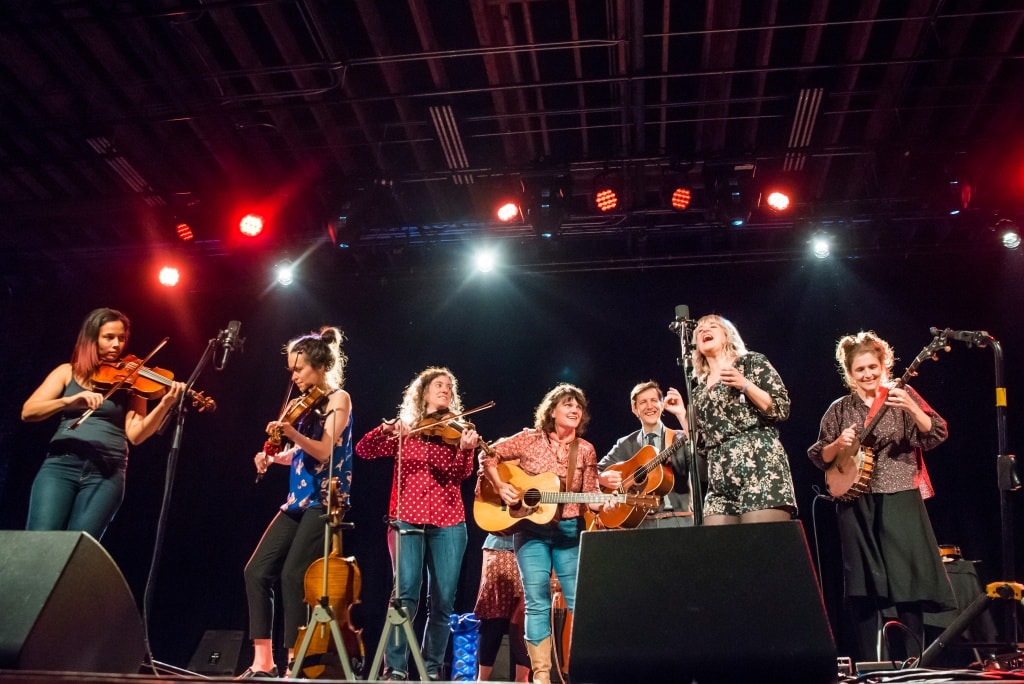
Big Ears weekend is one of the most exciting and engaging times of the year. It is so incredibly rewarding in that at times you really must work at understanding what the artists are trying to put out there. However, three days of that can take a serious toll, and by Sunday afternoon I was ready for something more familiar and comforting. The East Tennessee Bluegrass Association invited anyone who wanted to grab an instrument and join in the fun. The atmosphere at Boyd’s Jig & Reel was relaxing but lively and very welcoming, with folks on upright bass, banjo, mandolin, guitars and fiddle, the Old City Scottish pub sounded like my grandmother’s house at family gatherings. I heard a super fun rendition of “Folsom Prison Blues,” with the audience, including myself, singing along. With a festival that can take folks far across borders, it was nice to have a little corner of home to visit, as well. If you’re interested in joining this party in the future, you can find more info at https://etnba.org. – Jennifer Duncan-Rankin
Nik Bärtsch’s RONIN
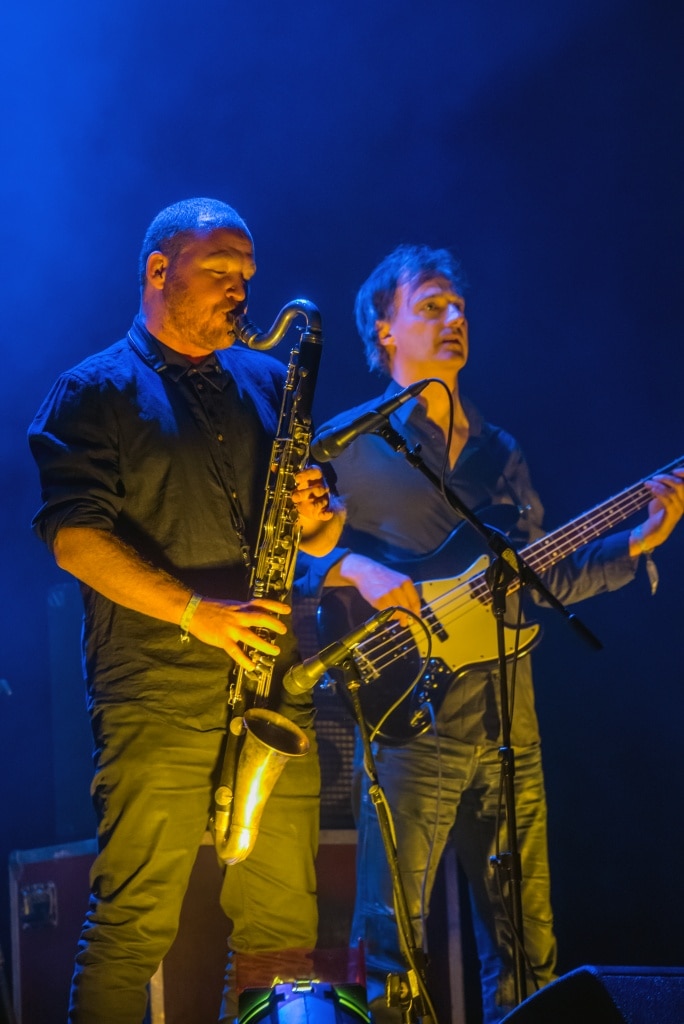
BLANK Publisher Rusty Odom likened the experience to watching Phish perform live. While I don’t necessarily agree with that assessment, given the intuitive understanding amongst the musicians, the immersive nature of the set and a few decidedly crunchy breakdowns, I can (kinda, sorta, maybe) see where he was coming from. Even if you disregard the masterful command of time signatures and instrumentation the musicians brought to the table, it was clear that they put on a fun and lively show that both casual listeners and serious students of music theory could enjoy. – Matt Rankin
Bill Frisell’s Harmony featuring Petra Haden, Hank Roberts & Luke Bergman
I lost count of how many times I heard a fellow BLANK cohort declare while discussing the day’s itinerary, “I’m going to that Bill Frisell thing.” The talented jazz guitarist was seen taking part in various collaborations throughout the festival weekend. The most exciting thing of his that I saw, though, was this matchup with That Dog’s Petra Hayden, along with cellist Hank Roberts and Luke Bergman on guitar. Unlike the loud, experimental distortion seen at other shows during the festival, this one possessed a quiet beauty. Haden’s sound was pure, clear and simple, with the quartet’s strings and melodies effortlessly floating over the charmed crowd. Couples were sweetly dancing, others swaying and singing along to familiar tunes such as “The Street Where You Live” or Marty Robbins’ iconic “Red River Valley.” This was a comforting and perfectly enjoyable way to wind down an incredible weekend of music and art. – JDR
Kristín Anna Valtýsdóttir
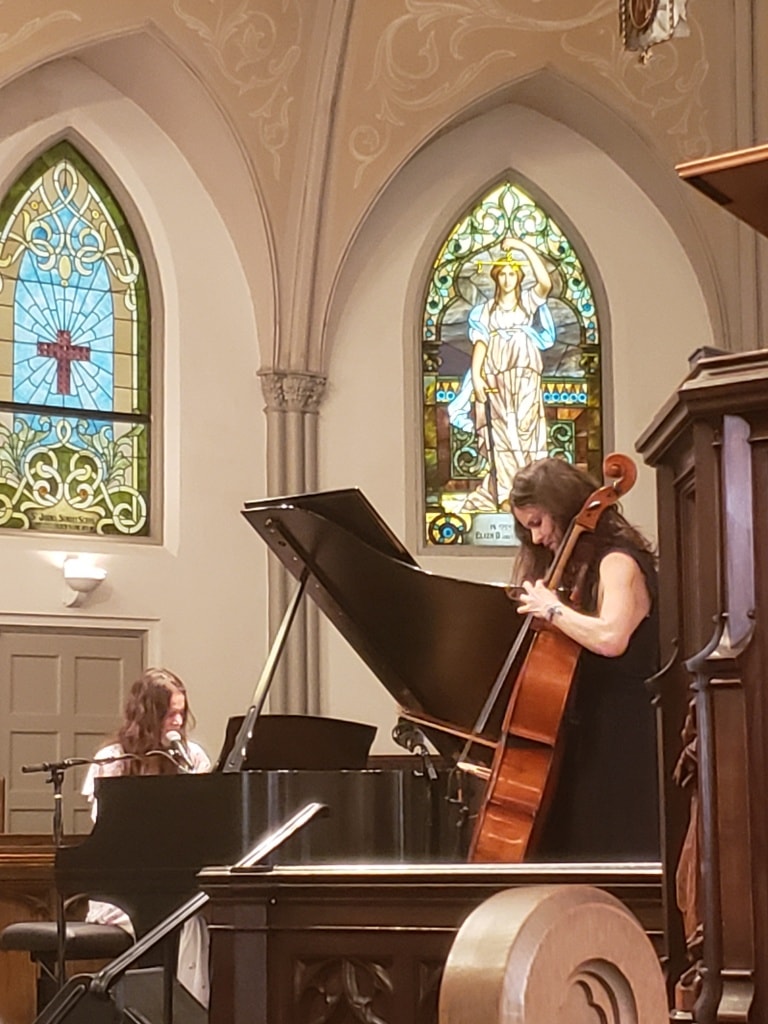
Seated behind a grand piano placed on the altar of St. John’s Cathedral, the gorgeous music coaxed into existence by the Icelandic singer-songwriter with the diminutive voice was appropriately yearning and immaculate. Tinkling lines transformed into a hammered cacophony and united with her high-pitched register, reaching for the heavens as if to give some of the incredible beauty present in the sanctuary back to the creator. As an added bonus, Valtýsdóttir at one point brought out twin sister Gýða, an excellent performer in her own right, to back her on cello. The resulting numbers were as stunning and charming as anything I have ever witnessed.
The pair recorded together years ago as members of art-rock supergroup múm, which often embedded warm crackles and slight imperfections into their warmly enveloping compositions. Surely then, they would have been bemused to hear every creak of a pew or footstep taken in the cavernous vestibule that otherwise was fittingly silent as a church mouse on this lazy, overcast Sunday afternoon. But just like on that band’s early albums, the noises were not distracting and added to the ambiance of the performance rather than detracting from it. – MR
Kayhan Kalhor & Brooklyn Rider
With each party in this collaboration at the Bijou having played separately and in other capacities throughout the course of the festival, it took until the last day for them to combine their talents. But the partnership was well worth the wait, as the stringed arrangements were sometimes sorrowful, sometimes haunting and sometimes jubilant – but always resonant and emotionally stirring. Seated onstage with the members of Brooklyn Rider surrounding him, Kalhor’s bow work on the kamancheh was individually arresting, but it synthesized beautifully with the quartet’s instruments, as well.
At some point, the five players must have transported me from the Bijou and into another realm because when I exited the building, I did so in a complete and utter daze. I vaguely recognized my surroundings (all of which I have seen countless times), but it took me at least 10 seconds to really understand where I was and in which direction I needed to turn to head to the Mill & Mine. In that brief interim before my brain caught up with my body, I had taken a right toward the Gay Street Bridge. Relaying this personal account is the best way I can describe how hypnotic and impactful this show was. – MR
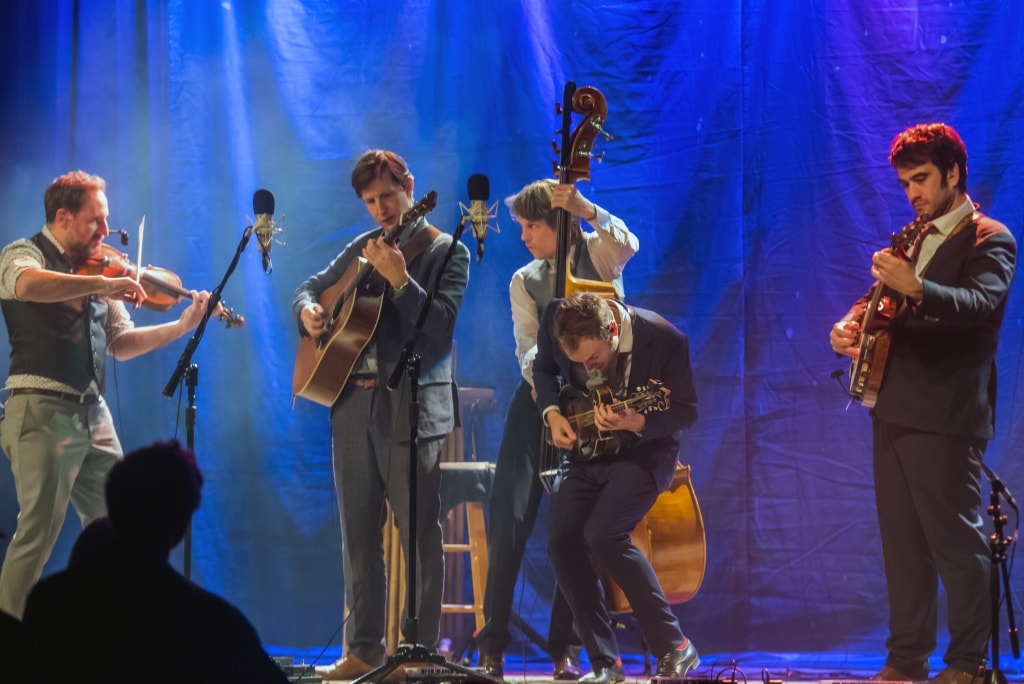
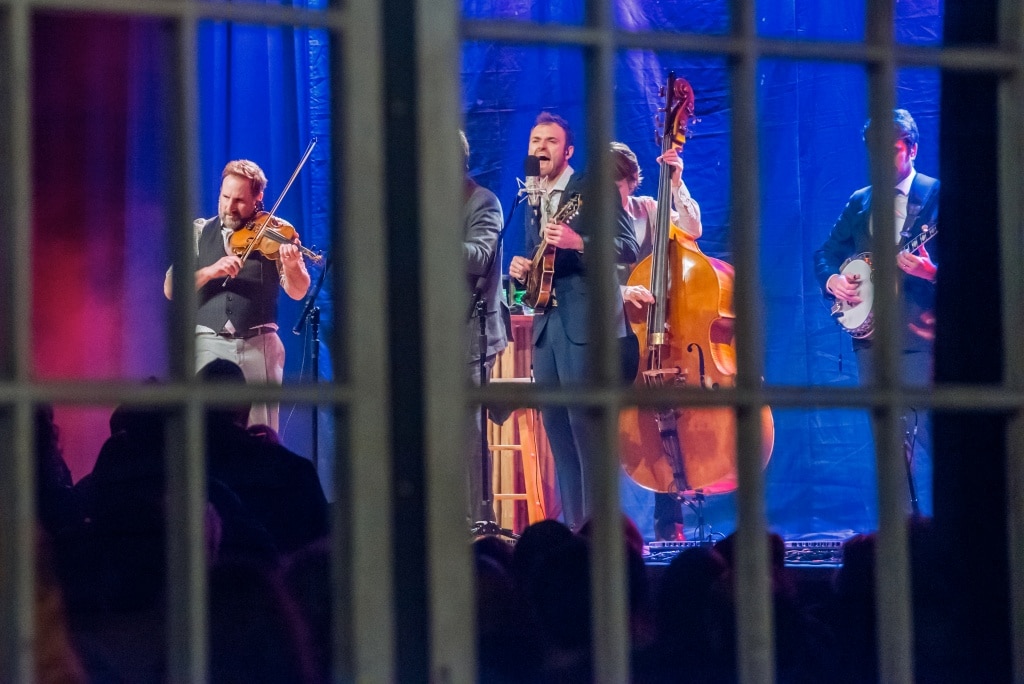
Sunday-night closing shows are always interesting at Big Ears. It’s often one of the biggest acts of the festival, but attendance can be off because so many attendees are from out of town and are in the process of leaving and, frankly, because of exhaustion. Thus the Mill & Mine was only at about two-thirds capacity when the Punch Brothers took the stage, but the crowd that was there was enthusiastic and energetic. Calling them a bluegrass band is like calling the rocket Evel Knievel rode across the Snake River Canyon a motorcycle. It’s technically true, but it kinda misses the point. The Punch Brothers today are as much jazz or prog as bluegrass, and they play some of the most sophisticated pop on the planet. Every member’s talent shone Sunday night as the band took the crowd for a two-hour trip through their catalog. In the spirit of Big Ears, I would have liked a little more experimentation and weirdness from a band more than capable of it, but a standard Punch Brothers set still includes a Debussy and a Josh Ritter cover, as well as the simple joy of seeing five of the finest musicians on the planet demonstrate nearly unlimited chops and musical telepathy. Chris Thile was funny and self-deprecating throughout, while banjo player Noam Pikelny provided comic relief. Highlights included “Angel of Doubt,” protest song “Just Look at This Mess,” and a spirited “Rye Whiskey” as the set closer. – BF
Harold Budd & Friends
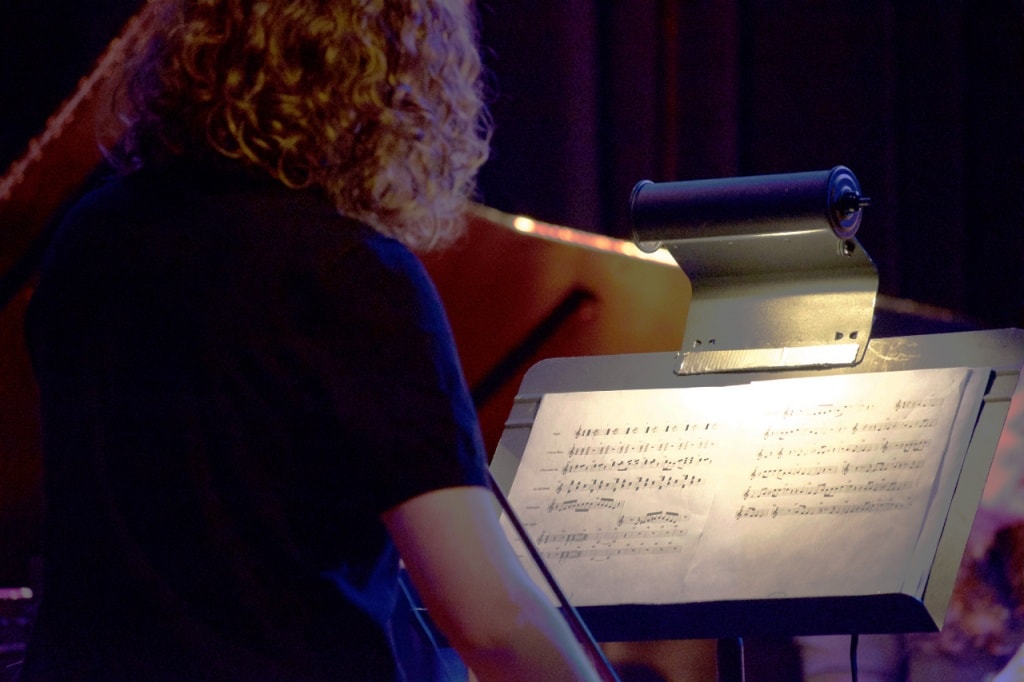
In various articles and promotional materials describing Harold Budd’s long and illustrious career in minimalist composing, the incredibly interesting themes that continued to emerge – and that were easy to witness in the performance at the Bijou Sunday evening – were Budd’s self-awareness of his role in his art and the extreme humility and simplicity of vision that extends to the point of almost writing himself out of the picture. In fact, multiple times in his career, according to various articles and releases, he or representatives announced he was doing final performances or he’d achieved what he could with minimalism and was literally getting down to zero. Another article described a very interesting way of putting it: that he’d seen a painting he loved that perfectly evoked a single mood or image and decided he simply wanted his pieces to be able to do that. He developed his “soft-pedal” style of playing piano and keyboard wherein less notes would be played and they’d be sustained longer.
Certainly the pieces performed by the ensemble Budd had gathered played into this ethos. He barely and rarely even played notes himself and even left the stage for parts of the set completely, as if to let audiences know purposefully that he didn’t feel necessary. Each player onstage (and there was a large, diverse ensemble) was individually still and silent for the majority of time, listening and watching whoever was playing what usually was just a few sustained, simple notes. Occasionally, when a new instrument would join in, it would create a new layer to the ambiance: a drone, a harmony, a mood or an atmosphere. But we found ourselves remarking how each player also showed remarkable respect for their fellow performers – in particular, restraint and poise – but when it was an individual’s time, he or she used beautiful technique, phrasing and attack to make that small part blend in to the piece smoothly. A room as quiet and intimate as the Bijou was the perfect setting for that perfectly constrained, minimalist set. – LB
Art Ensemble of Chicago
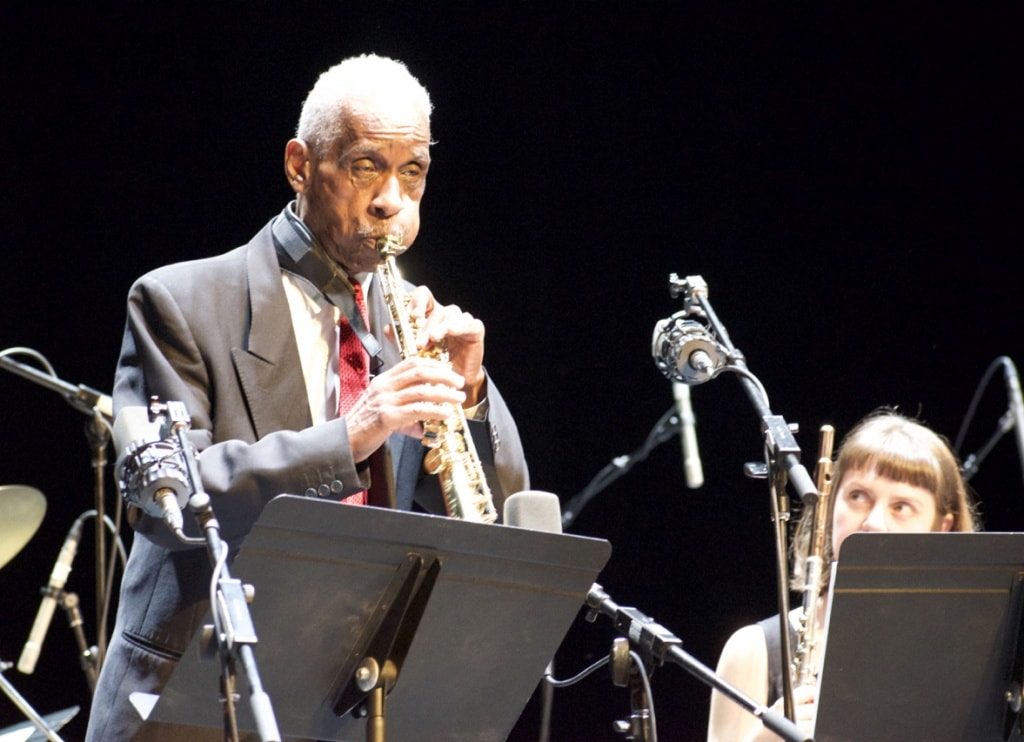
Formed as an innovative and diverse collective during the tempestuous cultural upheavals of the 1960s civil-rights era and countercultural movements, the Art Ensemble of Chicago endures today with some original members and continues to initiate exciting and vital new voices in experimental jazz into the fold. The group is large – several dozen members on stage together at once with hundreds of instrumental parts flying around – and they’re known for eschewing the black-tie stuffiness of classical ensembles in favor of incorporating modern elements like electronics or employing dance, costumes, operatic vocals and theatrics. Spoken-word poetry, as well as cacophonous off-kilter, avant-garde free-form jams, classical pieces and more were among the kinds of things presented. The ensemble’s closing-night set at the Tennessee Theatre was no exception, challenging, delighting and uplifting listeners at every turn. – LB