


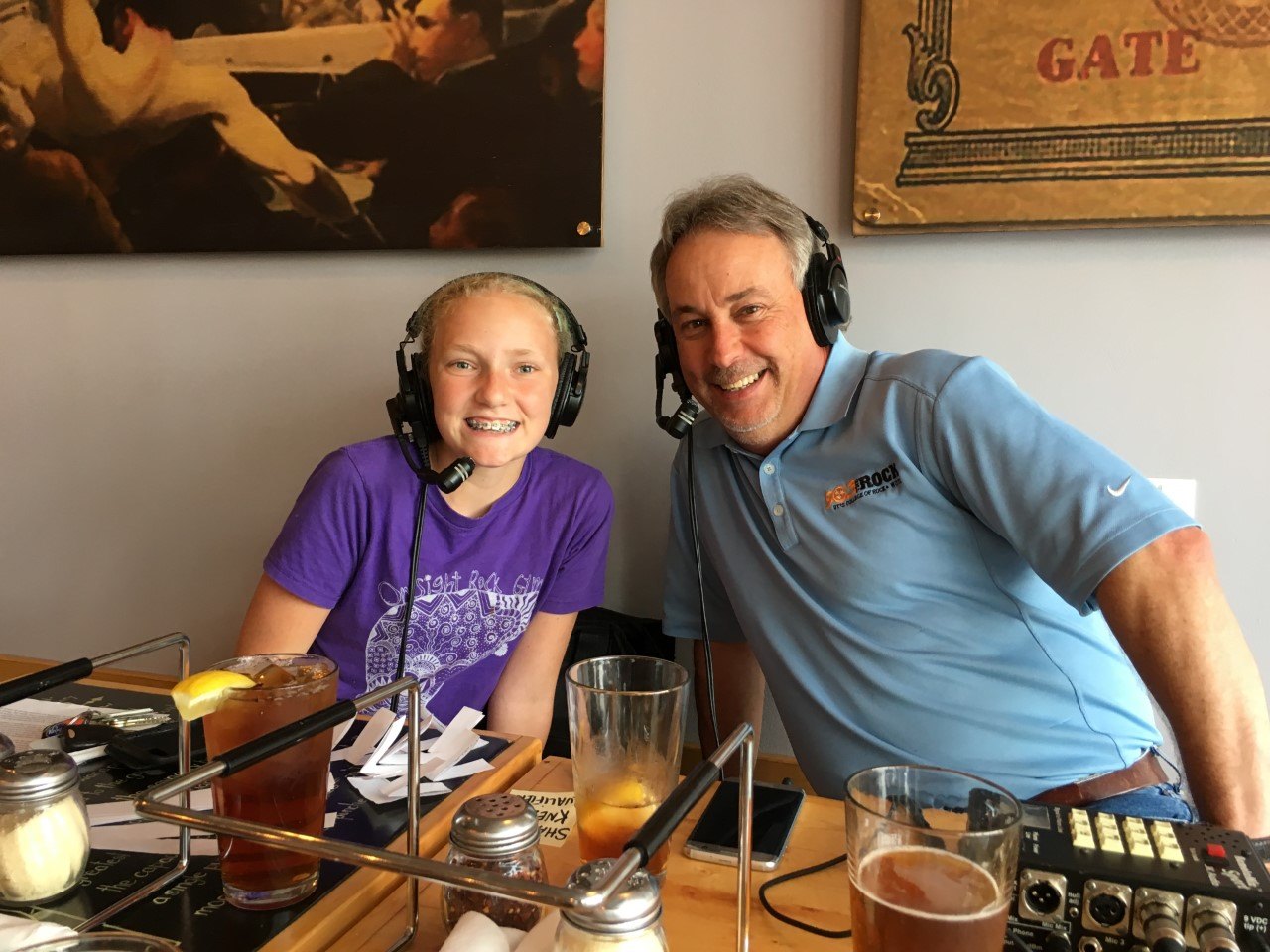
Back in 1982, when WUTK first elbowed its way onto the local airwaves, the 128-watt signal started to fade somewhere on the other side of the 17th Avenue hill.
Scroll too fast down the dial, and you were apt to miss it. By that point, Knoxville’s country radio giant WIVK had been broadcasting for 17 years, and contemporary commercial rock was being blasted from the TV and radio antenna that carried WBIR’s broadcasts. WIMZ was only a year old, but its ascendant popularity coincided with that of MTV, and it would soon dominate the target demographic that normally would have included a college freshman from Greeneville, Tennessee, who rolled onto the University of Tennessee campus a year later.
Benny Smith wasn’t just any other bright-eyed, bushy-tailed youngster from the East Tennessee sticks, though. For one thing, he was familiar with Knoxville, having ventured to town for the 1982 World’s Fair and to attend the occasional Big Orange football game. For another, he was already pretty hip for a country boy, having cut his teeth at WGRV, the AM station that everyone back in Greeneville listened to for news, sports and song.
That he was able to sneak in a late-night cut by the Pretenders or the B-52s made him feel like a young man in the know compared to his freshman compatriots, he told BLANK Newspaper recently.
But then he heard WUTK, which reached just far enough to fill a Hess Hall dorm room with sound and teach him how much about music he still had to learn.
“I was getting out of Greeneville, and I planned on experiencing Knoxville and UT and college for all its worth,” Smith said. “The show, the music, that reached out and got me was one on Friday night called ‘Steady Motion.’ Back then, in the fall of ‘83, it wasn’t even called hip-hop yet. It was a rap show, and Greg Tate did it, and I remember that being the first thing.
“I was already into hip-hop, listening to folks like Whodini and Grandmaster Flash, so I knew it and loved it, but to hear this show and this stuff that I hadn’t heard before and to realize, ‘That’s college radio?’ That’s when it hit me. That’s when it hooked me. Because for a guy who had a lot of fun playing music for his friends in high school that they’d never heard before, it was like, ‘Geez, man, here we go!’”
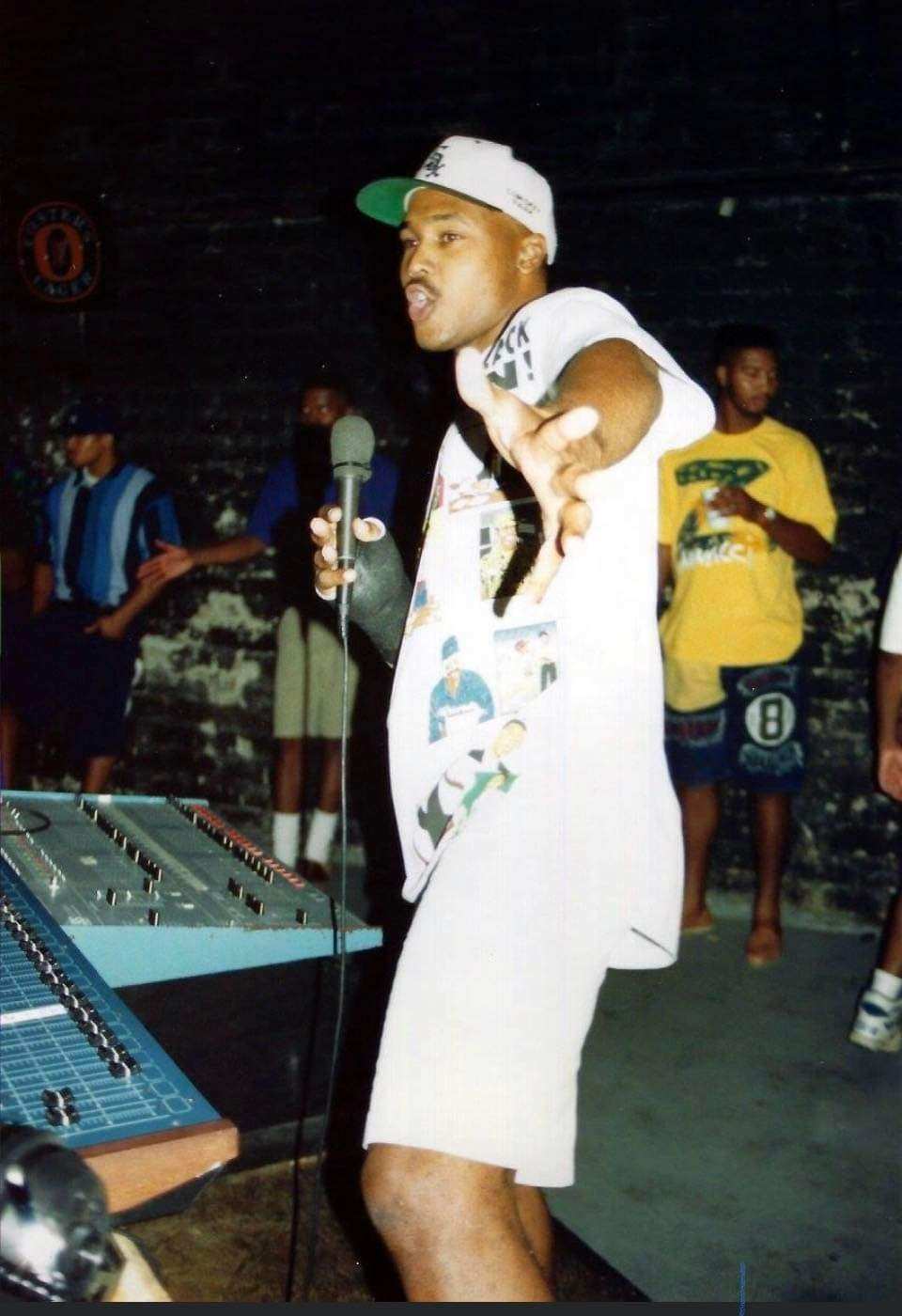
This year, WUTK, 90.3 The Rock, celebrates its 40th anniversary, and while Smith wasn’t there the day they turned the transmitter on, he joined the family during the winter quarter of his sophomore year, and in some form or fashion, he’s been affiliated with it ever since. Sure, there were a few years when it was solely as a listener, those periods when he went to work for other stations, for Ashley Capps’ AC Entertainment, for the now-defunct alternative weekly Metro Pulse.
But ever since 2004, when faculty member Sam Swan sent up the Benny signal and summoned him back home, he’s served as the general manager and the program director. More importantly, he’s served in more roles than he ever gets credit for, from instructor to lecturer, from engineer to mentor, from cheerleader to coach to promoter to ad man to anything else that is required to keep the Scruffy City’s scruffiest radio station not just in league with the big commercial stations, but besting them in one local poll after another, year in and year out.
“We’ve got to compete with the big dogs,” he said. “There’s no A league, B league or C league in radio; it’s just everybody, even though some stations are more powerful, but you’ve still got to compete with all of them. You’ve got to go out and hit up underwriters, and you’ve got to have a product and a brand that can literally hold up when tested, and you’ve got to do it year-round.
“I can’t have my staff go home for Christmas break. Volunteers like Derek [Senter] and Rob [Levering, who cohost “The Funhouse” show at 8 p.m. on Fridays], God bless ‘em, because those volunteers are the ones who help keep this train rolling, and they understand. We’ve got to have student listeners who breathe, eat and sleep WUTK and go out and see the shows that we promote, and we can’t shut down for four months during the summer and at Christmas.”
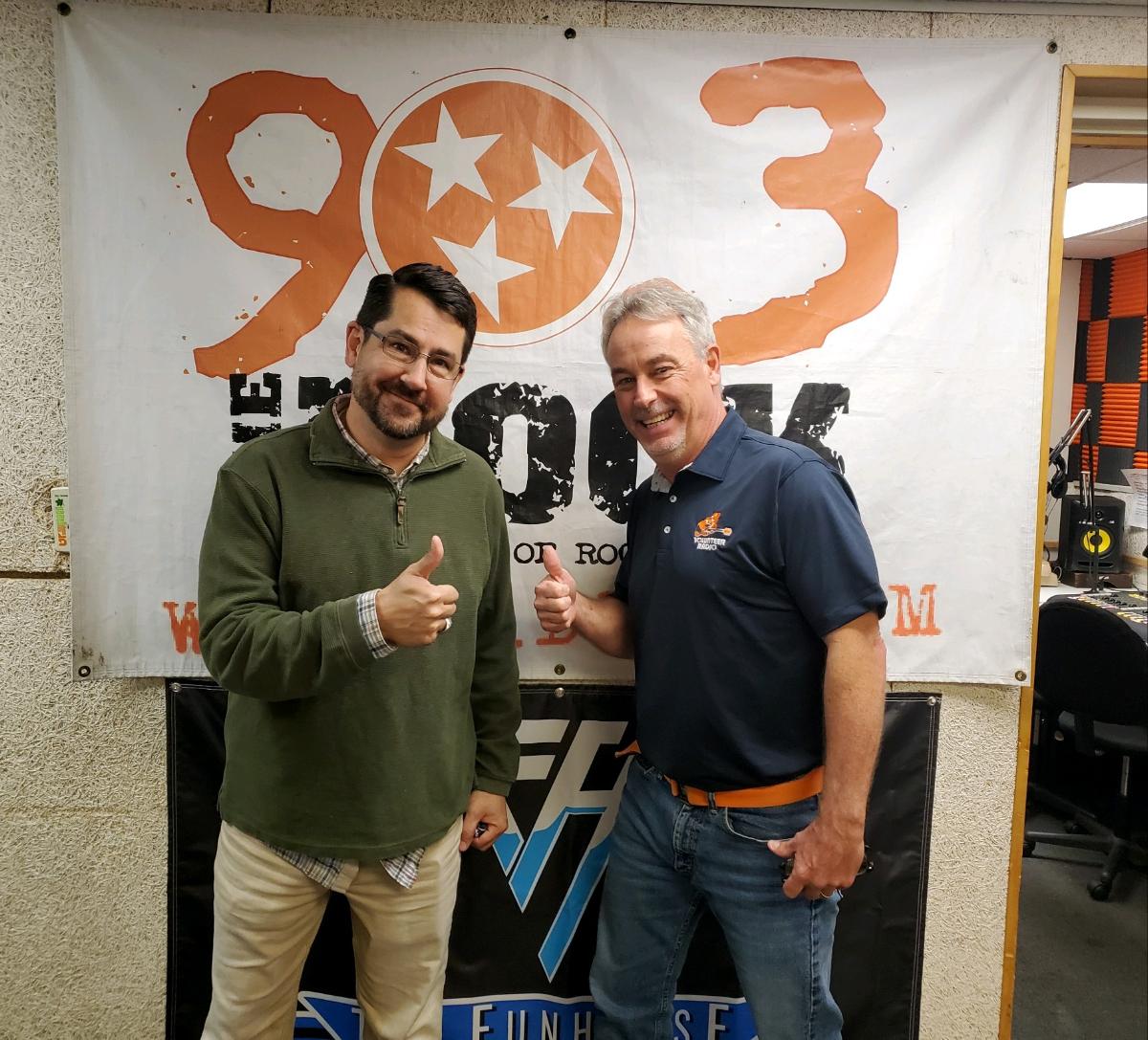
In a way, however, his early-life experiences at the radio hub of his hometown helped set the stage for his utilitarian, whatever-it-takes approach to running WUTK. Back then, he said, WGRV wasn’t just the soundtrack to life in Greeneville; it was life in Greeneville – or at least the closest thing to it that you could get without actually being in more than one place at the same time. As a child, it was the station that played Christmas classics that serenaded the Smith family during their country drives to look at Christmas lights; as he got older, it was the station that broadcast the gridiron exploits of his brother Bill with every Friday night football game.
“I remember in Greeneville, when there was a fire, the fire siren in the middle of town would go off, and what that meant was that everyone would turn on the radio, and they would tell you where the fire was,” Smith said. “I just remember how much of that town would stop when that fire siren would go off and go right to the radio. Even as a little kid, that was powerful because I remember distinctly how every house I would go to, if that siren went off, we’d all go to the radio.”
WGRV also laid the block for Smith’s foundational love of urban music. He was the original host of “The Mothership,” broadcasting “the best in old school funk and rap” from 8-10 p.m. Thursdays, and under his direction, the airwaves are colorblind at WUTK. A track from Knoxville hip-hop artist J.Bu$h might follow a song by alt-folkie Kate Bush; a classic by A Tribe Called Quest might lead into the latest from indie artist Snail Mail. That love of hip-hop, funk, soul, R&B, Motown and other genres can be credited to one man, Smith said: Bill Minton, the WGRV deejay known as the Lone Ranger.
“Back in the day, he would interview these classic soul artists backstage at the Civic Coliseum, and I still play ones he did with James Brown and Etta James,” he said. “I loved R&B; absolutely loved it, and that never stopped. I got so into listening to radio as a kid that at night I couldn’t wait until the AM low-power stations went down and the high-powered ones cranked up, and you got to hear radio all across the country.”
As a 16-year-old high school student, Smith got an internship at WGRV, and on his first day he was offered a part-time job. For his family, it was a prestigious event, more for the company he would be keeping on the job than for anything he would be doing, he said with a chuckle.
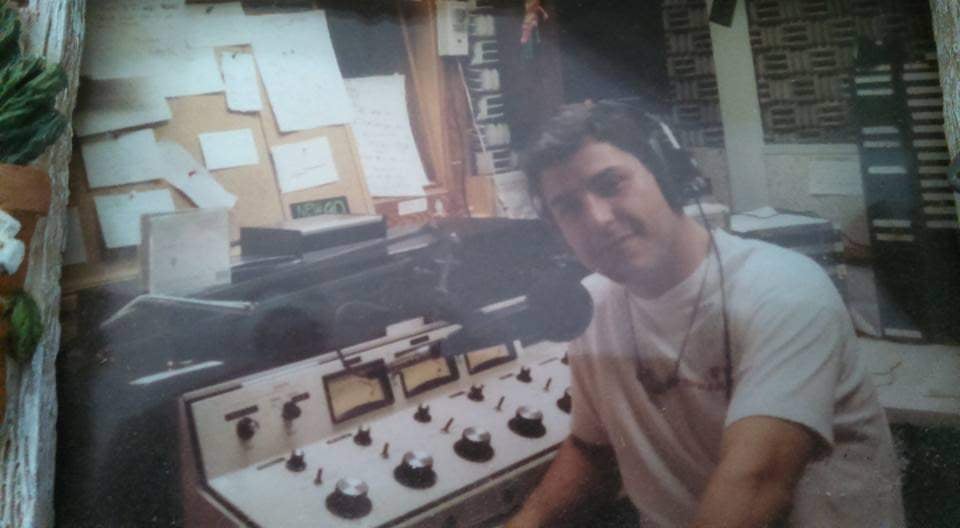
“I started reading those fire announcements, and I remember how the phone would go crazy whenever it started snowing,” Smith said. “Maxine Humphreys! Maxine was the news reporter who was on the air for decades, and I remember my mamaw, wherever she was, would shut down at 12:30 every afternoon for Maxine’s newscast. The whole town would!
“I saw how that programming brought that attachment to the community that it had with the station. It was a big county with a lot of farmland, but that radio station was a central communications point for that whole county. It was cool playing music, but being involved in those non-musical situations helped me see that the community needed that station as a source of local information and news.
“That really rubbed off on me as a kid,” he added. “I thought it was music, but that whole angle showed me what radio was really all about.”
Fast-forward to January 1985, and Smith was a devoted WUTK listener who spent his freshman and part of his sophomore year soaking up not just fresh-sounding hip-hop via “Steady Motion,” but bands like Let’s Active, XTC, the dBs, R.E.M. and other groups, mostly from a cat named Mike Zimmerman, his across-the-hall dorm mate whose tastes in rock ‘n’ roll were slightly more sophisticated. Lo and behold, Smith said, whenever he would turn on WUTK, those same bands would be filling his ears.
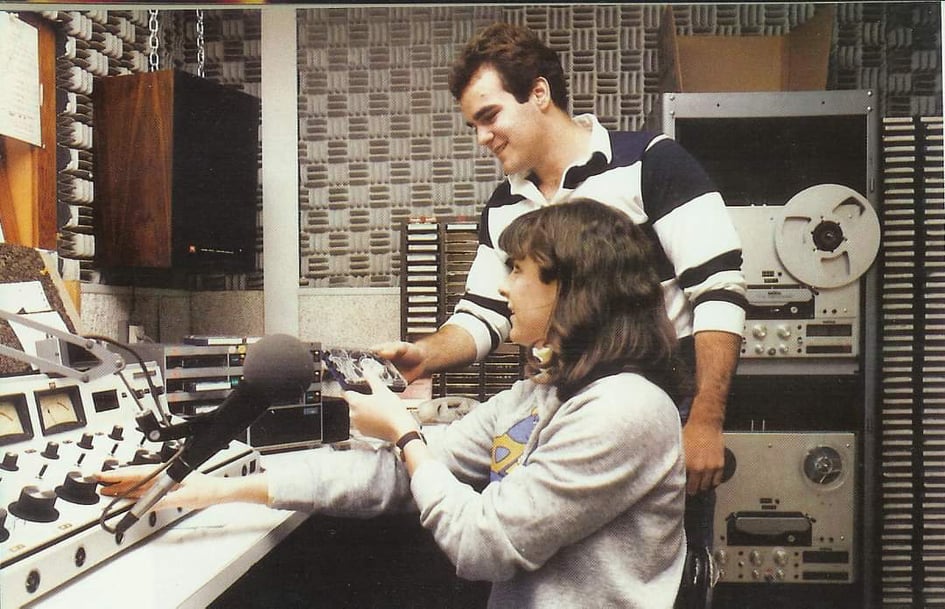
“I remember it was Jan. 2 or 3, and I went to a volunteer meeting, and I still remember that day, meeting there in the front part of WUTK and meeting these people I still do business with today and am still friends with today,” he said. “That day was just so huge for me. I ended up volunteering, and back then we had to turn the station on in the mornings, and since I knew how to do radio from my job in Greeneville, I became the Monday morning 6 a.m. deejay, and I would walk over at 5:30 and power it up.
“I already knew how to work the board, do the remotes, and I had met some people who made me feel like I was right at home. I just remember thinking, ‘Yeah, I’m here to stay during my time at UT because this is only going to get bigger and better.’”
At the time, the station was known as Album 90, but Todd Steed – now the music director at the university’s other station, WUOT – was the WUTK music and news director. He began pushing the station in a more alternative and album-rock oriented direction, and Steed took advantage of Smith’s radio experience to help him in that cause. As the 1980s progressed, WUTK became the only station in Knoxville that was truly alternative, and a number of bands that would go on to varying heights of fame – Toad the Wet Sprocket, for example, or the Spin Doctors – were loyal to the station in a way that transcended any sort of commercial relationship.
“They were coming in and hanging out before anybody really knew them, playing in one room in our little bitty studio, and they would be the nicest people in the world, coming and hanging out with these student deejays,” Smith said. “Just to watch them rise, it was so cool how they always stayed loyal to us. The same thing with the Spin Doctors. Because when they started, it was as college rock and as alternative as it could get, and just to see that music transform and move into the mainstream like it did was so cool because we were there the whole time, pushing it and championing it.”
Today, WUTK remains on that cutting edge. Fitz and the Tantrums? The band’s manager steered them toward WUTK. Other times, the artists themselves recognize the power of a college radio audience, and they make it a specific point to seek out some airtime on The Rock, Smith added. And, he pointed out, that loyalty extended to the other side of the broadcast, as well. He recalled how one previously mentioned classic rock station managed to pull some strings with Warner Bros. Records and take over promotion for a Bijou Theatre show by Knoxville’s own The Judybats.
“And the fans revolted!” he said with a chuckle. “They tore down all of the WIMZ posters, they booed the WIMZ deejays. I wasn’t there, so I had no idea. I was [angry] because they didn’t even play The Judybats, but I remember fans calling the next day to tell us about it, and it was almost like they were still out of breath from running to call us! I think that shows not only the pairing we’ve had over the years with the music scene, but also the fierce loyalty our local music scene supporters have.”
After graduating in December 1987, Smith stuck around for another four years, working on a thesis he never finished, but by 1991, the local market had changed. Venues like Planet Earth and Ella Guru’s were closing, and suddenly there were few places in East Tennessee for alternative bands to play. Managers, booking agents and touring artists all called Smith, a guy they considered to be in the know.
“Literally, by default, I just started booking shows for bands like Scull Soup, Brian and the Nightmares, Plain Jane,” he said. “They knew they had people who wanted to come see them and drink beer and spend money, so I started finding them shows at places like Club Taboo or Ace of Clubs. But we kept these bands coming through, and that’s what started my concert promotion business, almost by default.”
He continued to stay involved in radio, starting a show called “Soppin’ the Gravy” (with co-host Shane Tymon) on a fledgling station called WDVX, and he took his concert promotion skills to AC Entertainment. But after 7 1/2 years, he eased back into radio, this time with WOKI, 100.3 The River, under station general manager Aaron Snukals. The River died a sudden corporate death, and Smith went to work for Metro Pulse until October 2004, when Sam Swan called.
“He had been my advisor, and he said, ‘The station’s not what it needs to be; it’s not what it used to be; it’s not what you know how to make it. We need you to come back,’” Smith recalled. “I was ready to get back into radio, and I wanted to go back to UT. I bleed orange, and I’ve always thought WUTK is an effective learning lab, so I literally got the dream call that day.
“It may not have been under dream circumstances funding-wise or budget-wise, but to go back to a place that I knew made a difference for me and so many people, it’s literally been a dream.”
The job isn’t without its struggles, but the university’s administration is probably more supportive in 2022 than it’s ever been, Smith pointed out. The station has received money to purchase new transmitters and equipment (and now broadcasts at 1,000 watts), to pay salaries and benefits for a handful of full-time employees and to offer some stability so he can spend as much time educating young radio proteges as he does hustling up underwriting funds.
The challenge remains, however, of how to engage the young minds and ears of the station’s target demographic. One of the ways he hopes to do that is through podcasting. A new podcast studio was born of pandemic-planning to keep students interested and engaged and to demonstrate that, despite the dilution and interchangeable formats of most commercial stations, WUTK – along with its non-commercial Knoxville siblings WUOT and WDVX – offer something truly unique … for student listeners, student learners and the community as a whole.
“College radio stations allow us to free-form, to do whatever we want,” Smith said. “My students pick the music, and even though funding issues are tough, it’s a business model we’ve got to make work, and it has to involve students. And it’s tough some days. They see how tough it is, how stressful it is, but their involvement has always been the No. 1 priority for that lab.
“Because that’s what WUTK is: an award-winning national student lab, and we’ve never lost sight of that. That’s what we’re always going to be … but we’re also going to be one of the coolest radio stations you’ve ever heard, and when you listen to it, you’re listening to Knoxville.”
Check out several testimonials from Knoxville musicians and others here.
Here’s a tribute piece to Smith written by former DJ Tyler Larrabee.
wildsmith@blanknews.com



Benny is the best! Love him and Megan and his beautiful daughter so much ❤️