Two of Kentucky’s best musical exports performed at Knoxville Civic Coliseum on Tuesday

Words and photos by Bill Foster
On paper, a pairing of Tyler Childers and Sturgill Simpson sounds like a perfect fit: Both are strong country voices hailed as saviors of real country music, both are prone to rail against the industry and both are from Kentucky and share a past familiarity (Simpson produced and played on Childers’ breakthrough album “Purgatory”). In practice, Childers has made three records of increasing skill yet ploughing the same terrain while Simpson has made an outlaw country record, an ode to psychedelics, a love letter to his son and, most recently, a straight-out rock record that sounds like a cross between ZZ Top and the “Heavy Metal” soundtrack mixed by someone on an exotic cocktail of ecstasy and DMT.
In concert, I’ve been fortunate enough to see each of them several times in venues ranging from the Jig & Reel (Childers) and Barley’s (Simpson) to the main stages of Bonnaroo and Forecastle. They both tend towards setlists that don’t vary (this was the fourth show of this tour, and the setlists haven’t changed for either artist so far), and both have excellent bands that are equally adroit with a country swing or a throbbing rocker. But while Childers’ concerts have mostly been extensions of each other, Simpson has been wildly different every time I have seen him. This difference makes this particular mix either risky or appealing depending on one’s nature.
Tuesday night’s capacity (7,100) show, the first of two at the Civic Coliseum, was no exception. Childers is positioned as the opener, but judging by how full the arena was before he played and by the number of people who left early (fully two-thirds of the crowd was gone by Simpson’s final song), this is as much a co-headlining tour as anything – and one wonders how sustainable that can be. Childers played a 16-song, 75-minute set that easily was the best I’ve seen from him. Coming near the show’s middle, a clear highlight was the threesome of “Feathered Indians,” “Whitehouse Road” and “Country Squire.” New single “House Fire” was preceded by a ballsy instrumental version longer than the actual song in which each band member got to flex a bit. It was a brilliant move that was reminiscent of Springsteen’s instrumental introductions to “Prove It All Night.” “All Your’n” was another highlight, and the set ended with some heartfelt thanks from Childers and a solo acoustic version of “Nose to the Grindstone.”
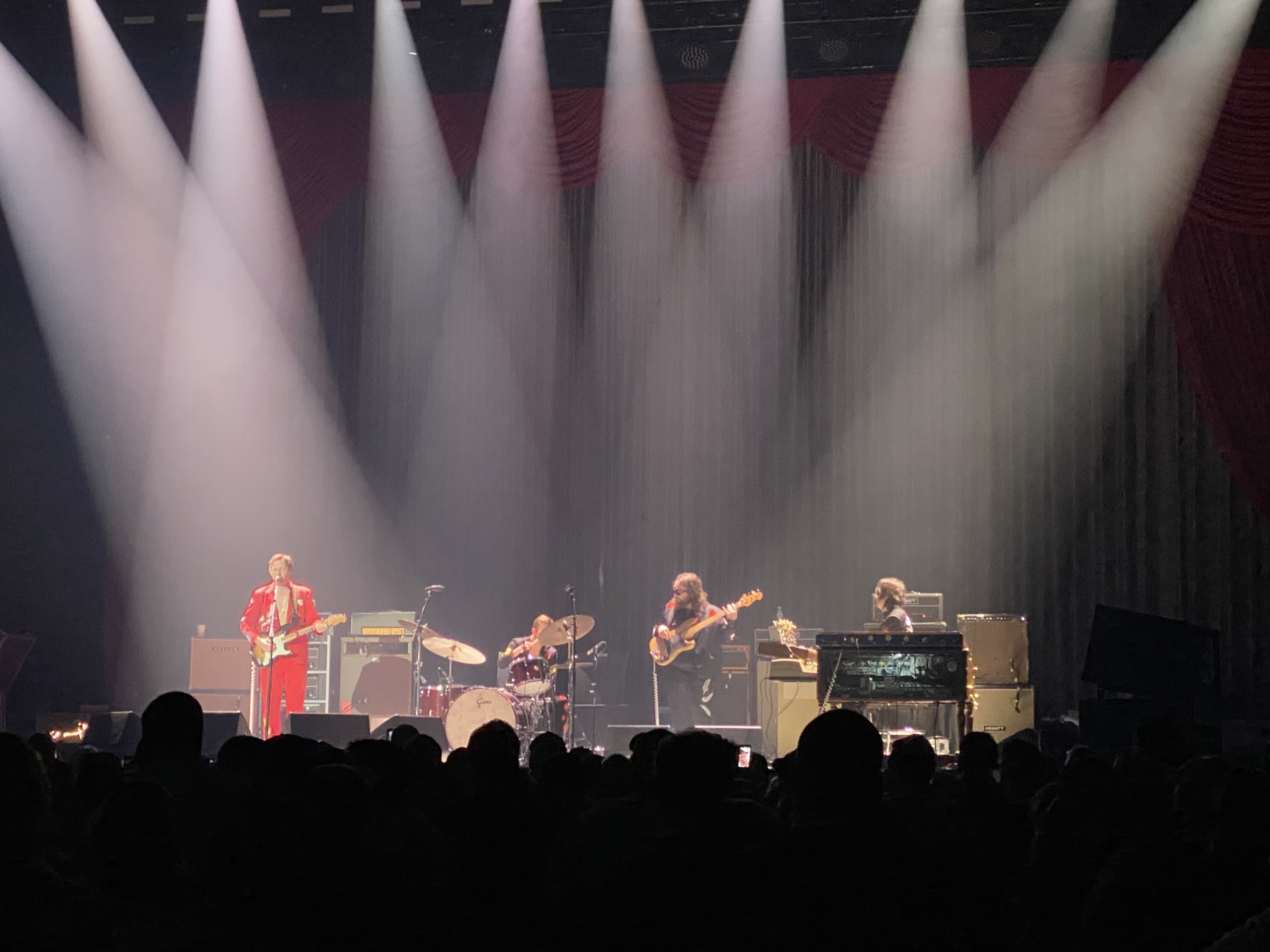
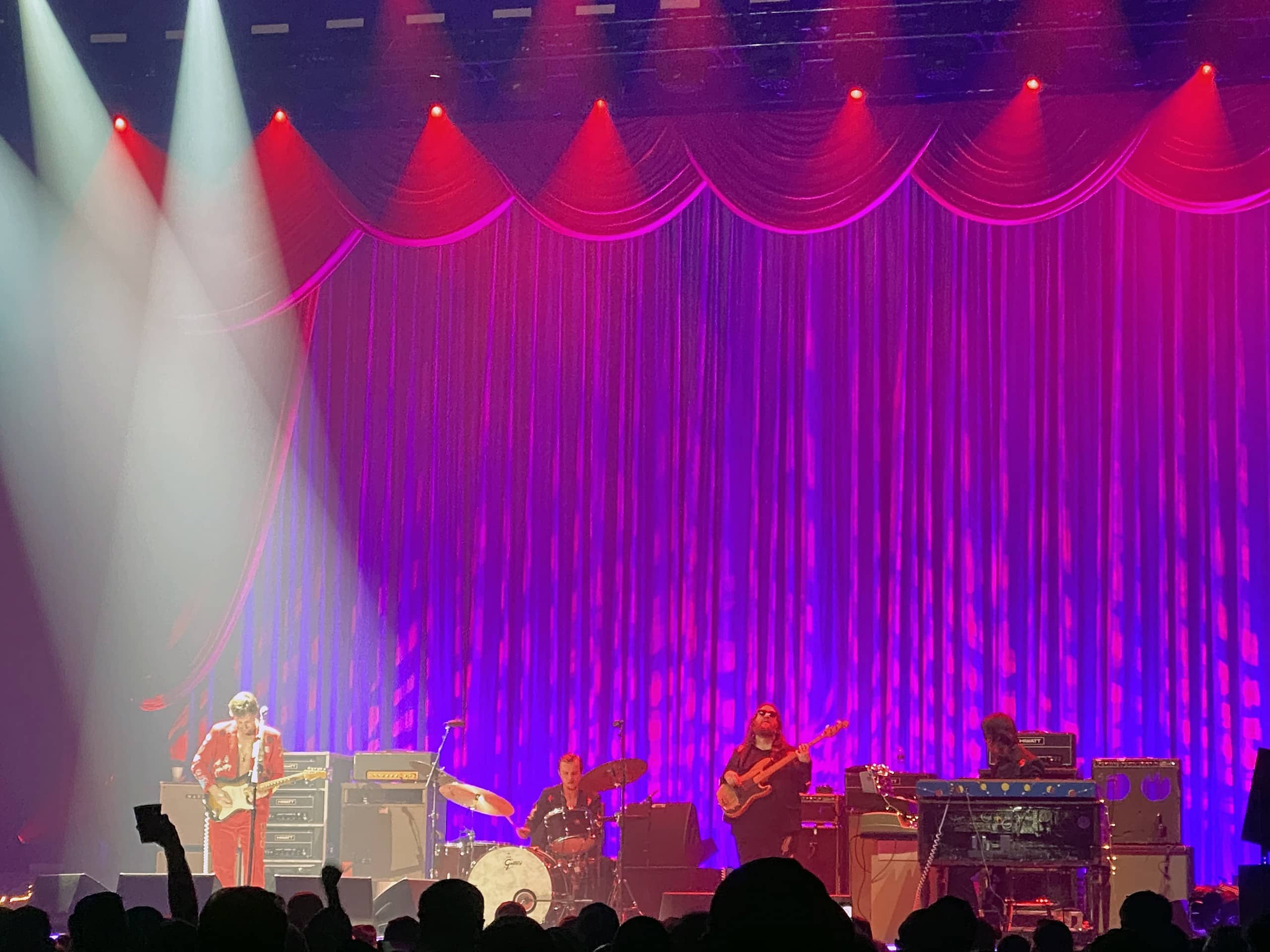
After a set break during which the crew tore down Childers’ painted RV backdrop and revealed Simpson’s much more tasteful red theater-curtain setup, Simpson tore into his new album. It’s impossible to believe that, after all the controversy and discussion of this record and a couple years of Simpson becoming more and more jammy onstage, that folks still could be surprised, but there were audible gasps and complaints near me, and several people headed straight for the exits as he tore into “Ronin.”
Dressed in the most amazing one-piece red jumpsuit and playing a sunburst Les Paul, Simpson shredded for the ages as the band tore through all 10 songs of “Sound and Fury” in order. The four-piece band (including Simpson) were on fire, with exceptional notice taken of keyboardist Bobby Emmett. “Well, that’s that,” Simpson declared as the band finished the album. They then continued with another dozen songs, including two each from his first two records and a half dozen from “A Sailor’s Guide to Earth.” Throughout, Simpson’s voice was a marvel, floating free and clear above a sometimes crowded background and at all times sounding simply arresting in its intensity, lucidity and strength.
Highlights included a completely re-imagined “Some Days,” which somehow became a funky, James Brown-influenced powerhouse instrumental while Simpson sang the exact same melody and tempo as the original on top. His only covers were the Willie Nelson cover from his first record and the “When in Rome” cover from his second. “Breaker’s Roar,” “Brace for Impact” and “Sara” were excellent, but the showstopper was an almost 10-minute apocalyptic run through “Call to Arms” that closed the show.
As I said, there were a lot less people at the show by that point, although those who were there moved up front, which made for a party atmosphere. The tonal contrast was jarring, I admit, or perhaps it was just late on a Tuesday. But it was like seeing Merle Haggard open up for Cream. That’s a bit much for people who like country music, and maybe a bit too much even for some people who like rock music. But, man, if you just like MUSIC, this was a show for the ages.