Event packs Regal Riviera Nov. 14-16

Time flies when you’re having fun.
The second iteration of Film Fest Knox, held Nov. 14-16 at Regal Riviera in downtown Knoxville, was a whirlwind of a weekend full of promising performances, charming direction and a whole lot of well-crafted cinema.
The narrative of the festival felt right, as it started with shorts and ended with a lighthearted yet profound flick about the end of an era.
Exhibiting a fun and productive flow, everything about the weekend seemed to work.
Artistic director Darren Hughes, Visit Knoxville Film Office director Curt Willis and Paul Harrill, Elev8tor Pitch judge and FFK’s Development Lab coordinator, did an admirable job of introducing each film or block, which calmed the nerves of those arriving a few minutes after scheduled showtimes and diminishing the chaotic nature that sometimes accompanies festivals that feature indoor events.
They were on point all weekend, making the filmmakers they interviewed feel comfortable and acting as conduits between the creators and the audiences. Visit Knoxville’s Kim Bumpas and representatives from Regal were equally locked in for the duration and by Sunday night, everyone in attendance was clamoring for year three.
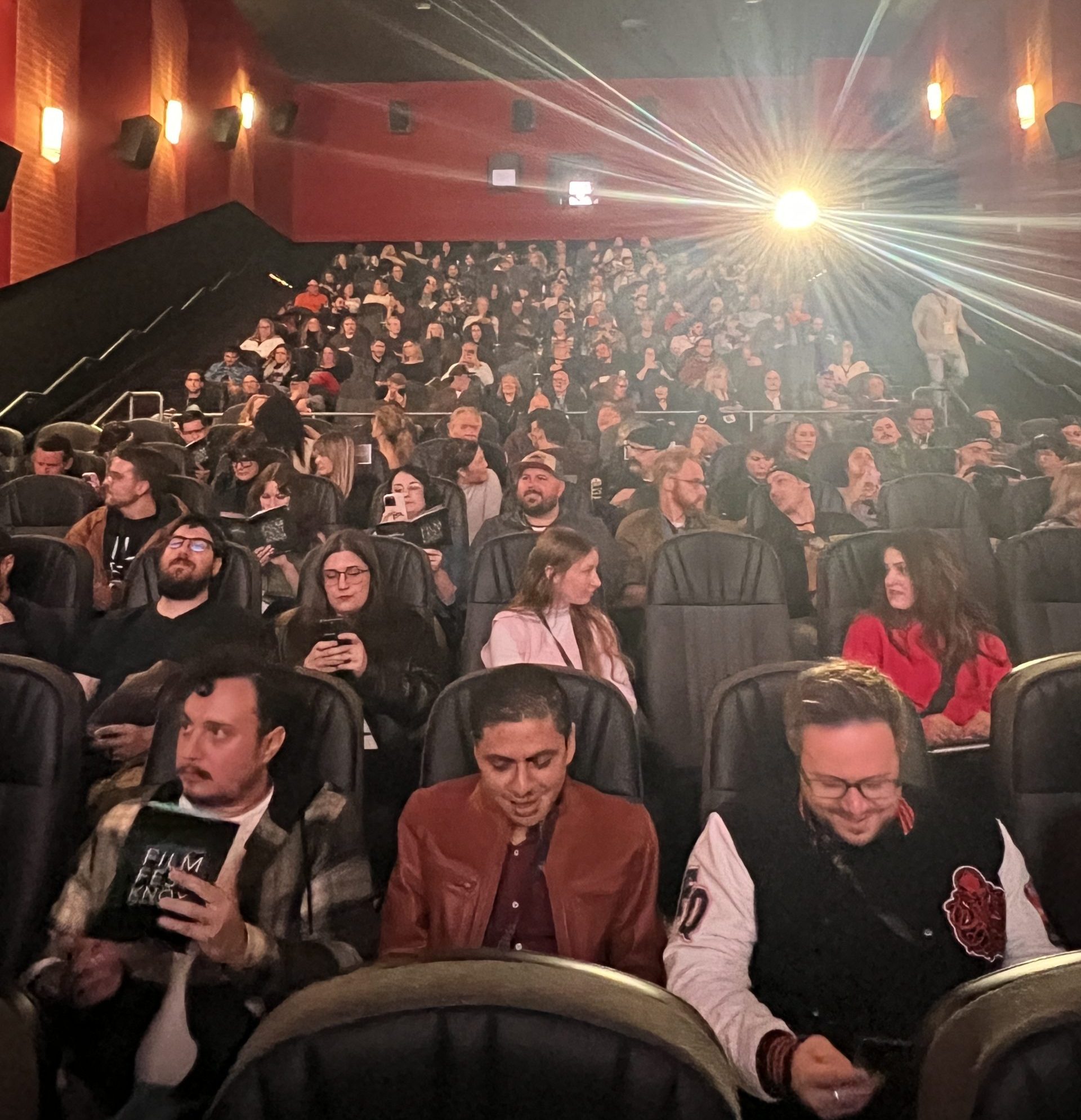
Opening night featured a packed house at the Riviera. The evening featured the Elev8tor Pitch competition, which focused on the top eight (of 21 submitted) short films made by filmmakers connected to East Tennessee. This contest exemplified the festival’s commitment to fostering local talent by putting these films in front of several credible forces in the independent filmmaking world.
Judges for the competition included Taylor Shung, executive producer of the Oscar-nominated film “Past Lives” and producer for Oscar winner “Nomadland;” Kelly Williams, an Independent Spirit Award-winning producer; and Kristen Shrader, who has 20 years of experience in entertainment publicity with companies like Warner Bros. Discovery and Netflix. Harrill – also a professor of cinema studies at the University of Tennessee – rounded out the panel and leads the lab that will foster the winners.
Exposure during the festival was just the beginning for the victorious entrants, though. The first-prize winner received $5,000; second place earned $3,000 and third pulled in a cool grand.
Friday featured four films, and it was off to the races from there.
Catching 1971’s “Let’s Scare Jessica to Death” on day two was an absolute blast, and there’s just no other way I would have been able to know about this film let alone catch it on the big screen without FFK presenting it. It is the first horror film I’ve seen in a theater in a solid decade, and it renewed my desire to again explore the genre. There were three other films under the Revival category that screened over the weekend: “Wanda” (1970), “Northern Lights” (1978) and “Desert Hearts” (1985).
Chatter around attendees’ favorite films evolved throughout the weekend, and as patrons began to arrive at the festival’s official afterparty at Scruffy City Hall, that venue’s proprietor Bernadette West raved about “Griffin in Summer” and the film’s young lead. (Read on for more about both.)
After the final awards were handed out, I personally couldn’t quit talking about “Bob Trevino Likes It.” Directed by Tracie Laymon, this story is as affecting as it is entertaining. Perfectly cast as Lili Trevino, Barbie Ferreira (of “Euphoria” fame) proves within the film’s first few minutes that she is ready to anchor a feature-length movie. Nothing comes easy for her character, though, and – as the audience would learn in the post-film Q&A – this story was based on events that plagued (and blessed) Laymon’s real-life journey, with the film’s twists alternating between severe cruelty and immense kindness. John Leguizamo, too, does some of the finest work of his career in this one, and every character that is worth rooting for traverses deep into viewers’ psyches.
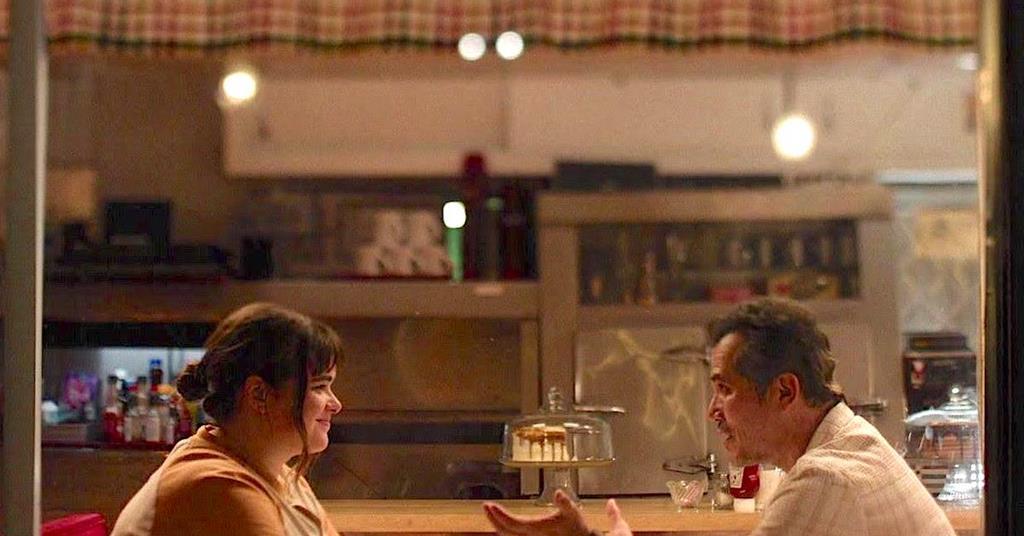
“Bob Trevino Likes It” is a film about unlikely family that extends that special bond to everyone in the audience in a beautiful, realistic and surprising way. Laymon has found a courageous and triumphant way to take the difficult moments she’s had and use them for good. With this film, she’s made sure that all those incurred experiences were not in vain.
In the end, neither of these films received awards over the weekend, which speaks to the quality and depth of filmmaking on display. This is a thick festival that appeals to its attendees in different ways. As a result, the answers for favorite of the weekend varied greatly. Further contemplation might reveal different results later on. For now, a few days after the festival wrapped, one of its main architects is resolute in his impressions from the weekend.
“Without a doubt, this has been one of the most fulfilling and rewarding things I’ve ever done,” Willis says. “It’s a perfect mix of collaborations. Darren is a very talented programmer. Paul’s a great filmmaker, and his connections to great people in the indie film world make this thing possible. A lot of the talent we had on the ground were due to his connections.”
Willis continues with praise of his fellow co-founders and others who make the festival possible.
“Kim is the best problem-solver in the history of Knoxville and a great leader,” he says. “It’s a really nice mix of creative ideas, and the Visit Knoxville events team is a well-oiled machine. It feels perfect.”
In terms of the future and the focus on those who submit their art to the festival, Willis doesn’t hesitate to welcome their creativity.
“We want to shower these filmmakers with love,” he says. “It’s a haven for collaboration at the end of the festival run. And several of the participants this year are interested in calling Knoxville home for their next project.
“It’s a fun, warm festival. But it’s a serious festival. I think we really have something, and I want this for Knoxville.”
BLANK special correspondent and longtime Raven Records and Rarities co-owner Jack Stiles attended the festivities throughout the weekend, as well. As a longtime student and enthusiast of moviemaking, his knowledge of the artform is virtually unparalleled locally, and he was generous enough to share with you, dear readers, some of his impressions of what he witnessed. – Rusty Odom
Kudos are in order to Visit Knoxville and all the folks involved for continuing their commitment to excellence with this second edition of Film Fest Knox.
They, and our city, should take great pride that Film Fest Knox is one of the better regional film festivals around – a feat accomplished in only two years.
All the 2024 films were varied, engaging and worthy of the big screen. That can’t be said for quite a few older and more celebrated film festivals. Here are some of the moments and films I enjoyed the most.
The fest opened with Elev8or Pitch, which featured eight short films chosen by a selection committee to be screened in front of a panel of judges and a live audience, followed by a pitch to the judges by the filmmakers about their films’ worthiness of becoming adapted into a feature-length film. The top three contenders received awards and cash prizes.
Here are my top three of these based solely on their feature-film potential:
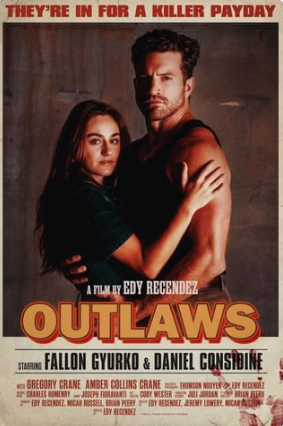
“Outlaws“
This is a comic thriller about a couple of home-invading robbers who pick the wrong house (that of a rich politician, who also happens to be a serial killer). The premise is nothing really new, but it definitely could be fleshed out to real crowd-pleasing proportions. The Film Fest Knox jury picked it No. 2.
“To Hell With It“
This is a straight revenge thriller from a talented director about a prostitute turning the tables on a stalker/killer. Well-acted and well-paced, this old-school exploitation effort has great potential to deliver the action goods while still making a legitimate, non-preachy statement about abuse and other issues often ignored (unlike, for instance, one of its inspirations, “I Spit on Your Grave”). The jury picked it tied for third. In this case, since there was a tie, both films received the $1,000 cash prize.
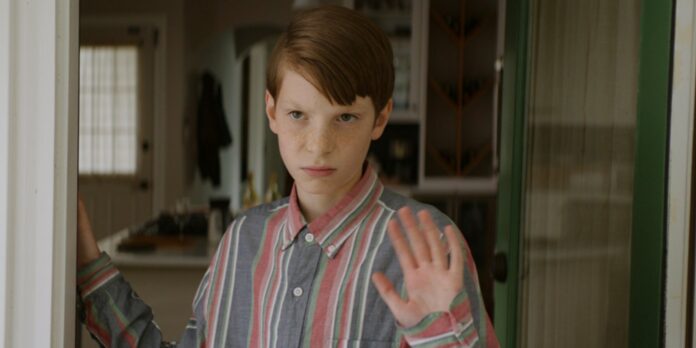
“A Scout Is Kind“
This is one in which Boy Scout best buddies experience a falling-out over a girl and other things. This drama set in the Smoky Mountains (though actually shot in Utah and Colorado) truly makes you care for its three characters in a scant eight or so minutes. The feature version might be just as compelling as the Spielberg films that inspired it. The FFK jury gave it the top prize.
The American Regional Cinema Competition shines as the highlight of Film Fest Knox. In this category, five features battle for an incredibly prestigious Oscar-qualifying run in select Regal Cinema locations across the nation. The winner this year was “To Kill a Wolf,” a modern reimagining of “Little Red Riding Hood” with an intriguing twist.
The special jury prize went to “Bitterroot,” a drama about a middle-aged Hmong man who is reeling from a painful divorce and seeking comfort and a new outlook while caring for his aging, traditionalist mother in the deceptive tranquility of gorgeous, rural Montana. It’s a simple story told from the perspective of a culture most of us know little about. The film is intriguing, insightful and beautifully photographed with Terrence Malick-inspired nature asides.
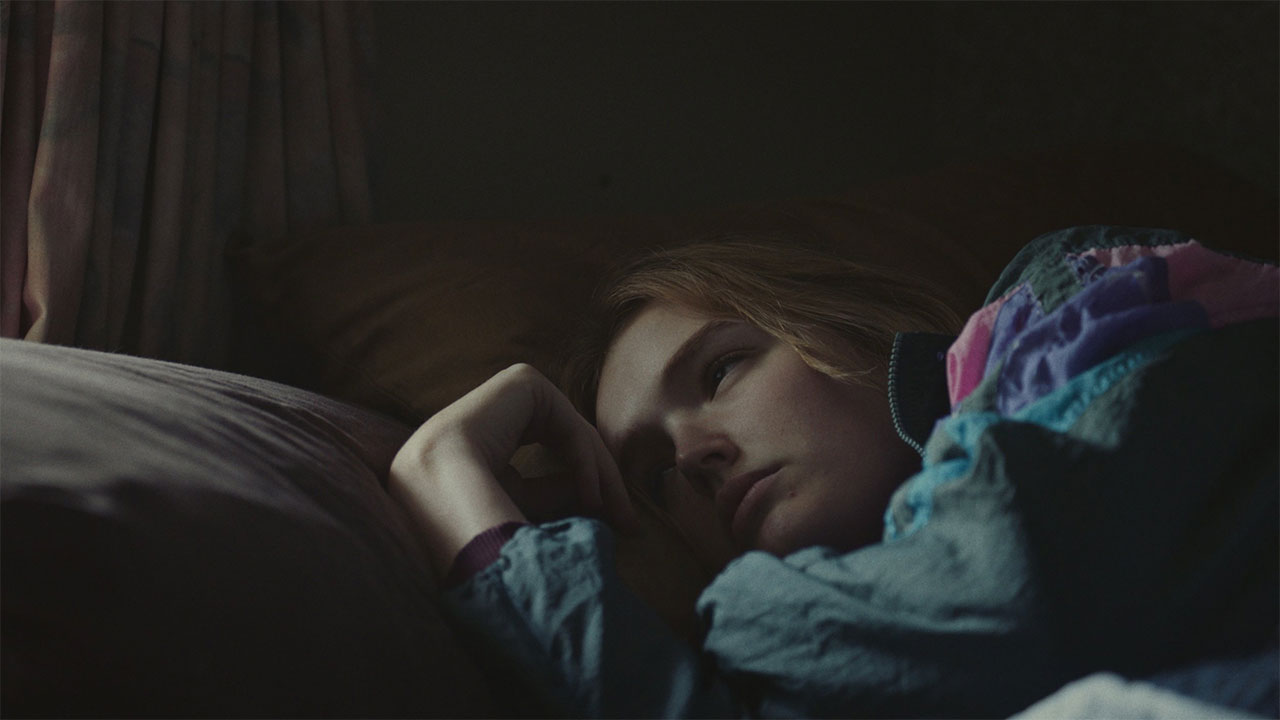
My favorite film of the five, though, was “Griffin in Summer,” a coming-of-age teen comedy/drama about an ambitious 14-year-old playwright who becomes smitten with a 25-year-old handyman hired by his mom (played by the great Melanie Lynskey).
Everett Blunck is a marvel as Griffin, the self-assured, pompous teen whose ambitions alienate him from friends and family alike. The opening scene at a talent show where Griffin acts out a scene from his play about a dysfunctional family is hilarious while also providing a bit of foreshadowing. Praise also to Owen Teague (both chapters of the modern “It” franchise, “The Reptile”) as the handyman, a “performance artist” longing to return to New York City. When he does, thus triggering a desperate reaction from Griffin, the film winds down in a very satisfying, non-cliched, non-sappy way.
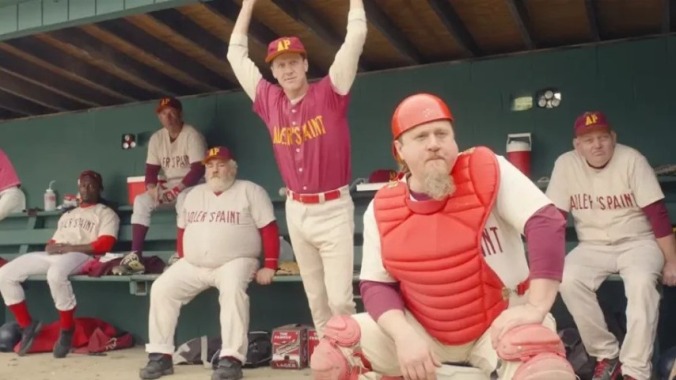
My favorite film of the weekend was “Eephus,” a Massachusetts-based comedy/drama set in 1994 about a men’s recreational baseball game that stretches beyond extra innings on a field’s last day as a beloved baseball diamond before it becomes the foundation for a new school. For non-baseball fanatics, the title comes from a pitch – a cross between a slow-pitch softball and a curve ball – developed by Pittsburgh Pirates pitcher Rip Sewell in 1943 that a teammate loosely named after the Hebrew word for “nothing. ”
This excellent film uses America’s pastime as a metaphor for community, nostalgia and loss. It was shot at Soldiers Field in Douglas, where the Red Sox and Yankees actually played a game in 1946 to celebrate the town’s 200th anniversary.
Using a Robert Altman-esque approach of overlapping dialogue and documentary techniques, director Carson Lund and writer/producer Michael Basta masterfully weave a tapestry of pure joy. Whether or not you love baseball, you will be entertained by the fantastic large cast of mostly unknown actors who perfectly capture their characters down to their favorite curse words and (in)ability to spit.
By the time ex-major league pitcher Bill “Spaceman” Lee mystically wanders out of the woods like a feeble version (not in his prime here) of Shoeless Joe Jackson from “Field of Dreams,” a third of the way through, you will be fully hooked. Also of note, famed documentary filmmaker Frederick Wiseman provides the opening narration over the radio, a key component of how baseball enthralls many of its fans.
Seek out “Eephus” whenever and wherever it screens for a wonderfully comic look at what it means to be part of a community and what it takes to keep that sense in the face of upcoming loss.
The other component to the festival was the Made in Tennessee program. This package featured two full-length films in “Angel of Light,” which took home honorable mention honors, and “Glass Valley,” which won the category’s Jury Prize. This tentacle of the fest also featured 17 shorts, which ranged in runtime from three minutes to 35 minutes. The longest of the bunch, “How To Sue The Klan,” won best film in the Made in Tennessee competition.
If this year were any indication, 2025 should feature a great program of films that deserve to be seen on a large screen with a large audience. Until then, the balcony is closed. – Jack Stiles
Complete List of Winners
American Regional Cinema Competition:
Best Film: To Kill a Wolf, written & directed by Kelsey Taylor
Best Director: Brandon Colvin, The World Drops Dead
Jury Prize: Bitterroot, written & directed by Vera Brunner-Sung
Made in Tennessee Competition:
Best Film: How to Sue the Klan (John Beder, Dir.)
Jury Prize: Glass Valley (Nicholas Crockett, Dir.)
Honorable Mentions:
– Angel of Light (Crue Smith, Dir.)
– Perfect Words (Anna Clary, Dir.)
– Plus One (Maddilyn Shea, Dir.)
Elev8or Short Film and Pitch Competition:
1st Place: A Scout is Kind. (Barrett Burgin, Dir.)
2nd Place: Outlaws (Edy Recendez, Dir.)
3rd Place (TIE): To Hell With It (Melanie Lund, Dir.) and Keep Watch (Kevin Keck, Dir.)