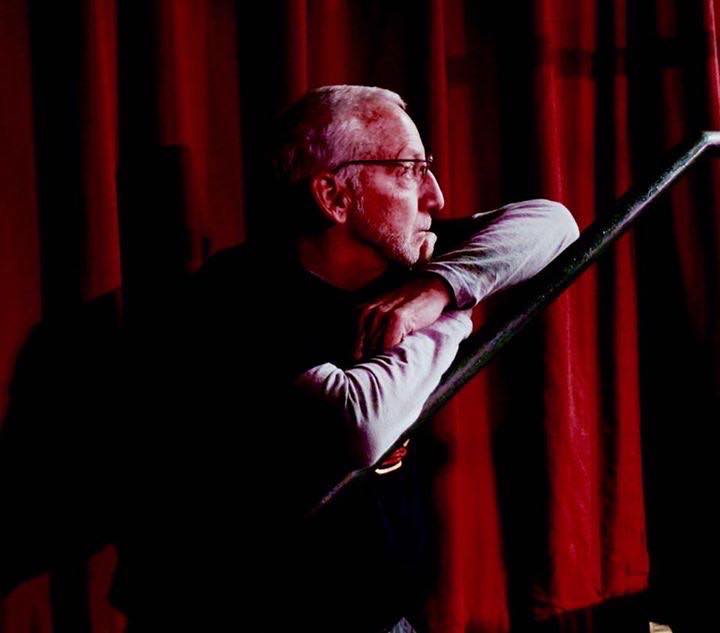
Event guru Aaron Snukals joins team of Knoxville’s newest party planner
If nobody blared AC/DC’s “Back in Black” as Aaron Snukals walked into the offices of BigWheel on his first day, they should have.
It was, he told BLANK Newspaper recently, the first time in 13 years that he’s hung his hat in a Knoxville place of employment, and given the cachet as an event coordinator he brings to BigWheel, the company’s intentions to expand beyond its role as a boutique web-design firm has gotten a shot of nitrous.
It is, he says, a win-win-win: for himself, for BigWheel and for individuals and organizations who want to put together festivals and events in a rapidly expanding, increasingly entertainment-hungry market.
“I love putting on events, and a lot of times, people call me a little P.T. Barnum,” Snukals said. “I like seeing people smile and knowing that maybe they’re forgetting about their worries, whether it’s at a concert for two hours or a festival for three days. That’s what gives me excitement and meaning for being here, and now with BigWheel, I can help three or four or five different charities if they want to do events or get involved with whatever.”
In a sense, the union of Snukals with BigWheel is serendipitous, given the parallel paths both company and individual have experienced. Case in point: In 1995, when the genesis of BigWheel came together as Digital Media Graphix (DMGx), founded by graphic design majors Wade Austin and Kurt Jenkins, Snukals was a sales manager for South Central Media. In 1999, a year before Snukals took on a role as general manager for WOKI-FM 100.3 The River – a much-respected Americana/alternative station in Knoxville that went out of business in 2003 – DMGx moved to offices in the Old City and began working with clients like Scripps and Ed America.
In 2008, the same year Snukals accepted a position as director of marketing at Smoky Mountain Harley-Davidson in Maryville, the company Gigmark, according to the BigWheel website, contacted DMGx about “developing software for an interactive USB that allows artists and companies to share information with customers in real-time. DMGx successfully designs and develops the product, and Gigmark acquires a patent for the IFD (Interactive Flash Drive).”
Enter BigWheel CEO Parker Frost, a native of Grand Rapids, Michigan, who moved to Knoxville in 1997 from Chicago. At the time, he wanted to go into business for himself as a manufacturing representative, a career at which his father had been successful. Dad offered to show Parker the ropes, and when he arrived, he found a scruffy town that’s a pale shadow of the vibrant city it’s become today.
“There was just a lack of services, of restaurants, of things to do, especially in ’97,” Frost said. “Downtown was a ghost town after 5. Turkey Creek wasn’t built. It was just a different town than it is now.”
By 2006, Frost, his father and their investors had transformed their representation into a company called The Plastic Source, which had grown to a $20 million business. They sold it, and Frost took his share and began sourcing materials from China for domestic businesses as TPS3, a plastic, printing and promotional-products firm. A high-school friend with whom he started the company died in a car wreck, however, and when a mutual friend living in San Francisco ran into a particular business problem, he reached out to Frost.
“He was into USB technology and was doing it out of L.A., and even though he had the hardware, he was having problems getting the product out of China,” Frost said. “He had developed a machine that – if you went to a concert or a convention to listen to speakers or a show – it would download a thousand a minute onto a USB drive, and people could get the live recording off of the soundboard and walk out right then.”
That’s where Gigmark entered the picture, and in mid-2008, Frost and his team began to wonder if it was possible to enable those USB drives for two-way information so that bands or businesses could communicate with drive recipients. His connection in Los Angeles was the hardware guy, which led him to contact DMGx. They successfully developed the idea, Gigmark obtained the patent and things seemed poised for success – until the recession, combined with declining sales in the music business, pushed the company to take a detour through corporate America. They fine-tuned the concept so that those USB drives, when inserted into a computer, would call up a host computer, update the content and send back user analytics. Companies like Philips Lighting were able to replace telephone book-sized catalogs and generate sales leads, and the success led Frost and his partners to approach DMGx about a partnership.
In 2010, Gigmark and DMGx would merge; in 2013, the year Snukals was named director of development and media relations at Second Harvest Food Bank of East Tennessee, DMGx acquired the marketing agency Bluegill, changed names to DMG Bluegill and began “offering a complete package of marketing strategy, design and development.”
In 2014, DMG Bluegill acquired Voices Heard Media, a developer of “website plugins and mobile apps … designed to aggregate and prioritize common user questions and comments using crowd-sourcing technology,” and the following year, the three companies rebranded themselves as BigWheel.
“We wanted something fun that was on brand with our culture and what we do,” Frost said.
In 2018, Snukals led the development of the Second Harvest concert series Music Feeds, but by late last year, he was ready to return to work in Knoxville – and do so in a capacity that wasn’t the never-ending grind of raising money for a nonprofit.
Joining the BigWheel team, he said, made perfect sense.
“One of the things with doing events is that there’s a lot of moving pieces, and from what I researched, BigWheel is No. 1 in digital marketing, website design and building apps, so that made for a one-place shopping experience for event coordination,” Snukals said. “I meet with people who want to do festivals. There’s no charge to sit down and meet with me; we’ll sit down and talk for an hour, and after an hour, they might decide the event they have in mind is not worth putting on.
“My definition of experience is: If you’ve messed something up once before, you’ve at least gotten a lot of experience. What I bring to the table is helping clients make sure they don’t make mistakes I’ve made in the 40 years I’ve had of putting on events. If it’s something they see is not worth doing, they can walk away, and that can save a nonprofit a lot of money and headaches if they don’t have the ingredients to put on an event that’s successful.”
But if they do, that’s when the wheels start turning – no pun intended. Clients can be involved in as much or as little of the process as they want, and BigWheel will pick up whatever remains to be accomplished. One example: a potential new concert series by the new owners of Barley’s Taproom in the Old City, still in the planning stages.
“They run restaurants, so working with us allows them to run their restaurant, and we’ll handle everything else,” Snukals said. “They’ll show up on the day of, it’ll be a Barley’s event that’s very well-produced and everyone will have a wonderful time – and they don’t have to deal with the headache of putting on an event.
“What we do is essentially let people do what they’re supposed to be doing. Does Children’s Hospital – just to use a hypothetical example – need to be spending four days out in the field putting up bike racks for an event when they could probably spend time doing more important things for Children’s Hospital?”
Given the BigWheel resources, the company’s abilities to accomplish as much or as little of a proposed event can run the gamut. The team’s web designers can build a website, or the software developers can design an app. The marketing team can handle a project’s social-media posts. Or, Snukals added, they can do it all, and do it locally.
“We have 23 people at BigWheel, so clients don’t have to go to New York or L.A.; we do it all right here, and we’re already doing things for companies not from Knoxville, like Disney and CBS,” he said. “We do a lot of stuff for some big folks, and the folks are really good at the interactive stuff. That’s what concerts and festivals need: interactive components to let people there know what’s going on.”
While Snukals is a well-known personality for the company, he’s adamant that he’s not necessarily the face, or even the brains, of BigWheel. Throughout the years, he pointed out, he’s endeavored to form relationships with more-knowledgeable individuals, and that’s where joining the BigWheel team gives him an advantage in festival and event planning.
“That’s where forming good relationships in the market pays off,” he said. “I’ve been smart enough to find people or work with people or form relationships with people who are smarter than me, and with BigWheel, we can offer feedback, or we can let the people we work with book the music or handle the ticketing or whatever. And the other parts of the concerts, we’ll take care of – from feeding the crew to the backstage, the logistics between lighting and sound people to the riders to whatever. We can do that a lot easier than somebody else.
“We try to stay ahead of the curve, and when we talk about doing events, we say we don’t do weddings. That’s not what we’re here for. If someone thinks they have an idea that will sell, we want them to bounce it off of us to see if it would work, to see if the time frame would work. We pretty much know what’s going on around town, so we can look at the calendar and determine whether there are other things happening on that day or that weekend that may be competitive, and right then and there, we’ve saved somebody some money and time. We’re a good sounding board for somebody who has an idea and wants to bounce it off with somebody who has experience.”
And given Knoxville’s growth as an entertainment market, Snukals (and, by extension, BigWheel) is confident that if there’s a ceiling on the amount of events the area can host, it’s still over the horizon.
“People get nervous when they think something else is going on, but think about movies: How many can you go see in a day? And if you see several, all of the theaters seem pretty full,” he said. “It’s about putting on the right stuff, doing your homework and putting on what the audience wants to see. And if it’s the right place and the right time and the right event, there’s room for everybody.
“The cool thing is, we all used to hear about how there was nothing going on in Knoxville, but you can’t say that anymore. There’s something going on here every weekend, and I think we can compete with Nashville, with Chattanooga, with Atlanta in terms of music and the quality of music and entertainment we provide in this area. Everybody in this area does a wonderful job of putting on the best shows possible.”
Frost agreed, from both a personal and professional standpoint. Yes, BigWheel is looking to get into the festival game, but as an avid concertgoer – he averages at least a show a week, he added; sometimes as many as three – he believes there’s room at the table for everyone.
“We started talking with Aaron two years ago about how there’s an underserved market in Knoxville for helping nonprofits run events,” he said. “The Helen Ross McNabbs, the United Ways, that have full staff that can run their events. But there are 250 or 300 nonprofits with a two-person staff, and Aaron saw a need to help make sure those organizations are serviced and can run events as well. We can help them maximize their dollars, because if they’re maximizing their dollars, they can spend more to help the community, which is important to me.”