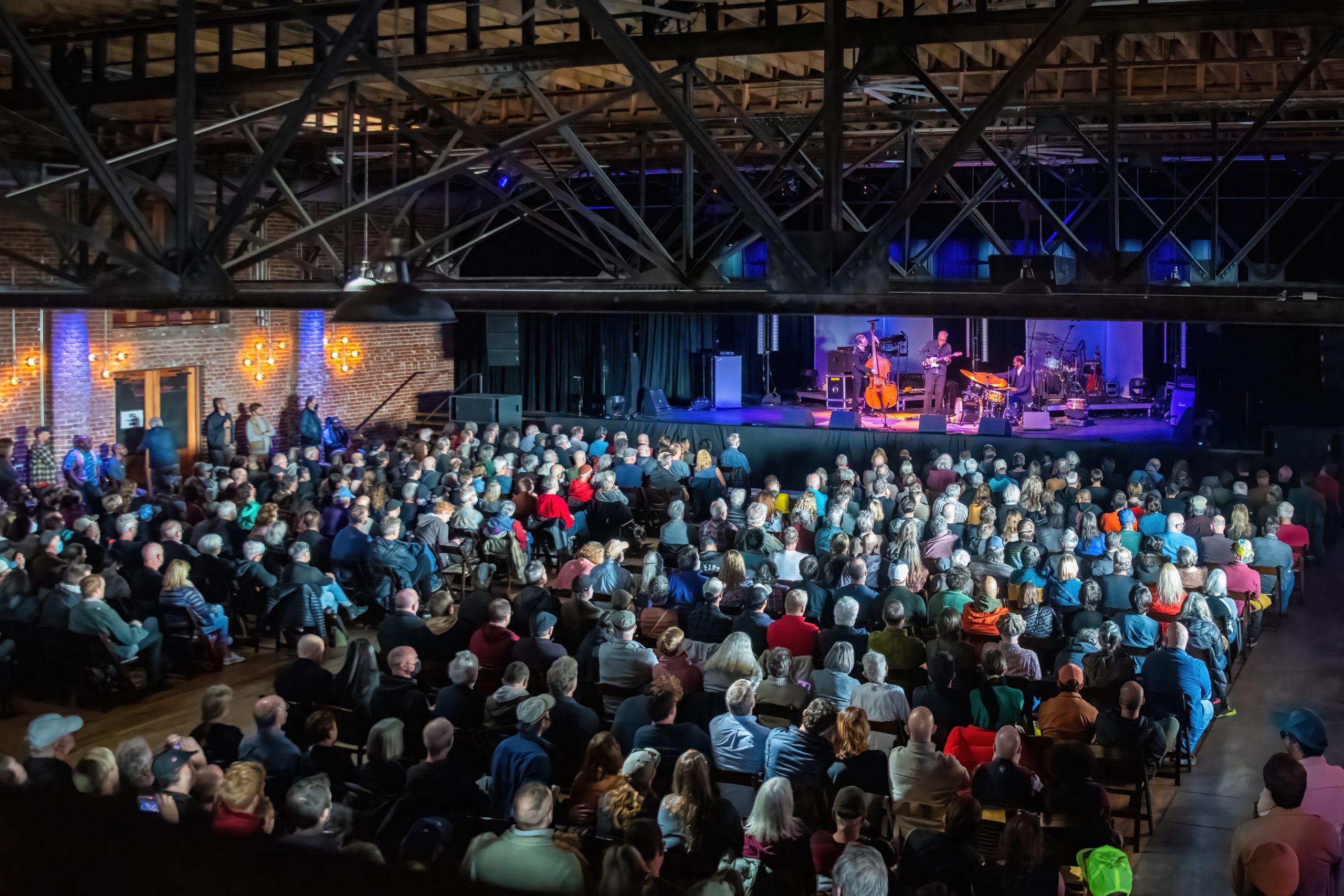
Knoxville’s most diverse festival ends with a bang
By Daniel Britt, Jennifer Duncan-Rankin, Rusty Odom and Matt Rankin
Sudan Archives
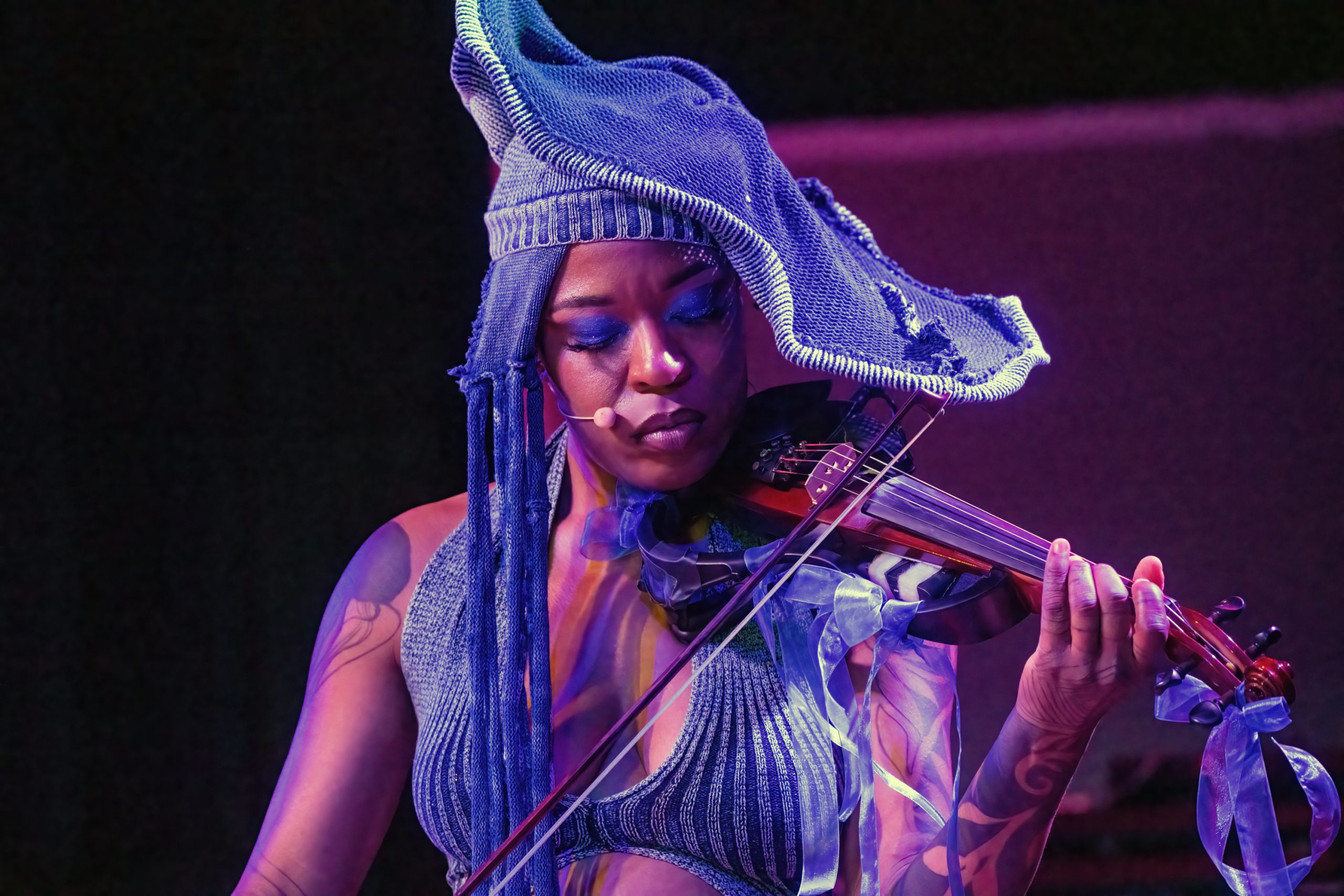
This late-afternoon set at the Mill & Mine started a tad late and didn’t take up all of its alotted time, but I seriously doubt that anyone who was there could harbor any complaints. The one-woman tour-de-force that is Sudan Archives was a whirlwind of positive energy, donning a lavalier mic that allowed her to traverse the stage unimpeded and freed her hands to help communicate the emotional content of her songs, whip the crowd into a frenzy, pick up a violin or – as she did at one point – fling the spectacular headpiece she had been wearing toward the stage-left wing.
Looping samples of plucked and bowed fiddle over synthesized beats, the artist exhibited an impressive variety of styles. It is this penchant for genre-bending that characterizes her work and unites her diverse range of influences under one umbrella. However, all of the new material she debuted shared two common traits: boundless vigor and intensity, both apparently borne of pandemic malaise and the impatient desire to once again perform in front of live audiences. Granted that opportunity by the festival on Sunday, Sudan Archives did not disappoint.
Bubbly, smiling and laughing (albeit breathlessly so as a result of her nonstop dancing/movement) between tracks, the artist harnessed and focused that effusiveness during songs, staring intently into the crowd while unleashing torrents of sharp verses. The show itself embodied a dichotomous dynamic, too, effectively bridging the gap between highbrow culture and commercial accessibility. Resolutely adroit enough to measure up with the most accomplished names on the Big Ears roster, she also injected some welcome breeziness into the last day of what sometimes can come across as a deliberately stuffy affair. – Matt Rankin
Circus No. 9
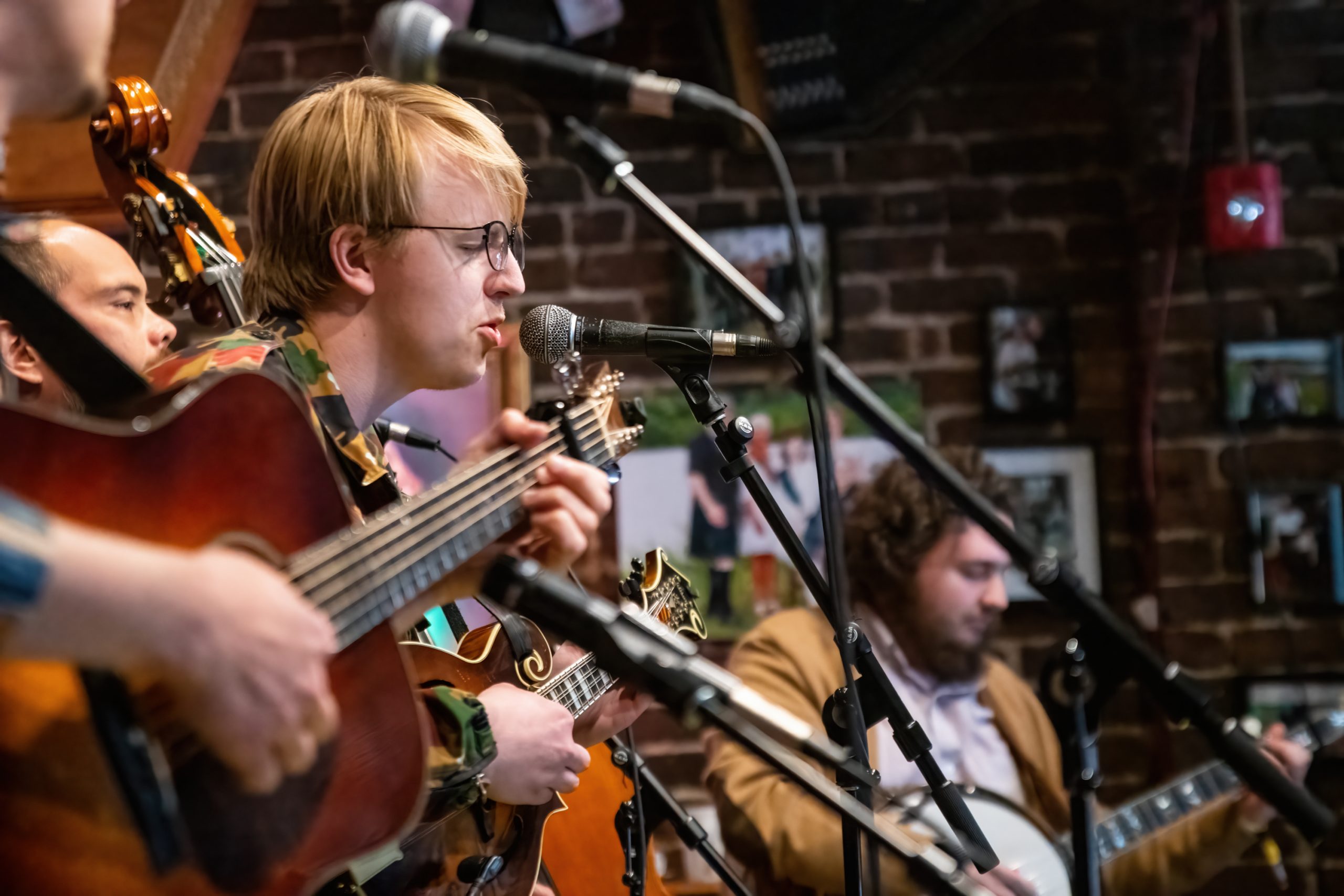
This is not the first stint at Big Ears for East Tennessee’s own Circus No. 9. Debuting at the festival in 2018, they were scheduled a second round in 2020 before the pandemic put everything on hold. Each member of this five-piece is an accomplished musician on their own, so it’s no surprise that the music they make together is nothing short of outstanding.
With fiddle, guitar, mandolin, banjo and upright bass, this local supergroup creates music that adds dashes of jazz, blues and even funk to traditional bluegrass, which makes for a sound that’s familiar yet unique. On top of the advanced instrumentation, their beautiful harmonies on both originals like “On a Shelf” and classics such as “Carolina Star” push this act to another level and leaves you craving more. – Jennifer Duncan-Rankin
John Zorn: New Masada Quartet
When the sun both literally and figuratively begins to set on the last day of Big Ears, exhaustion is replaced by melancholy at the realization that the experience soon will be over. But while these weekends are all too fleeting and ephemeral, the remembrance of the genius with which they regale us, without fail, will live on in our minds and hearts forever. Such brilliance was on full display one final time this year in front of a rapt capacity crowd at the Bijou on Sunday evening.
The penultimate performance of 2022 artist-in-residence John Zorn found the mercurial composer and saxophonist forming a quarter of this four-piece that also comprised guitarist Julian Lage, bassist Jorge Roeder and drummer Kenny Wollesen. The sum of the quartet’s individually gifted parts was stunning, each player’s fractal contribution adding up to an uncannily round whole. But perhaps the jaw-dropping quality of the show was simply supernaturally induced; Zorn said that the ghosts that supposedly haunt the historic building were motivating factors in him spurning Ashley Capps’ offer of the Tennessee Theatre for this smaller (but admittedly better-sounding) room.
Though the music made me feel like I had been transported back to New York City in the ‘50s, these free-jazz freakouts were wilder than anything the Beats could have envisioned. Underlying the outward chaos and seeming dissonance of these compositions, however, was a tightly organized structure, written and directed by Zorn, of course, but established and maintained by the most precise and intuitive rhythm section I’ve ever heard. With Zorn’s sax and Lage’s electric engaged in a competitive battle, Roeder and Wollesen’s syncopation was locked in, their push-pull dynamic simultaneously stoking and steadying the fury.
I generally have this thought several times throughout the course of a Big Ears weekend, but I was overcome by emotion at several points during this set alone thinking about how genuinely lucky we are for this festival to call Knoxville home. Zorn and company obviously were the catalysts for my sentimentality, and I would have loved watching their second performance, which included Bill Frisell, John Medeski and Ches Smith among others, but I wanted someone else to be able to experience it in my stead. The composer’s many superfans in attendance had no qualms about giving it a another go, however, as the majority of those who had been in the theater reformed a line outside of the venue awaiting reentry an hour later. – MR
“A Thousand Thoughts” with Kronos Quartet
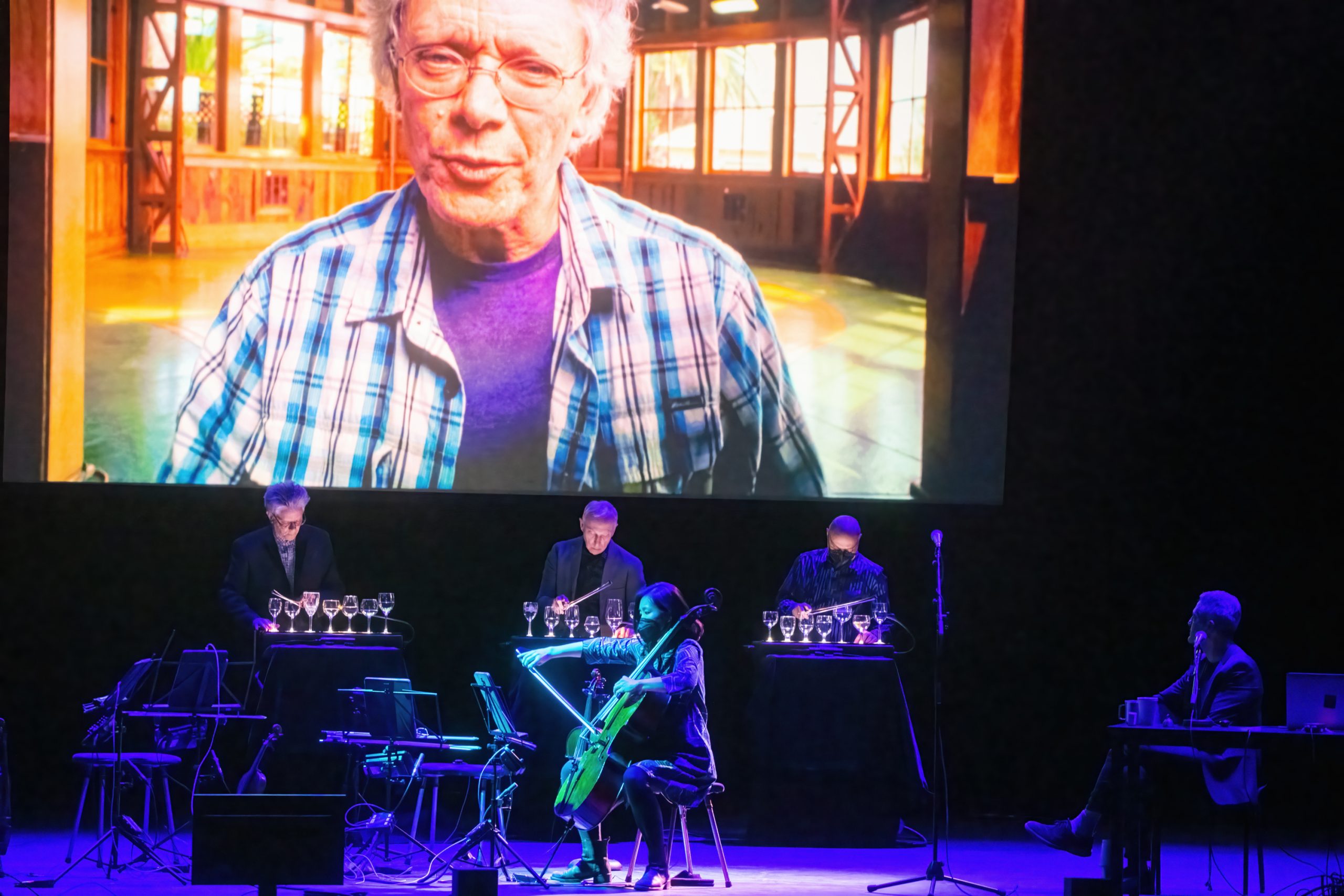
If you were someone who loves not just music itself but also other humanistic fields of study that touch on topics like history, psychology, sociology etc., there was no better way to wind down this four-day festival than by watching this documentary being scored live at the Tennessee Theatre by its subject, a collective that has appeared at Big Ears multiple years and served as its artist-in-residence in 2015.
Writer and filmmaker Sam Green provided narration for this documentary that he produced with Joe Bini about Kronos Quartet. The show started with a mindfulness exercise, asking the audience to notice the sounds around it. Creaks of chairs, throats being cleared and rustles of jackets noticeably pinged through the air inside the cavernous theater, gradually dissipating to a point at which the crowd grew almost perfectly silent.
As a collage of images from regular life in the ‘70s appeared on the screen, the quartet began playing along. That the foursome was playing the soundtrack to its own story was interesting enough, but the fact it was doing so as its members sat in front of 10-foot-tall images of themselves accounting their life stories was quite powerful. I appreciated and respected just how vulnerable they allowed themselves to be; that in itself was artful.
Kronos has been making music for more than four decades, and this film captures how these classically trained musicians took music that had been associated with stuffy old men in suits and powdered wigs, transformed it, pushed it into the mainstream of society and created a brand that is hip and modern.
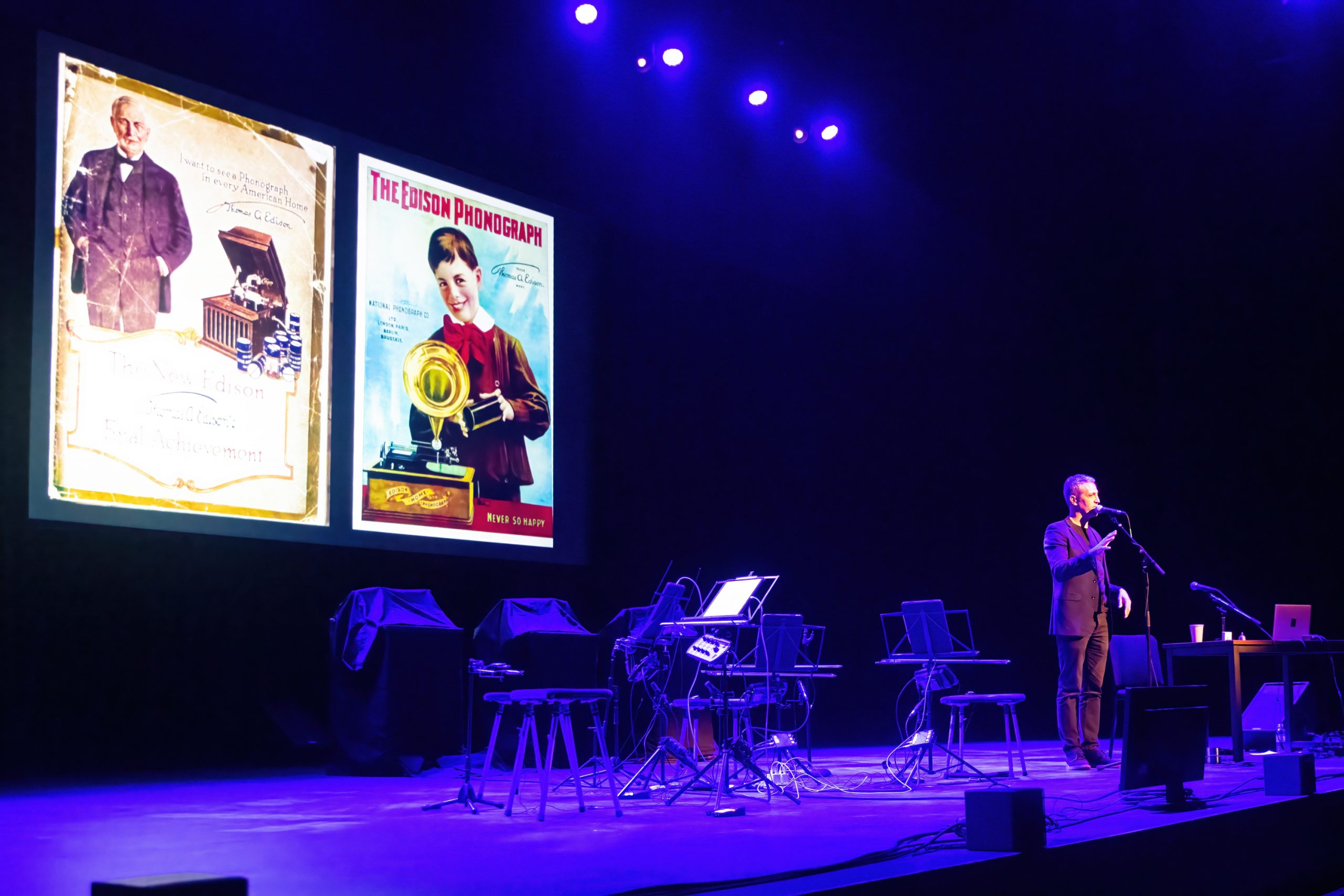
When not touring, the band practices in its San Francisco space surrounded by nearly a half-century of archives, and it was interesting to see what it had collected over the years. Also intriguing was learning about how the group’s place in pop culture was established after being featured on “Saturday Night Live” and “Sesame Street,” and a spotlight on its members’ evolving fashion sense was a fun and nostalgic journey.
The music was scored by an array of composers, and there were interviews with many of their collaborators, including Phillip Glass, Terry Riley, Wu Man and Tanya Tagaq – all of which are names that should sound familiar to Big Ears patrons. The members poked some good-natured fun at themselves but talked of heartbreak, as well. (Especially founding member and violinist David Harrington.)
Green wrapped up the presentation by introducing the audience to the various instruments currently used by the group. All of the items were each at least a century old, with Harrington’s Testore violin dating all the way back from Italy in the 1720s. In learning this fact, we were given the opportunity to imagine all the places it had been and what kind of stories it could reveal to audiences in the future. I gained so much knowledge from this performance, was entertained from start to finish and walked away in awe of what we all have the ability to accomplish. – JDR
Yves Tumor
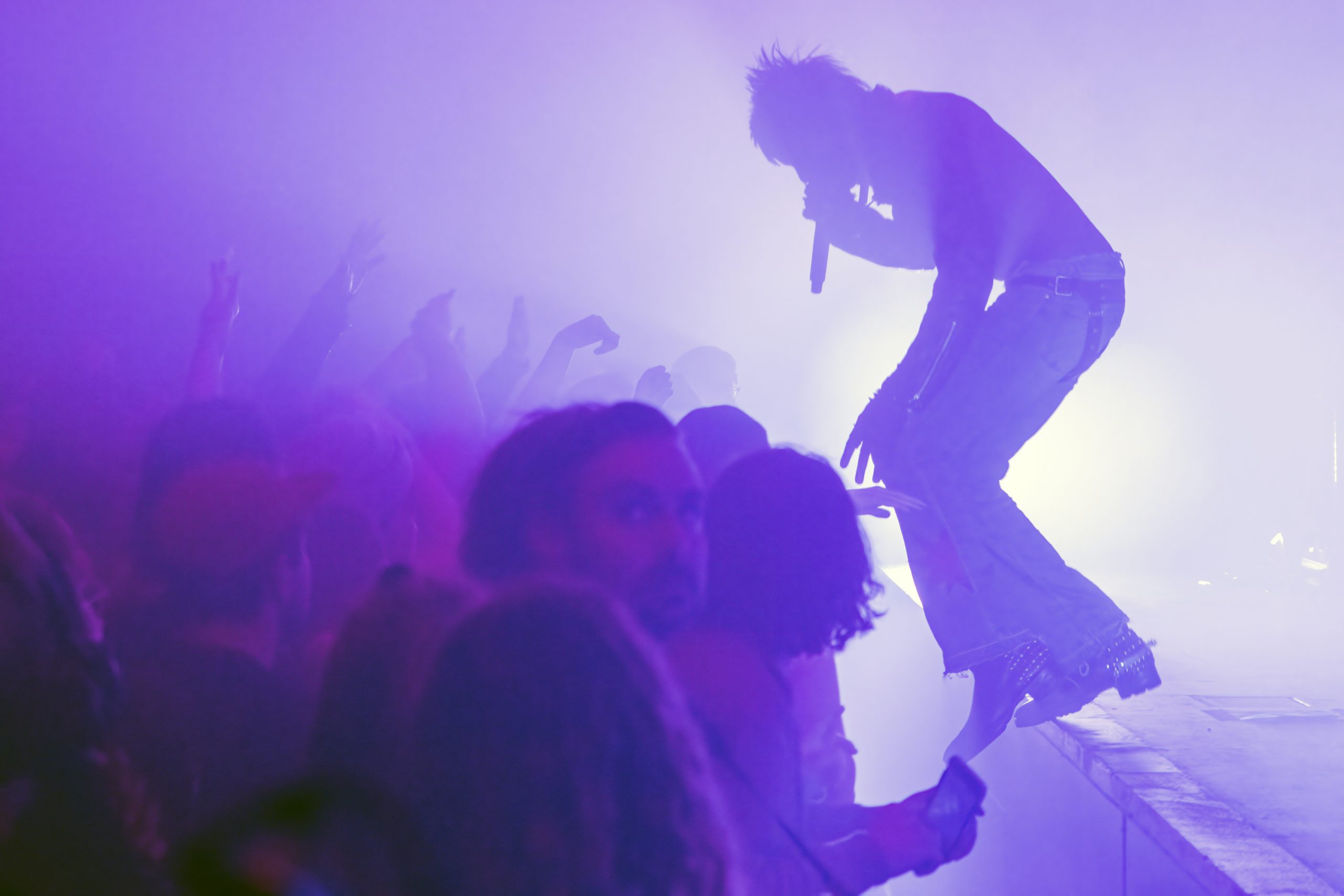
Big Ears wrapped up with Knoxville-raised Yves Tumor putting a very funky cherry on top of what already had been a memorable Sunday. Taking to a Mill & Mine stage awash in pink and purple light, the band kicked things off with soulful tracks culled from last year’s EP and 2020’s “Heaven to a Tortured Mind.” Tumor and company disappeared in and reemerged from copious clouds of generated fog as they crooned the chorus to “Gospel for a New Century,” showcasing why the bandleader earned comparisons to Prince after its release. The first half of the set slid by in an almost-trancelike way but was not all the band had to offer.
True to genre-bending form, the groove began to give way to glam-rock and noise-punk elements. Rhythm turned to rambunctiousness, Tumor’s intense energy holding the pieces together as songs built and then crashed around them. The crowd, reticent at first, began to become more involved, responding to the psychedelic aesthetic and soundscape that had enveloped them.
Returning to the stage after a lengthy delay, Tumor’s guitarist began the encore with a solo fit for an ‘80s hair-metal band before settling into their 2018 art-pop anthem “Noid,” returning to the soulful strings that began the set an hour earlier. Ending the show was a crunchy yet dance-y rendition of “Secrecy Is Incredibly Important to the Both of Them.” The punk splashes streaked across the bouncy song brought both sides of the concert together and left the audience not sure of how to describe what it had seen but loving it just the same. – Daniel Britt