With hundreds of performances across downtown Knoxville, the festival’s biggest challenge might be choosing what not to see
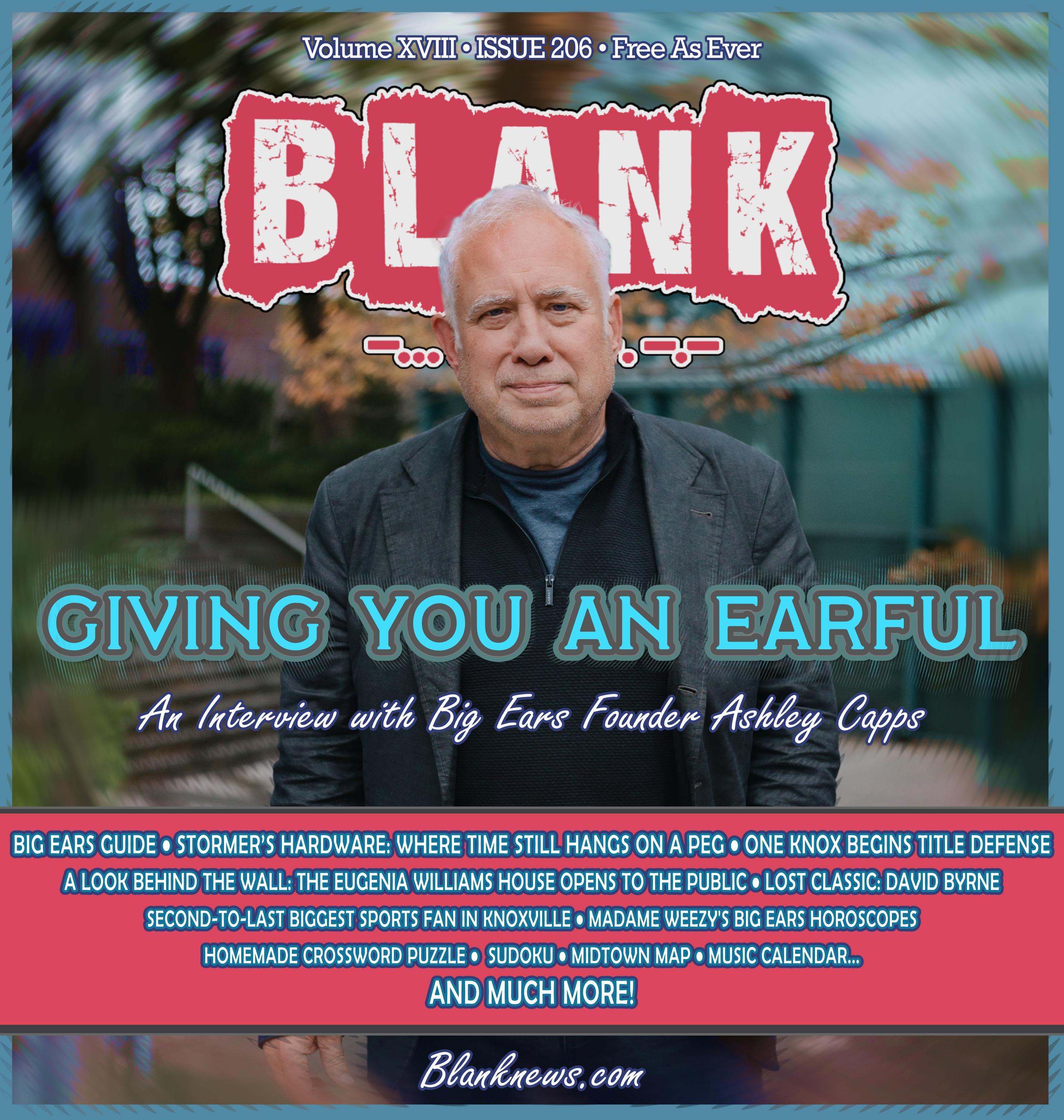
Big Ears Festival Guide • Madame Weezy’s Big Ears Horoscopes • Big Ears Creator Ashley Capps Interview • Big Ears for Small Ears
For the music lovers who descend on Knoxville each March for the annual Big Ears Festival, that first deep dive into the schedule brings with it a familiar and unavoidable sensation: crippling FOMO.
Fear of missing out – defined as “the feeling of apprehension that one is either not in the know about or missing out on information, events, experiences or life decisions that could make one’s life better” – becomes less a psychological quirk and more a logistical certainty at Big Ears. With hundreds of performances spread across downtown venues, festivalgoers are spoiled with an embarrassment of musical riches, but forced into impossible decisions: Do you catch David Byrne holding court at the Knoxville Civic Auditorium or slip over to the old Greyhound bus station for the trance-fusion jazz of SML?
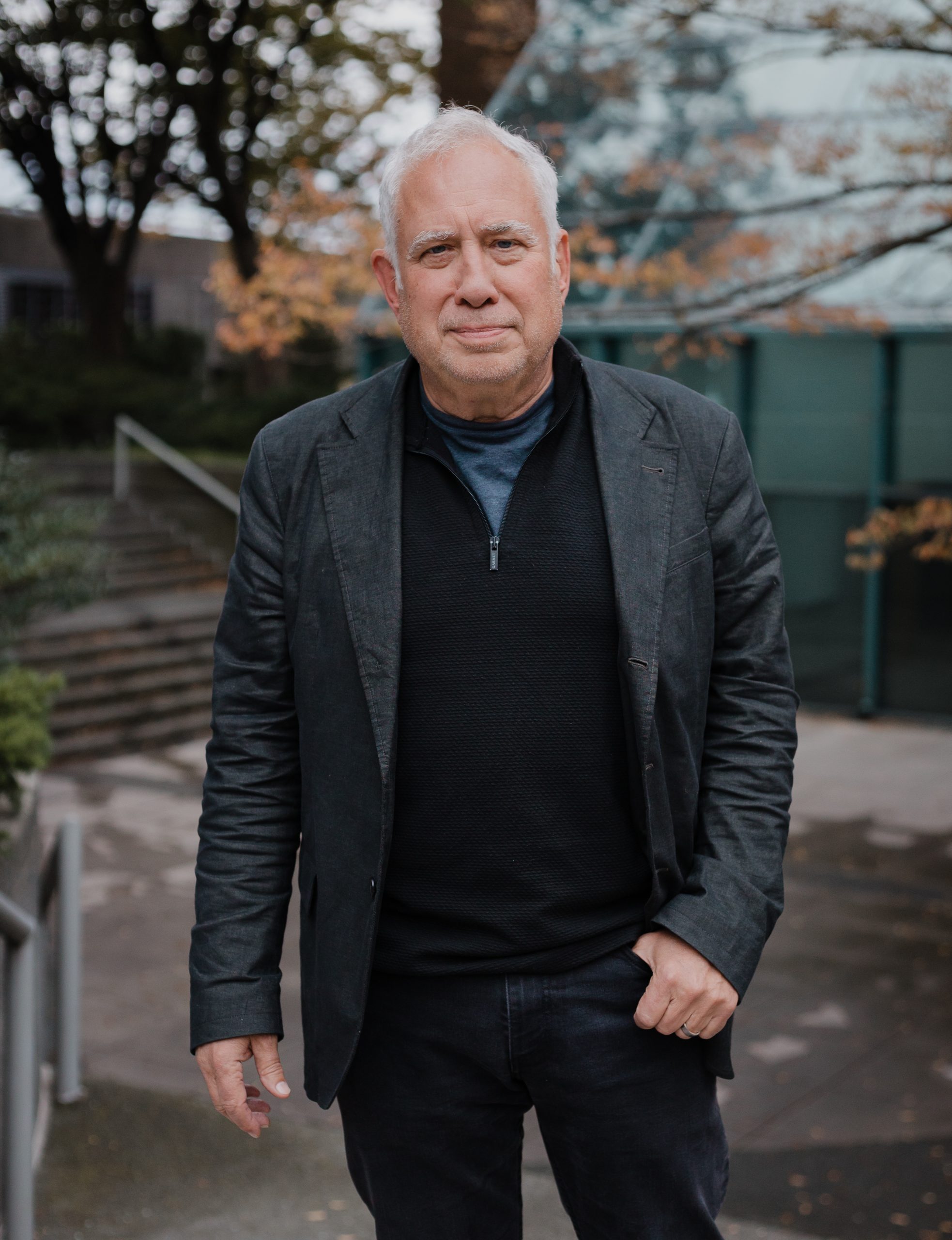
Even, it turns out, for the man who built the whole thing – though he’s always quick to note it’s the work of a deeply talented team.
“There are quite a few people who come together from all over the country working on the production and operations behind the scenes, and our full-time team includes some of the best festival people in the business,” says Ashley Capps, the visionary promoter widely regarded as one of the most influential figures in modern concert promotion.
“The good news is that as far as my work goes, most of it is done before the festival starts,” he says. “Now, I have a lot of friends that I’m eager to see, so there’s a lot of socializing going on. But yes, I do make it to shows. I also make it one of my missions to go to as many shows throughout the year as I can, so if I have to miss something, I can minimize the FOMO.
“But at Big Ears, I still have FOMO like everybody else. I’ll be standing there looking at the schedule early on Friday evening and thinking, ‘What madman booked this? Who can I blame for this?’ Except at that point, there’s no one else to blame.”
A festival built on curiosity
That sense of abundance and the impossible choices that come with it have been baked into Big Ears from the beginning.
Founded in 2009 by Capps – the same guy who conceived of Bonnaroo and ran AC Entertainment for years before selling it to Live Nation in 2020 – the festival was conceived as something radically different from the typical multi-stage music event. Instead of focusing on a single genre or a handful of big-name headliners, Big Ears set out to celebrate musical curiosity itself, bringing together artists from across the spectrum of experimental, jazz, classical, indie-rock, electronic and global traditions.
From the start, the festival embraced Knoxville’s historic downtown as its stage, placing performances in theaters, churches, galleries and unexpected spaces throughout the city. Early editions featured visionary artists like Philip Glass and Pauline Oliveros alongside boundary-pushing bands and improvisers, establishing a template that blurred lines between genres and artistic disciplines.
After its first two years, the festival went quiet for several seasons before returning triumphantly in 2014 – bigger, bolder and even more adventurous. Since then, Big Ears has grown into one of the most celebrated music festivals in the country, drawing thousands of visitors each year and presenting hundreds of concerts, talks, film screenings and collaborations across downtown Knoxville.
What hasn’t changed is the philosophy behind it: a belief that great music thrives when artists and audiences are willing to listen with open minds – and, as the festival’s name suggests, big ears.
“The genesis of everything is other people: artists and their ideas,” Capps says. “I liken myself to a sponge more than anything else. I love to travel, and I love to go see musical performances of all kinds, and I’ve been doing it all of my life. It’s second nature for me to find myself in these situations, and that’s where part of the idea for the Greyhound station came from.
“I’ve been to European festivals where the idea of repurposing a deserted building or space – or even performing in an open, abandoned parking lot or around a cistern – is a part of a festival venue. It gives you the opportunity to experience something in a different way, outside of its normal routine.”
If there’s any overarching theme to Big Ears 2026, that may be it: bold steps in new directions. While past years have leaned toward more conventional themes – the New Orleans flavors that were served up in 2022 when Preservation Hall Jazz Band led a Mardi Gras-style parade through the city, or the emphasis on Appalachian music and culture in 2018 – this year focuses on a celebration of artistic derring-do.
“As always, we do have traditional music and bluegrass and music from all over the world, but this year, I think the theme goes back to the original impulse behind the festival: artists creating exceptional, innovative work in this time,” Capps says. “If anything, we felt like it was really important to make a bold statement, if you will, about all of the music that’s being presented. And the boldness, I think, is reflected in all sorts of different ways through the programming.”
Where the music finds its space
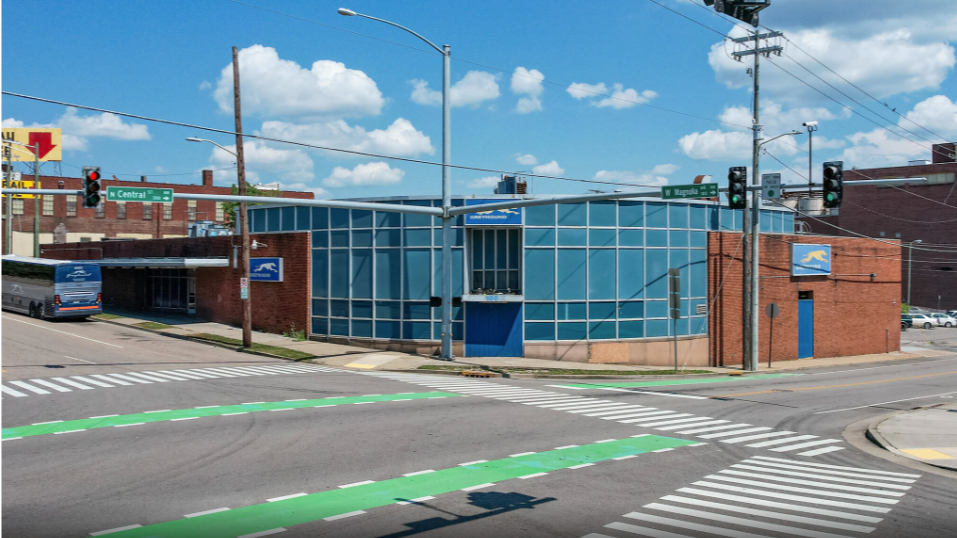
That boldness is a through line from the art to the places where it’ll be presented, Capps adds. The old Greyhound bus station on Magnolia Avenue closed in 2022 and was subsequently purchased by Dewhirst Properties; the development firm’s Mark Heinz told the Knoxville News Sentinel in January that the building is basically a “shell” that, while ideal for acoustic exploration via Big Ears, will need additional work before reopening permanently. For the festival, however, it’s an ideal venue, Capps says.
“The Greyhound station came about for a variety of reasons,” he notes. “We were looking for a space where we could do some special, immersive types of experiences that were a little different from the standard performance set. The first thing we were looking for was a space where we could set up the stage in the round, with the artists in the middle and the audience surrounding them as they perform. We wanted an environment that captured people’s imagination.”
SML – “essentially a jazz band, but not in the traditional sense; they’re a very creative ensemble that reminds me of Miles Davis from the early 1970s, when he made ‘Live at the Fillmore,’ for example,” per Capps – will hold a three-night residency at the Greyhound, playing two hour-long sets each night. The first features music by the band itself – SML stands for “Small, Medium, Large” – and the second hour, Capps adds, is billed as SML XL and will feature guest artists who want to stop by and perform their own works with the group.
“They’ve got this incredibly adventurous spirit with an irrepressible groove,” Capps says. “And then we were approached by Patrick Watson [a Canadian singer-songwriter whose band incorporates elements of cabaret and classical] and [Polish pianist/composer] Hania Rani about a project they recently did in Montreal. ‘Film Scores for No One’ is what it’s called, and it’s basically film scores for imaginary films with some interesting projections.”
Rani, Capps adds, will also perform her latest work, “Chilling Bambino,” on Saturday at the Greyhound – a “trancey electronic music show that’ll be a lot of fun, with interesting lights and projections.” (In addition, on Sunday at the Civic Auditorium, Rani will join the Knoxville Symphony Orchestra and saxophonist Jack Wyllie for the North American premiere of her four-movement concerto, “Non-Fiction.”)
Also at the Greyhound: disco, Big Ears-style, at 11:30 p.m. on Friday. The experimental, contemporary music collective Wild Up, led by Christopher Rountree, will perform Arthur Russell’s “24 to 24 Music” – the full work, only released in 2021, even though it was composed in the late 1980s, Capps says. The Big Ears website describes it a combination of “the dance music and ebullient minimalism [Russell] loved, an octet of guitar, drummers, sax, trombone and Julius Eastman’s pulsing organ bound to his pizzicato cello.”
Saturday afternoon, the Greyhound stage will feature a performance by Saul Williams with Carlos Niño and friends. The former is a globally respected slam poet who starred as the character Sammie’s preaching father in “Sinners,” while the latter is known for cultivating collaborations between jazz musicians, ambient pioneers, hip-hop artists and contemporary composers. Finally, the old bus station will reverberate on Sunday with the spirit of the late Velvet Underground and solo rocker Lou Reed, when “Drones” – a six-hour masterpiece driven by feedback from Reed’s guitar collection arranged against a wall of amplifiers – will return to Big Ears in a performance that also will feature “many musicians by special invitation who are joining in,” Capps says.
And that’s just at the Greyhound. Those performances alone would make for an incredible festival in and of itself, but with 17 other performance spaces and two movie screens dedicated to Big Ears content throughout the four days of March 26-29, FOMO may turn into a weekend epidemic.
Reimagining the city
The Greyhound isn’t the only formerly occupied building that’s being repurposed for Big Ears. In January, the craft distillery PostModern Spirits closed after a decade; while Big Ears has long held performances in Jackson Terminal, the Old City’s former freight depot was also home to PostModern, and that space will be transformed into the PostModern Sound Exchange for the duration of Big Ears.
“I think there’s a spirit of reimagining places that are not currently in use to this year’s festival, and it’s an exciting part of the aesthetic,” Capps says.
The warmth of that old wooden structure will enrich the ambience for a number of performances, including the Saturday night transcendence of Laurie Anderson, Eyvind Kang and Martha Mooke, performing together in a collaboration labeled Spin. The trio first came together in Reykjavik, Iceland, and together – “Anderson, a towering figure in avant-garde performance and storytelling; Kang, whose work spans ancient tunings, film scores and free improvisation; and Mooke, a trailblazing electric violist who has collaborated with everyone from Philip Glass to David Bowie,” according to the Big Ears website – they’ll create a singular experience the site says can’t be missed.
It does, however, pose a hell of a conundrum, because the 10 p.m. start time competes with MJ Lenderman at the Civic Auditorium; Canadian contemporary classical conductor and soprano Barbara Hannigan performing with John Zorn at the Bijou; Sonic Youth’s Thurston Moore collaborating with producer and composer Bonner Kramer at The Point; classic-rock revivalists Winged Wheel at Barley’s; indie-pop singer-songwriter Annahstasia at St. John’s Cathedral; jazz singer Eliana Glass and her full band at Regas Square; the Darius Jones Trio at The Blackbox … and that’s not even all. It’s not an exaggeration to say that the choices can be crippling, but the good news is this: There are no wrong choices. Even for Capps, whose answer to a pointed question today would undoubtedly be different than it was when this interview was conducted, the decision often comes down to the whims of one’s current mood. Or how tired one might be. Or even a coin toss.
That question: If there’s one show that can’t be missed … one Big Ears performance that requires special attention … which one is it?
“There are so many that I’m beyond excited are happening, so I’m just going to pick one randomly … and I’m already second-guessing myself,” Capps says. “I don’t think I have to tell you to go see David Byrne, which is maybe the best touring show on the road right now. Robert Plant is great. John Zorn – everybody coming to Big Ears knows Zorn is going to be one magic trick after another. You don’t need me to tell you to go see those folks.
“But one that might not get a lot of attention is Ghost Train Orchestra playing Moondog [two Friday performances, at noon and 1:30 p.m. at the Tennessee Theatre]. Moondog [real name: Louis Thomas Hardin] was this mercurial, fascinating, enigmatic figure in New York in the 1950s and ’60s. He dressed in full-on Viking regalia and would recite poetry and sing songs around Columbus Circle, and he was a fixture of the scene at the time. Just this very, very gifted composer who influenced many artists who encountered him at the time [including Big Ears vets and composing titans Philip Glass and Steve Reich].
“He was a genuine American original, and Brian Carpenter and Ghost Train Orchestra have made it a mission to revive Moondog’s legacy and present it,” Capps adds. “They’re this large ensemble with special guests who perform at all of the shows, and while I don’t want to spoil anything, Joan Wasser – Joan as Police Woman – has regularly been performing with them.”
Like many of the acts booked for Big Ears, landing Ghost Train Orchestra was a combination of good fortune and an instinct for unusual sounds that run the Big Ears gamut. Capps attended a show at New York’s Town Hall in the spring of 2024 and heard for himself how special the presentation was, so when Carpenter reached out about a possible Big Ears spot, inking a deal was a no-brainer.
Others take a little longer to reel in: The Dirty Three – Nick Cave collaborator and rock provocateur Warren Ellis with guitarist Mick Turner and drummer Jim White – has been on Capps’ radar since at least 2014, he says, but the timing has never worked out. A year and a half ago, the trio released a new album, and in April 2025, Capps took a trip to New York to see Nick Cave and the Bad Seeds – of which Ellis is an integral part – at the Barclays Center in Brooklyn.
Knoxville native Larry Mullins, an old acquaintance and a percussionist whose work has taken him around the world with acts like Swans and the Bad Seeds, invited Capps to the show’s afterparty, where he and Ellis struck up a conversation, and White just happened to be in attendance.
“All of a sudden it was like, ‘We can do it! Let’s do it!’” Capps recalls. “And it finally came together in that way. That’s an example of conversations that sometimes take a while to bear fruit, and sometimes they never bear fruit. It has gotten to the point where in some ways, each festival becomes a snapshot of a continually moving process. It’s a living, breathing thing, and just today, I sent a note to two young women whom I hope can do a show; I don’t want to say who they are, but they’ve got a record coming out, and we had a space in this year’s festival open up, and they’d be perfect for that.”
Lightning in a bottle
For all the bold programming and boundary-pushing music, Capps believes the true magic of Big Ears lies somewhere less tangible.
“The secret sauce behind Big Ears is definitely community,” he says. “It’s almost cliché these days to use that word, but you can’t use it enough in the context of what Big Ears is all about.”
That community, he said, operates on multiple levels: the artists, the audience and the city itself. Critics who have never stepped foot in East Tennessee inevitably marvel at what for them amounts to small-town spaciousness, even in the heart of the city; for fans, it’s just as likely they’ll run into one of their favorite performers grabbing a quick bite from Yassin’s Falafel House as they will see them onstage. And Knoxville? It remains the town where Capps was born and raised, cut his teeth and made his bones, even if he does spend a lot of time travelling to other towns.
“People come from all over the world to be a part of this amazing weekend,” he says. “There’s also the community of musicians who come together to make the weekend what it is, and very much our own community here in Knoxville – both the physical infrastructure of the city and the people who live here and run businesses here.”
What makes it work, he points out, is the city’s scale.
“Knoxville has the infrastructure that is perfectly suited for nurturing this type of experience,” Capps says. “You have this multiplicity of venues all within walking distance of each other – great restaurants, great stores, nice hotels.”
The result is something that feels both intimate and expansive at the same time. Even though festivalgoers may be staying in a downtown hotel and walking to multiple venues throughout the course of a day, none of the performances feel separate. There’s cohesion to all of it, even the quick duck into Mast General to grab a bagful of candy or a souvenir for loved ones back home.
“It’s possible to come to Knoxville, stay in a hotel room, go see all of these shows indoors at a dozen different venues and still feel like you’re at a festival,” Capps says. “Downtown is at a scale where people can feel like they’re having a shared experience.”
Even after years of growth and international recognition, he admits he never fully anticipated how the festival would evolve.
“Lightning in a bottle is very difficult to create,” he says. “I’ve been involved in many festivals that were quite good festivals but didn’t have that spark – the drawing power, the impact and the community that inspires people to create.”
What Big Ears has become, Capps says, represents a rare opportunity not just for the festival but for Knoxville itself. The festival has evolved over the years into something that feels like a tentpole for the city, an opportunity to market Knoxville – and not just to folks who couldn’t even find it on a map before buying Big Ears tickets. Every review raves about the city itself, as if Knoxville is another festival headliner alongside Robert Plant and David Byrne.
And in a way, Capps adds, it is.
“We’re seeing an extraordinary, evolving opportunity for the city,” he says. “The big question is whether our community is really going to be able to seize that opportunity and realize its potential.”
Then he laughs, acknowledging that all the talk of artistic philosophy can make the whole enterprise sound more serious than it really is. Because at the end of the day, those who have purchased passes and opted to take part in the rapturous sound bath that is Big Ears – FOMO be damned – need to remember one of the biggest reasons they’re going to such lengths.
“Because dammit,” Capps says, “it’s a lot of fun. If it wasn’t, no one would come.”
wildsmith@blanknews.com