By Will O’Brien
The true spirit of rock ‘n’ roll is a hard essence to capture, and some flourish easier than others. To fit the bill, one must have the walk, the talk, the looks and the stage presence to identify as a rock star. An unwavering sense of self-confidence and persistent networking are requirements for the trade, as well.
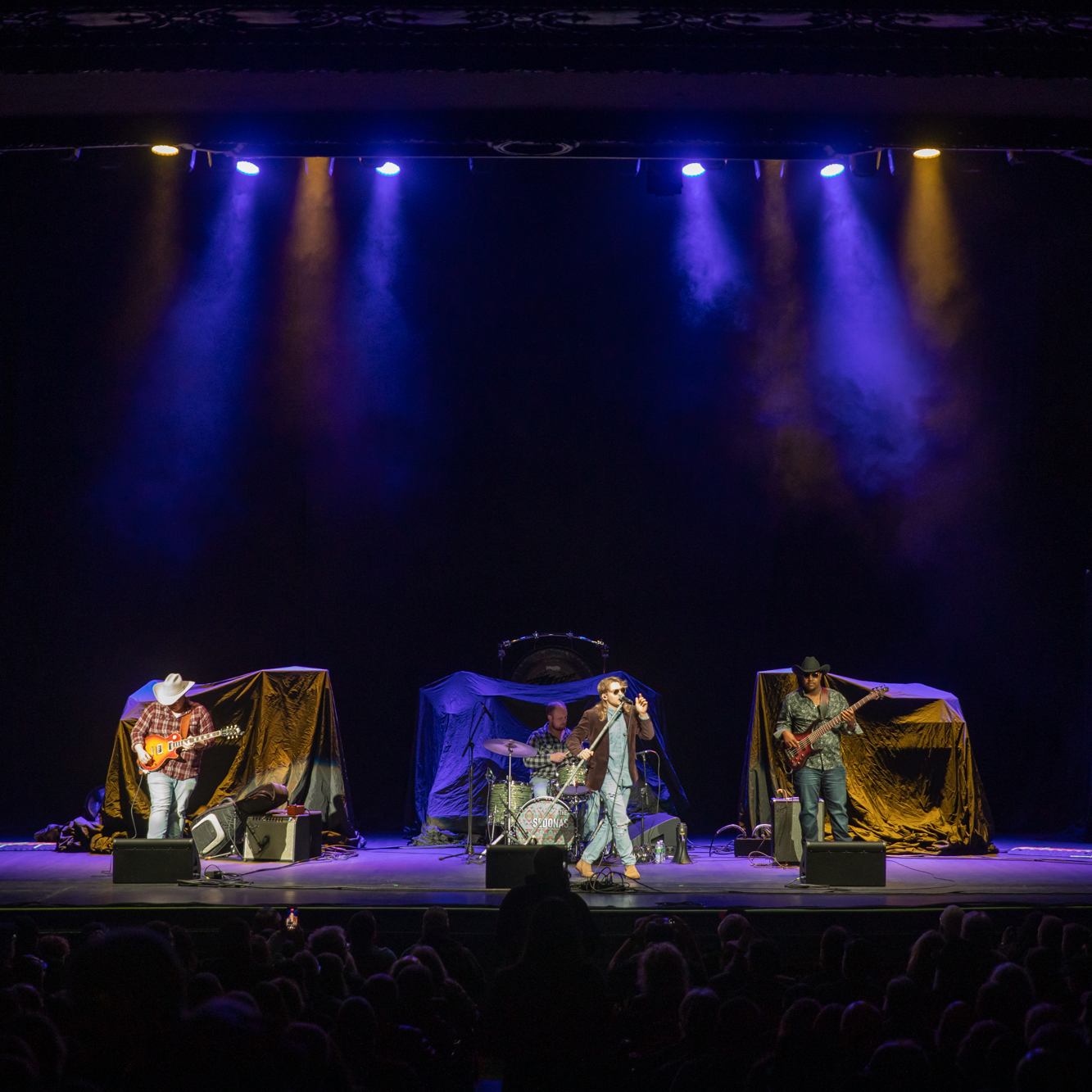
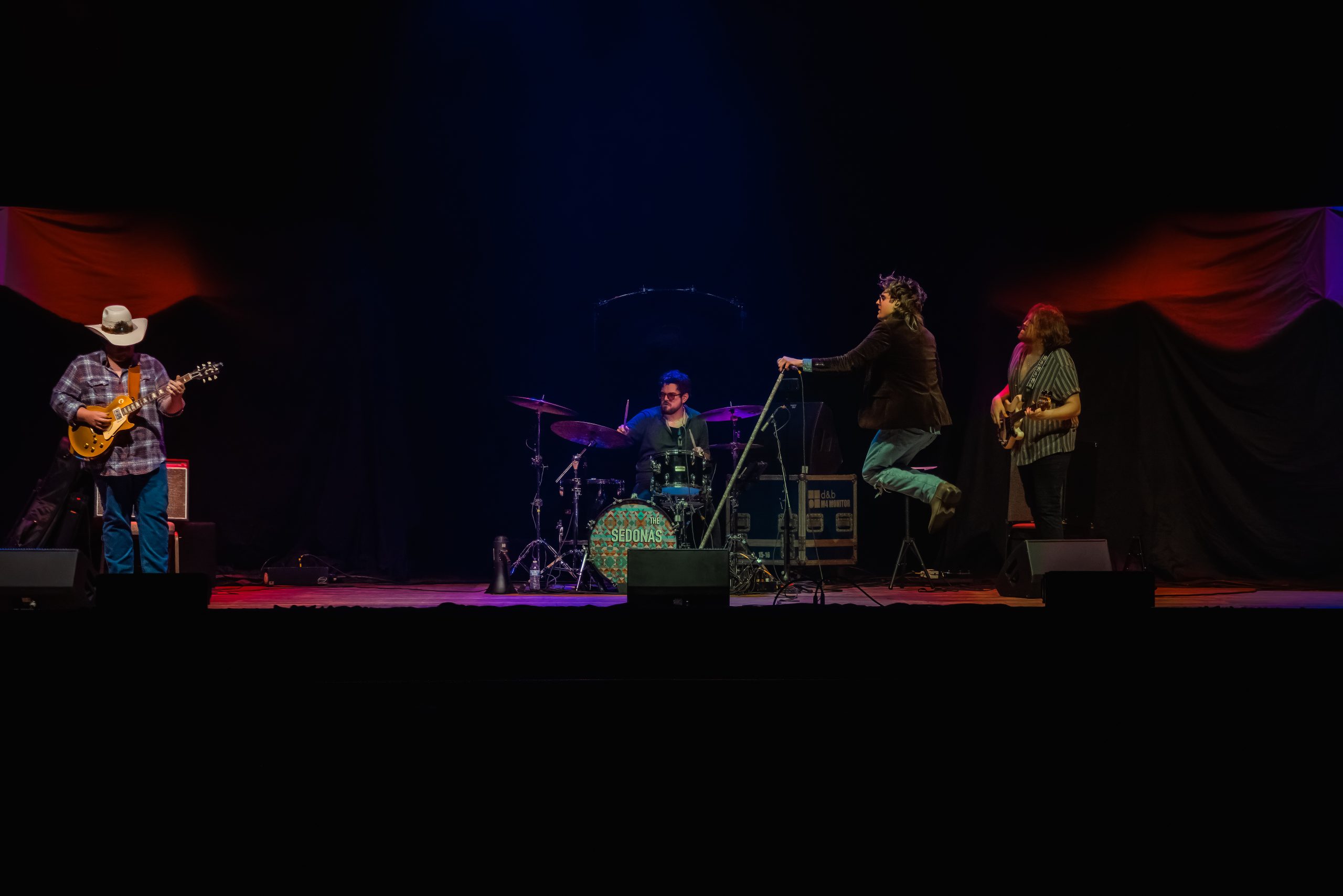
East Tennessee is loaded with diamonds in the rough when it comes to notable musicians, but James Connor Wike and his band The Sedonas have solidified themselves as pillars of the Knoxville rock scene. Since their first album, 2017’s “American Paint,” The Sedonas have toured the country with such legendary acts as The Who, ZZ Top, The Black Crowes and many others.
The group’s most recent release, “Opening Selects,” features tracks recorded from live performances and gives a great snapshot into the soul of The Sedonas. In anticipation of that new album, Wike and I sat down at Open Chord to discuss the new album and his past experiences that have influenced the style of The Sedonas thus far.
BLANK Newspaper: How did you decide on a name for your band? Does it have a specific meaning or origin story?
James Connor Wike: I went out to Sedona [Arizona] as a kid on a family trip. This is probably like 2010, I want to say. And I really enjoyed it out there, so I wanted to remember that trip in some way. And I thought, “Oh, that’d be a good name for a band.” So it’s kind of that simple. But yeah, kind of just nostalgic for me.
BN: Do you think that kind of coincides with the music a little bit? Because I feel like you all do a great job at threading together memories from the past with allusions to present day in your lyrics.
JCW: Yeah, that’s a good point. I’ve never thought of it like that before. But yeah, I could definitely see it like that. Yeah, we do a little bit of everything.
BN: What brought all the band members together in Knoxville?
JCW: We’ve gone through some different changes on that…the drummer [Casey Green] has been with us since 2016. He was really good friends with Ryan [Sise, guitarist], so he brought him in around 2017. And then for the bassists, lately we’ve had Dre [Phelps] and another guy named Sam have played with us.
BN: Are the current members all Knoxville guys or more spread out?
JCW: Ryan used to be in Knoxville. He just moved to the Sweetwater area. Casey was at UT but he moved to Crossville, so he’s out there now. So we all kind of had our elements in Knoxville at one point or another. The bassists, though, are generally Nashville-oriented.
BN: I remember you said that you guys go over to the Welcome to 1979 Recording Studio a lot to work in Nashville.
JCW: That’s our place to go. We don’t play there really that much, but when we do recordings, we go to ‘79 for sure. They’re just great people over there and they have good deals. It’s an awesome spot for sure.
BN: What is the vibe of that place that keeps you going back to it?
JCW: I would say it’s the owner: Chris Mara. He’s a really good dude. Their engineers are really good. They’re able to accommodate our schedule so we can go in there on [a] singular session. We went in there and recorded everything in one day, from early morning until the evening. A lot of studios aren’t going to be up for doing that, [but] they were. So we keep coming back, and we’re very loyal to those guys. I like them a lot.
BN: I really love that you have opened for so many legendary bands and acts; is there a decent amount of pressure to always be first in line?
JCW: Oh, for sure. A lot of times, people probably don’t know who we are so we have to impress them. But we’re always going to go out there and do everything we can to impress the audience. But there’s a little bit of pressure sometimes. And there can be, too, if we’re opening for someone that maybe I think, “Oh, this could be a little risky; their sound is quite different from ours.” But it’s something that I really like doing. I like making fans at those shows. The gamble of trying to win some people over is a lot of fun to me.
BN: I love this quote on your website from The Who: “The audience seems to like him despite not knowing the band or history. Well, it’s sure one that this band earned.” How was it hearing that from such a legendary group?
JCW: That was very complimentary. They were extremely kind to us. Yeah, I don’t know if we’re ever going to be able to top that. That was amazing. It was a little stressful because it was last second, but it was a last-second show for them, too. That was the final North American date that they were supposedly going to be playing to the public because they did a charity thing after that. That was a really big deal for us and I was very happy they liked us. I didn’t think we were going to get anything like that, so that was kind of shocking. I’m forever thankful to them for that.
BN: As far as cosigns from these bigger groups, a couple of them mentioned your use of a megaphone onstage. How did that come about?
JCW: Do you know Stone Temple Pilots? I got it from Scott Weiland. [It creates] a cool lo-fi sound on the vocals. That’s how I recorded it on the record, “Happens Right” on the LP. I [used] a megaphone, full volume, standing away from the mic. It’s a fun little toy.
BN: I feel like the onstage outfits resemble the music in a way. I saw some descriptions on your website of “soulful harmonies and a jagged intensity;” I feel like that’s kind of a similar contrast. How do you balance those two extremes?
JCW: That’s a good question because we go from ballads to some harder stuff. And it’s not easy in a live situation; you have to kind of turn it over really quickly. We do one of our hardest songs, “Looking Fastly” generally right after one of our softest songs, “Tracy Rain.” So it can be hard – at least for my vocals because I got to get into a different headspace on each one. But I think that’s kind of what I do. I just try to make sure I can do it quickly. I practice a lot beforehand; I do a lot of running and singing at the same time.
BN: You mentioned that you like playing a lot of the songs live first before you even get into the studio with them in order to get used to them a little bit. What are the pros and cons of working that way?
JCW: The cons would be that we’re definitely still going to make some mistakes live. But when you go record, you get a really nice broken-in sound on most of the stuff. It doesn’t sound like you just learned it that day. It sounds very put-together and tighter, I think.
BN: I was really touched to see the title cards used in some of your music videos dedicating them to all those recently affected by death, suicide, illness, unemployment and the like. These are heartwarming sentiments; I feel like they do a good job of setting the stage for the tracks.
JCW: I put a lot of thought into those cards beforehand. For “Even in My Mind’s Eye,” I did all the editing on that one. And I’m probably going to do all the editing on this next video for “Live My Years.”
BN: On those tracks, do you draw from more personal experience, or is it simply speaking to the common man? You reference things that most people have to deal with, and, as an audience member, it’s like, “Oh, somebody’s got some visibility on this.”
JCW: It’s from experience, but I also know that I’m not the only one going through some of that stuff. So I try to make sure that I can put positive messages out there as much as I can.
BN: Are you a Knoxville native?
JCW: I was born in Lebanon, Tennessee, in 1997 and then moved to Knoxville in ‘99, so I’ve been here my whole life.
BN: How do you think being raised in this area has affected you as an artist?
JCW: Knoxville has a lot of different backgrounds of people and you have some people from the country and people who are more into the city. And then you have people who participate in all sorts of different music here. So I think I just picked up on that from school. I had some friends who were into rap. [There were other] friends in [rural areas] more into rock. I grew up listening to all sorts of stuff. I can credit Knoxville for the various sounds in our music for sure.
BN: Regarding “Opening Selects,” what does that title mean?
JCW: I really just tried to simplify the titles as much as I could. It’s basically the selected songs that we use when we’ve opened for people. If we were to be headlining or something, we’re going to have all those songs in [the setlist] because I think those are our strongest songs. Down the line, we’ll always play those songs – regardless of if we’re opening or headlining.
BN: Has the energy of a particular city or crowd influenced the way a performance has gone or even altered the sound of a specific track?
JCW: There’s a very cool venue in Indiana called the Blue Gate in Shipshewana. They just have such a loving vibe up there. I would say that’s a pretty big inspiration to us. That there are things out there that are just like a family [atmosphere] still is really cool.
BN: Have folks in the Northern United States been pretty receptive in general?
JCW: Yeah! The Midwest for sure. Indiana, a lot. They have a really cool scene up there, and there’s been a lot of people who have given us opportunities up there.
BN: How do you think this new album fits into your overall artistic journey?
JCW: We have really never put out a live album. We had a couple live tracks that we put out with “American Paint,” but we’ve never done an actual [live] album, and I’ve heard from people that they enjoyed what they heard live more than maybe what they heard on the recordings. That got me thinking – a year or two back when we started doing the recordings for this – that I need to start getting some of these live recordings and put them out to people because I think we capture a different audience.
BN: I saw you mention in an interview for The Maryville Daily Times that your full-length album releases have had more structure compared to past EPs. Where do you think the new album falls on that spectrum?
JCW: There’s definitely a lot of improv on our stuff. We go into some jams for sure – your’ll hear it on “1 Day or Another,” a little bit on “It’s Worth-While.” But anytime that the guitar starts in solo and it kind of stretches out more, we just generally will jam on it for a good bit.
BN: How do you measure success? Would you say it’s a strong fanbase; creating something new live; selling out venues; or something else?
JCW: I would say the strong fanbase. I would lean more towards that because I think you can still do pretty well if you have even just a small fanbase and you can still go play some areas and get a good bit of people to show up. You don’t have to sell it out every time, but I think that’s how I measure success. I always try to be really personable with fans. I just want to make sure that I connect with people as much as I can.
BN: Are there any moments that stand out to you as far as experiences or connections you’ve made?
JCW: We’ve met a lot of really cool people. Some of the people that we’ve opened for have been nice enough to talk with us, which has been really cool. As far as connections go, ZZ Top has been incredibly generous to us. I’m forever indebted to those guys. We’ve met really cool people all over, but Knoxville has some really cool people [at] the Tennessee Theatre.
BN: Is there a specific moment you can think of on the road, in the studio or elsewhere that you look back on as a turning point for the band?
JCW: Honestly, I would say it was probably ZZ Top … back in 2022. I’d asked their agent – that’s kind of how I do this stuff, I cold email people – but I asked their agent if they were looking at adding any opening acts on some shows. He got back with me and they wanted to add us on a few shows. After we did [those], we started getting more eyes on us, and we started getting some more opportunities with bigger people. I would say that was a big turning point.
BN: Where does this internal fire come from within you to be able to keep up with these business necessities?
JCW: There’s a lot of not hearing back, and there’s a lot of following up I have to do. I try to be respectful and polite as I can be on that stuff. I just love playing music to people, and that’s kind of my drive. Whatever I’ve got to do to keep doing this, I’m going to do it. I always want to make sure I’m as respectful as possible, because nobody owes us anything, so I want to make sure I don’t come off rude in any way. I just love playing to people so much. And the rest of the guys do, too, of course. And that’s what keeps me wanting to keep the train moving along.
BN: Do you think there’s a track on “Opening Selects” that neatly sums up The Sedonas as a whole?
JCW: I think “Live My Years” would be it because that whole song is about playing music and fighting through whatever it takes to keep playing music. That whole song is – lyrically, at least for me – coming from a [meaningful] place. I would say that’s the best way to summarize this album and us, as well. It’s also our opening song at most of our shows, so yeah, I would credit that one.
BN: What do you hope fans take away from this album?
JCW: I hope they’re able to hear something different than they do on the studio stuff and they enjoy that. We play differently live than we do in the studio, and I hope they can hear that and just hear a variation of the songs that maybe they enjoyed before and they can hear them in a different way now with the live recordings. [It’s] just a very stripped-down, not-overproduced thing. That’s kind of what I was going for.