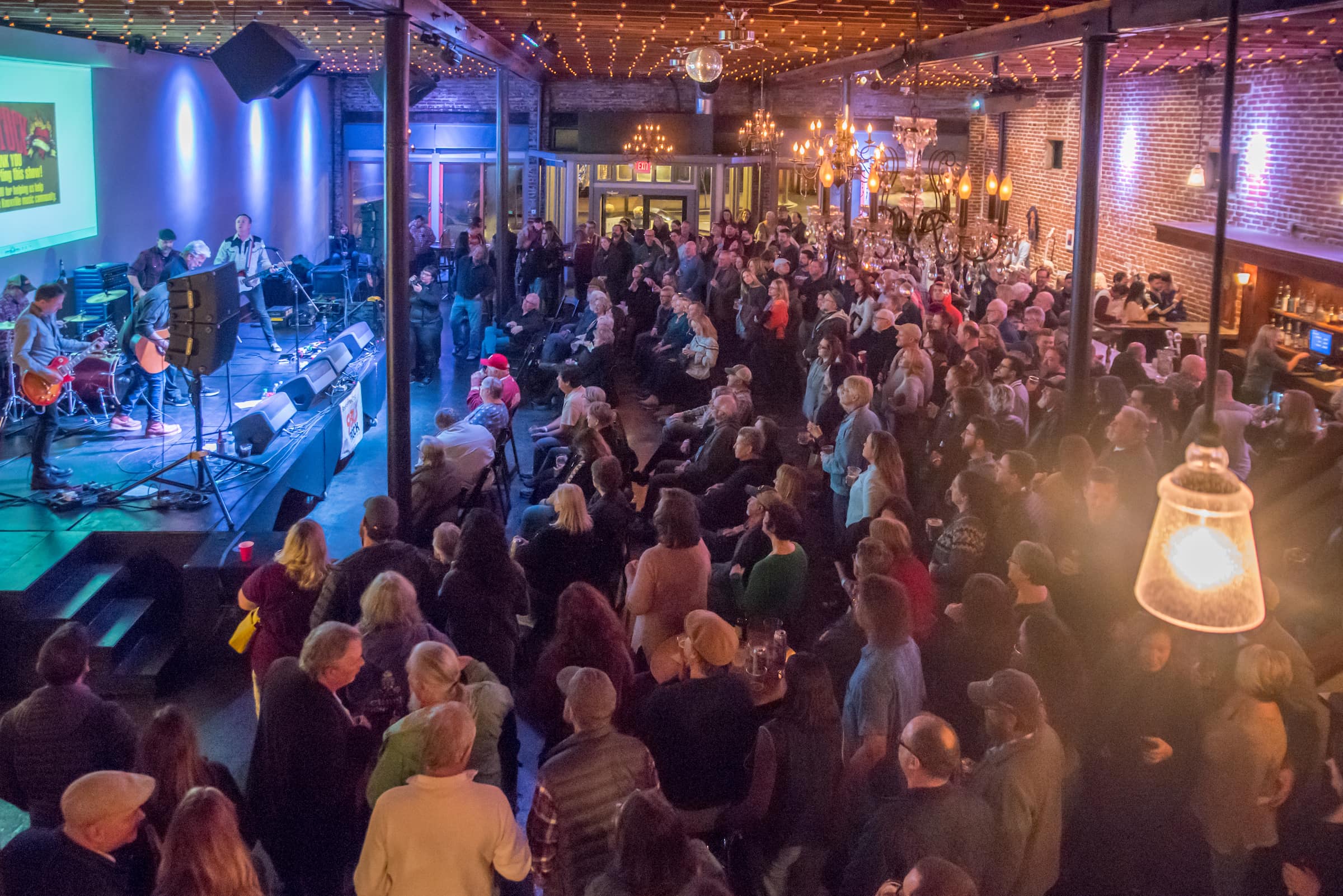
Reflections on an annual event that’s become a showcase of local talent, a festival of good deeds and a scene family reunion.
Full disclosure: It is an impossible task for me to write about Waynestock: For the Love of Drew with any of the objective detachment required for standard journalism.
For the past nine years, since it debuted in January 2011, it has remained one of the greatest accomplishments in my 48-plus years on this planet. That is not a claim I make lightly. I’ve been blessed to have taken part in some remarkable experiences over the years, but to be of service – to another human being or to organizations that give much to other people – is something that fills a great void in even the most restless of spirits.
That’s how Waynestock began, and that’s what it has remained over the course of 10 iterations, the most recent of which wrapped on Feb. 1. I cannot, in good conscience, write a retrospective on it without breaking the fourth wall because I am inextricably tied to its origins. It began, in fact, with a phone call I made on the morning of December 12, 2010, to Wil Wright.
Wil, those familiar with the Knoxville scene know, is the frontman of the alt-rock ensemble Senryu. He’s also the given name of wizard rapper LiL iFFy and half of the electro sex-rock duo Peak Physique, all of which have performed at Waynestock over the years. But that morning, I called him as a mutual friend of Wayne Bledsoe – for whom Waynestock is named.
The night before, Wayne’s oldest son, Andrew “Drew” Bledsoe, had died without any warning. A heart condition previously diagnosed as of little concern turned out to be the thing that killed him, and so at 23 years old, he slipped off the vestiges of his mortal coil and departed this world, leaving behind a younger brother, Rylan, and a younger sister, Lauren.
And a father, who had done so much over the years for the Knoxville music scene … had befriended so many … and who had lost his wife, Ruth, to cancer a decade earlier.
For those of us who knew and loved Wayne, the loss of a son after burying a wife seemed profoundly, cruelly unfair. I probably spoke for a great many in the Knoxville music scene when I called Wil, in shock, and insisted that we had to do something, anything. I had no idea what, only that fate had already plunged its knife once into Wayne’s heart, but twice? It was unfathomable that any man should carry such a burden, and condolences seemed particularly feeble in the shadow of such grief.
“We definitely talked about doing a benefit show off the jump because I remember you asked me to talk to him about it,” Wil says, recalling our conversation. “I talked to him about it that morning, so everything moved really fast. We all know what we’re worth, and especially at that time, all of my resources were ideas and songs and effort. I didn’t have any money, so I couldn’t really do anything except go play the guitar for somebody. That’s kind of a theme, but in a moment like that, you want to give somebody everything you have to give and find a way to turn what you’ve got into what they need.”
The plan began to coalesce a week later at a memorial service for Andrew at The Bijou Theatre. It was a profoundly moving experience, and I ran into the Lees – Tim and Susan Bauer – afterward. There was little we could say to ease our collectively troubled minds except, “Let’s plan some music.” At the inaugural Waynestock meeting, which took place at Sweet P’s BBQ and Soul House, myself; the Lees; Wil; Mic Harrison; and Jason Knight were in attendance. We came up with the idea for a gathering of bands, many of which were Wayne’s favorites, to raise money to assist the Bledsoe family. Riding shotgun was the determination we felt to, as Wil would say when Senryu took the stage six weeks later, “make it better.”
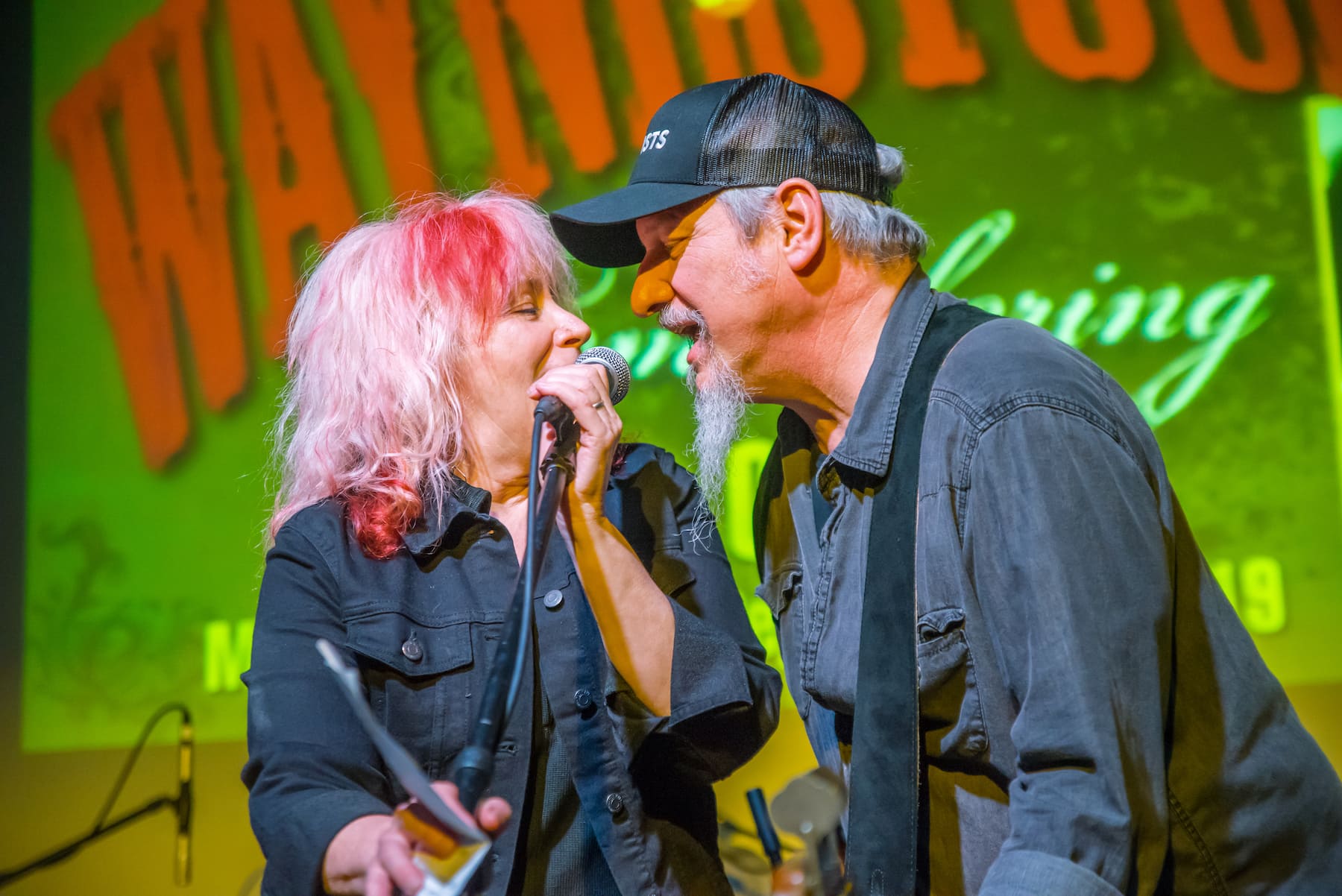
Not a single musician we asked that year hesitated. Not a single musician asked how much it would pay. Every man and woman who took the stage gave everything they had to lift Wayne up and turn sorrow into beauty.
“It was rough remembering how Wayne lost Ruth, man, and when Andrew died, it was like, one of the greatest humans I know shouldn’t have to go through all this heartbreak and tragedy,” Rus Harper, Knoxville’s version of Iggy Pop and frontman of the swamp-blues/horror-rock ensemble Melungeons, tells me. “It was awful. It was a gut punch. But when I caught wind of folks organizing this music festival, I thought it was one of the most beautiful things ever. And when they got in touch with me, I said, ‘Yeah, anything I can do!’
“The way it started – ‘let’s take care of one of ours’ – it’s kept that same spirit. The sense of community it gave everybody to get together and help out this kind, kind human was such a great boost by the local music community, and just having it called Waynestock brings to mind, every year, how we got together and said, ‘OK, let’s do this’ in the first place. That sense of helping out – it’s a powerful one, man, and it’s carried on from the very first one.”
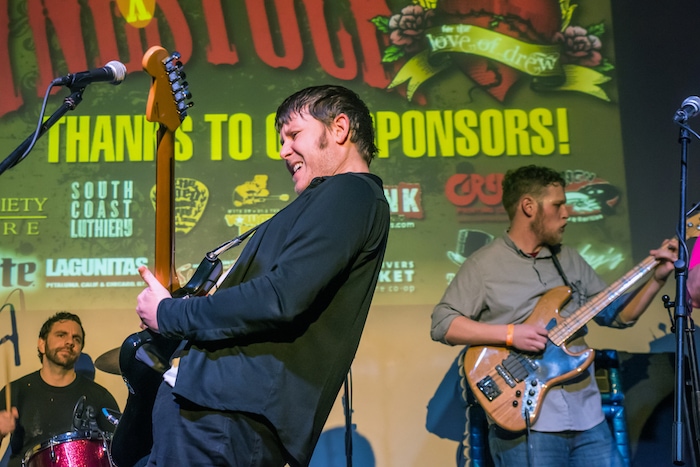
Waynestock officially began on Jan. 27, 2011, with a songwriters-in-the-round session featuring Jake Winstrom (Knoxville expatriate and former Tenderhooks frontman), Sean McCollough, Steph Gunnoe and Greg Horne, followed by performances by Hudson K and The Bearded. The rest of the weekend featured sets by Quartjar, Todd Steed and the Suns of Phere, the Kevin Abernathy Band, Mic Harrison and The High Score (with a special appearance by Scott Miller), Melungeons, The Drunk Uncles (with harmonies from members of the Naughty Knots), Katie and the Bass Drums, Westside Daredevils, the Tim Lee 3, R.B. Morris, Senryu and a closing set by Psychotic Behavior.
Every single performance was a thing of wonder, and when Psychotic Behavior took the stage, an empty microphone up front where Andrew would have sang, it was visceral. Throughout the weekend, the grief that permeated the community didn’t necessarily go away, but it was wrapped in love and beauty and such community that everyone present knew immediately that it was something special, unlikely to happen again.
It would take another tragedy to ensure that it did. I can’t say for certain that Waynestock would have continued – we certainly talked about it, but when Phil Pollard died on Oct. 29, 2011, the die was cast. A larger-than-life bon vivant who never met a stranger and touched more people than can be counted, Pollard was a beloved member of the scene, and we fell into the familiar roles of madcap planning as 2012 sped to a close. BLANK publisher Rusty Odom became a part of the planning team that year, and his familiarity with the music scene led to the inclusion of some newer acts that were just getting started – hip-hop supergroup The Theorizt, for example, and King Super and the Excellents.
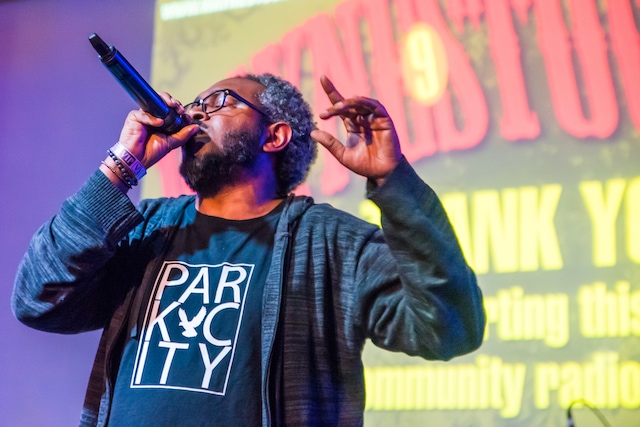
The Theorizt, which would eventually spin off into the Good Guy Collective, became an integral part of Waynestock that year, and Joseph “Black Atticus” Woods would return in various solo and group roles to lend his talent to the cause.
“I felt honored to be recognized as having the type of work that fit the mold of such a worthy cause by fellow artists who rep cross-genres in this scene,” Atticus says. “And it made me (and I’m sure the crew) feel this sense of being understood to what our purpose is for making this art.”
For King Super, which enjoyed a run of several years as one of Knoxville’s preeminent party bands, Waynestock was something of a test drive.
“We had been playing random Tuesday nights at the Preservation Pub and were coming off winning the Sound-Off [band competition] at The Square Room,” recalls Dave Cain, the colorful frontman of King Super. “This was really the first time someone had reached out to us to play – special shout-out to Rusty for throwing our name out for that. We were a band that nobody outside a small circle of people had really ever heard of, and Rusty … put his head on the chopping block and just said, ‘Trust me.’
“I remember it being very intimidating knowing we would be taking our ‘joke band’ out and sharing the stage with Knoxville musical royalty [like] Tim Lee, R.B. Morris, Kevin Abernathy and Todd Steed. They’re serious musicians that inspired awe from the crowd, and here we are making sure we all have our sunglasses and camo jackets. But after all was said and done, people seemed to really like it, and Rusty got to keep his head. After that, we kinda realized we might be able to take this circus on the road. We became more confident, driven, and began to pump out music weekly.”
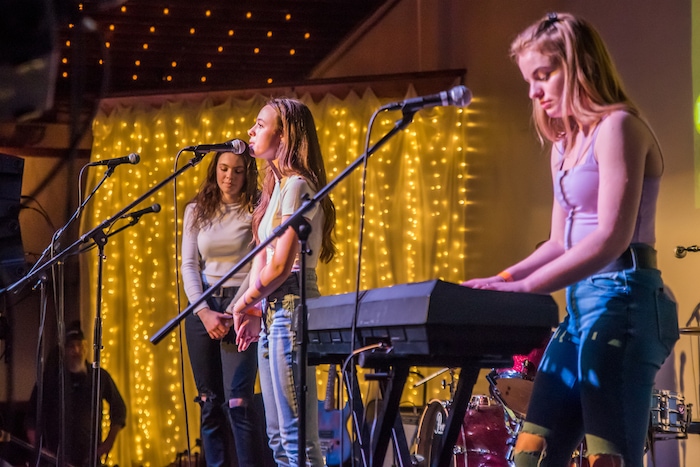
Year two was the first that featured a “grand finale,” the Waynestock closing set that’s become a staple of the weekend. It was somber, like the previous year’s closer by Psychotic Behavior, but when Band of Humans crowded onto the stage and began pulling guests from the weekend up to perform Pollard’s songs, it was electrifying. At one point, I remember looking out at the stage and seeing a runaway train of magnificent talent, riding the edge of total chaos but having a glorious time doing so. If Phil Pollard’s ghost was somewhere in Relix Variety Theatre, where Waynestock has taken place every year, he was no doubt gleeful at the sight of Atticus rapping the “Gettysburg Address” alongside Jack Rentfro shouting into a bullhorn and members of the Lonetones, who had played earlier that night, singing alongside them.
“I was honored to play at the first Waynestock, and have played at a handful over the years, but none was as meaningful as year two when we were all shocked by the death of our good friend,” remembers McCollough of The Lonetones. “To get to share in honoring Phil with such a wonderful group of musicians in front of such a caring audience that included many members of Phil’s family was healing and exhilarating – just as Phil would have wanted it. I still think of it as one of the best shows that the Lonetones have ever played, as we rode atop the grief and love and joy that filled the air.”
When the house lights came on and Relix owner Daniel Schuh told us we would always have a place to host Waynestock and the proceeds again made a difference in the lives of extended family members of the scene, we felt an obligation.
To Drew. To Phil. To Wayne. To so many people who began to see Waynestock for what it is: a family reunion.
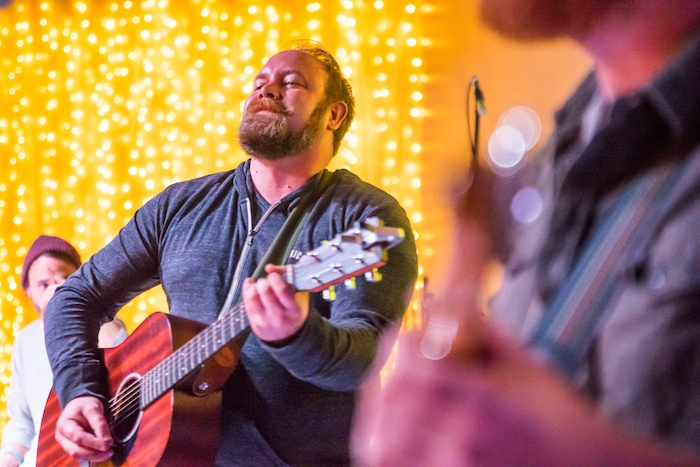
“The first one and this most recent kind of hit me the hardest, but in the middle, Waynestock became a part of the calendar,” Wil says. “I celebrate Waynestock more than I celebrate Easter. It’s like we formed this big organism, and every year we’d put up the Christmas tree and hide the eggs and shoot off fireworks by getting together and playing some songs and giving people some money. To me, that’s the most productive holiday on the calendar.”
Along the way, Waynestock has become a repository of memories for some amazing collaborations: Harrison and The High Score teamed up with country soul icon Con Hunley during year three, and the pairing was so mutually beneficial that they’ve resurrected it a couple of times since (most recently for Waynestock X) and even hit the studio together. (Also year three: Atticus opened for Con and Mic, and the older ladies who came to see their blue-eyed sweetheart fell in love with a black man who treated them to some powerful spoken-word poetry.)
“The setup every year made me feel more and more respected as an artist,” Atticus says. “I never had to worry about sound or if the stage was cleared and ready to go. It’s the kind of thing you won’t know or think about until you’re up there having to clock in, night in and night out. I love festivals/events that have the artist’s experience in mind, as well.”
Credit Tim Lee, along with a rotating cast of sound engineers who brought Relix to life, with that. Along with Amanda Starnes, who joined us several years back to help wrangle cats. Every year, we learned something, and the next year, we made enough small changes that the event began to self-regulate while never feeling like an afterthought to attendees whose only concern was showing up and having a great weekend.
In year five, Scott Miller, Jeff Bill and Todd Steed resurrected the long-gone outfit Run Jump and Throw Like a Girl, and Rus took the stage with Psychotic Behavior to read his own poetry – as well as some of Andrew’s – over the band’s thundering power chords.
“That was cool because it was out of the ordinary,” Rus says. “I treasure every time I get to be onstage, but it was super cool getting to get up and read his poems again after Wil and I read some of his stuff at his Bijou memorial. It was heavy but very, very cool.”
Some of the bands that have played Waynestock are no more. Bands have formed in the years since and received an invitation to take part. Bridges have been built, thanks to Tim and Susan, whose love of collaboration brought into the Waynestock fold a number of musicians that for years received little recognition outside the confines of The Pilot Light (which, incidentally, was one of Waynestock’s recipients over the years). Bringing up monster guitarist and Knoxville DIY godfather Will Fist was the start, and this year, the punk outfit Ex-Gold made its second appearance at Waynestock.
“Speaking for everyone in Ex-Gold and Temp Job [which performed in 2019], we all appreciated being asked to contribute our art to helping our friends in the community,” says Chris Rusk, formerly of Royal Bangs and currently with a good half-dozen bands. “It was also cool to see such a diverse mix of performers pulled together for it, and I think it gave the audience exposure to local music that they may not have been familiar with. Temp Job had only been a band for under a year at that point, and I know we gained quite a few fans from that performance. Gaining new fans and contributing to a good cause at the same time is certainly a win-win.”
And the class of year one has continued to return to the stage, no questions asked, whenever they’re called upon – for the same reasons they said yes in the first place.
Because a man who had done so much for so many was hurting, and playing music was a better condolence than mere words. Andrew Bledsoe may be gone, and those who knew him would trade all of the Waynestocks to give him back to his father, but with the cards fate has dealt, I think we’ve come up with a pretty good winning hand.
“Every time, it’s like, ‘Oh, hell yeah!’ It’s an honor to take part in it, because it’s a big ol’ magical thing,” Rus says. “It’s like a force of folks getting together to do something positive with their art.”